

Key Takeaways
- Smiling can reduce stress and boost your mood by releasing neurotransmitters like serotonin, dopamine, and endorphins.
- Even a fake smile can trick your brain into feeling happier and help you manage stress better.
- Smiling may improve your immune system by helping you relax and reducing inflammation.
Smiling is a friendly gesture that can make others feel welcome and happy, but it also has real mental and physical benefits. When you smile, your brain releases mood-boosting neurotransmitters like serotonin, dopamine, and endorphins. This can lift your mood and help you feel happier and more relaxed.
From reducing stress to boosting your immune system, smiling can make a big difference in your overall well-being.
Verywell / Jiaqi Zhou
1. Smiling Helps You Live Longer
Paul Bradbury / Caiaimage / Getty Images
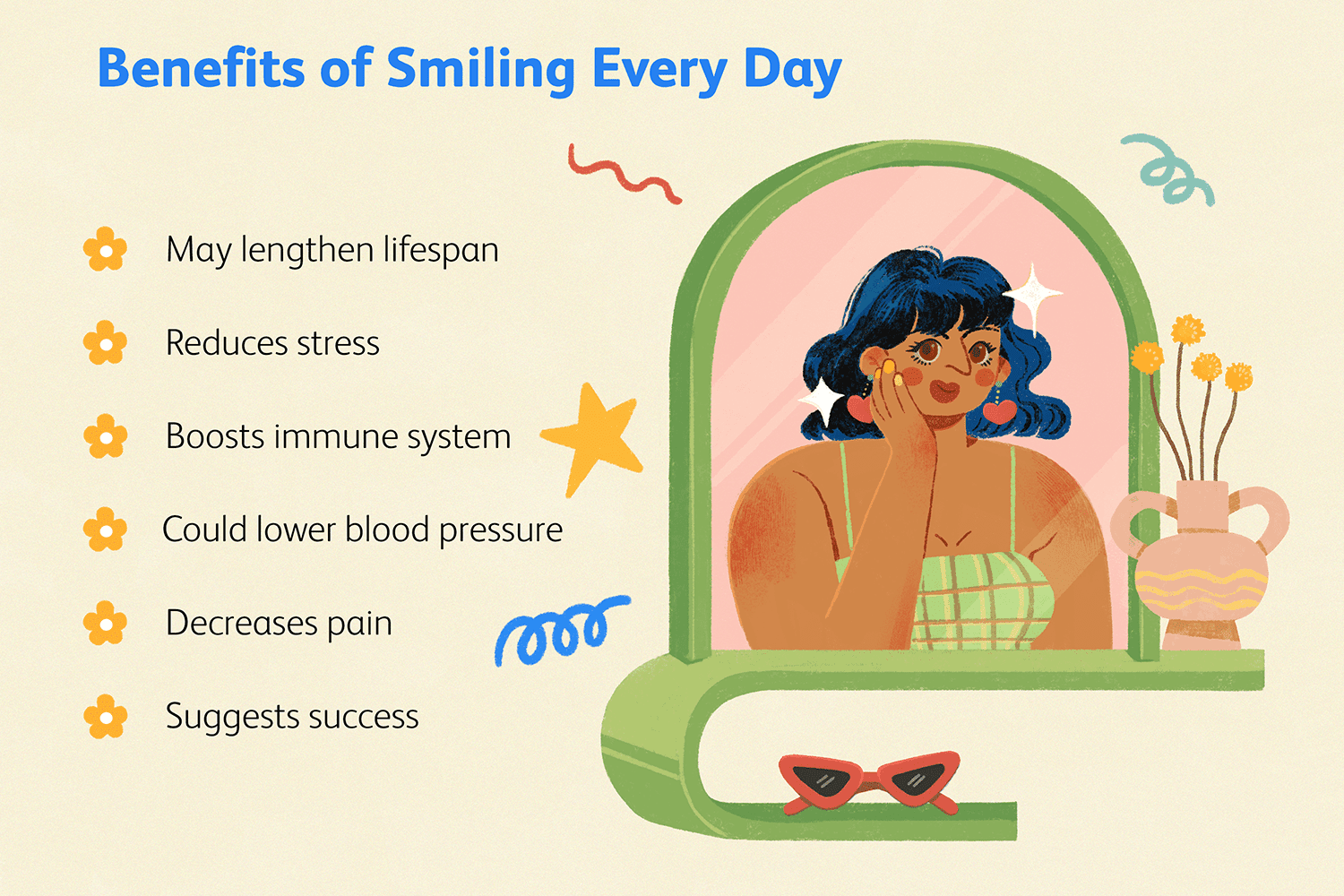
Perhaps the most compelling reason to smile is that it may lengthen your overall lifespan. Happy people seem to enjoy better health and longevity, but more research is needed to understand why. Research indicates that happiness could increase lifespan by years, suggesting that maintaining a happy, positive mood may be an important part of a healthy lifestyle.
2. Smiling Relieves Stress
Stress can permeate your entire being, including showing up in your face and expression. Smiling not only helps prevent us from looking tired, worn down, and overwhelmed, but it can also help reduce stress.
Believe it or not, smiling can reduce stress even if you don’t feel like smiling or even if you fake it with a smile that isn’t genuine.
3. Smiling Elevates Mood
Smiling can also help make you feel happy. Next time you are feeling down, try putting on a smile. There’s a good chance your mood will change for the better.
The physical act of smiling activates pathways in your brain that influence your emotional state—meaning that by adopting a happy facial expression, you can “trick” your mind into entering a state of happiness. This effect works whether or not your smile is genuine.
A simple smile can trigger the release of neuropeptides (such as prolactin, vasopressin, and oxytocin) that improve your neural communication. It also causes the release of neurotransmitters such as dopamine and serotonin, which can reduce anxiety and boost your mood.
Think of smiling as a natural antidepressant.
4. Smiling Is Contagious
How many times have you heard that a smile has the power to light up the room? While it is certainly a beautiful sentiment, it carries a hint of truth.
Smiling not only can elevate your mood, but it can also change the moods of others for the better.
Research suggests that smiles are actually contagious. Your brain automatically notices and interprets other people’s facial expressions—and sometimes, you may even mimic them. That means you might spot someone else’s smile and unconsciously smile yourself.
5. Smiling May Lower Blood Pressure
Smiling could have a beneficial impact on your blood pressure. Laughter specifically seems to cause muscle relaxation and lower blood pressure after an initial increase in heart rate, breathing rate, and oxygen consumption.
While smiling has been shown to lower one’s heart rate under stress, research also shows that it lowers blood pressure. One study showed that laughter therapy may help patients reduce their need for heart medications.
If you have a blood pressure monitor at home, you can try testing this idea for yourself. Sit for a few minutes and take a reading. Then, smile for a minute and take another reading while still smiling. Do you notice a difference?
6. Smiling Boosts the Immune System
Smiling can also boost your overall health by helping your immune system function more effectively. It is thought that when you smile, your immune function improves because you are more relaxed, thanks to activating the parasympathetic nervous system.
This regulates the release of gut hormones and antibodies that reduce inflammation and mediate the immune response.
Proverbs 17:22
A merry heart does good, like medicine, but a broken spirit dries the bones.
— Proverbs 17:22
Whether you’re trying to maintain your overall health or strengthen your immune system ahead of cold and flu season, smiling may help. Warding off illness and staying healthier can also help you feel less stressed.
7. Smiling Reduces Pain
Studies have shown that smiling releases our body’s natural painkillers, known as endorphins, as well as serotonin. Together, these brain chemicals make us feel good from head to toe.
Not only do they elevate your mood, but they also relax your body and reduce physical pain. Smiling is a natural ‘high.’
8. Smiling Makes You Attractive
We are naturally drawn to people who smile. While more severe or negative facial expressions, like frowns, scowls, and grimaces, work to push people away, smiling is seen as more attractive—and people may even assume you have more positive personality traits if you’re smiling.
Not only can smiling make you more attractive, but it can also make you look more youthful. The muscles we use to smile also lift the face, making a person appear younger. So, instead of opting for a facelift, try smiling your way through the day—you’ll look younger and feel better.
9. Smiling Suggests Success
Research has shown that people who smile regularly appear more confident, are more likely to be promoted, and are more likely to be approached. Try putting on a smile at meetings and business appointments. You might find that people react to you differently.
10. Smiling Helps You Stay Positive
Try this test: Smile. Now, try to think of something negative without losing the smile. It’s hard, isn’t it?
Smiling can influence your feelings of positivity, even if it feels unnatural or forced. Whether or not your smile is genuine, it still sends the message that “Life is good!” to your brain and, ultimately, the rest of your body.
What Can Smiling Mean?
Research suggests that there are three primary types of smiles:
- Reward: Smiles that convey approval, happiness, contentment, and other positive feelings
- Affiliation: Smiles that communicate positive intention, trustworthiness, belongingness, compassion, and social connection
- Dominance: Smiles intended to convey contempt, disgust, or superiority; these smiles have been shown to increase cortisol (stress hormone) levels in people they are directed toward
How Smiling Affects the Brain
Smiling triggers the release of brain chemicals that can improve mood and reduce overall feelings of stress. Even “faking” a smile when you aren’t really feeling it can send signals to your brain that help reduce anxiety and improve happiness. In other words, pretending to feel happy can actually help you feel happier.
Over time, the simple habit of smiling regularly strengthens the neural pathways associated with positive emotions.
Smiling also affects the brain in ways that then improve mental and physical health. This includes:
- Increasing “feel-good” chemicals like dopamine and serotonin, which improve mood
- Lowering cortisol levels, which reduces stress and improves health
- Activating areas of the brain linked to empathy and bonding, which improves social relationships
How to Smile More
Smiling can be tough when you’re having a bad day or just aren’t in the right mood. Some strategies that can help you reap the benefits of smiling include:
- Watching something funny: Look for moments of humor in your everyday life, whether it’s something humorous your kids said or a funny video you saw online.
- Practice gratitude: Spend a few moments each day writing down what you are grateful for. Thinking about these moments can give you a great reason to smile.
- Do something you enjoy: Spend some time doing something you love, whether it’s hiking, reading a book, or engaging in your favorite pastime.
- Take a walk outside: Spending more time outdoors can be a great way to improve mood and make it easier to find a reason to smile.
