

Key Takeaways
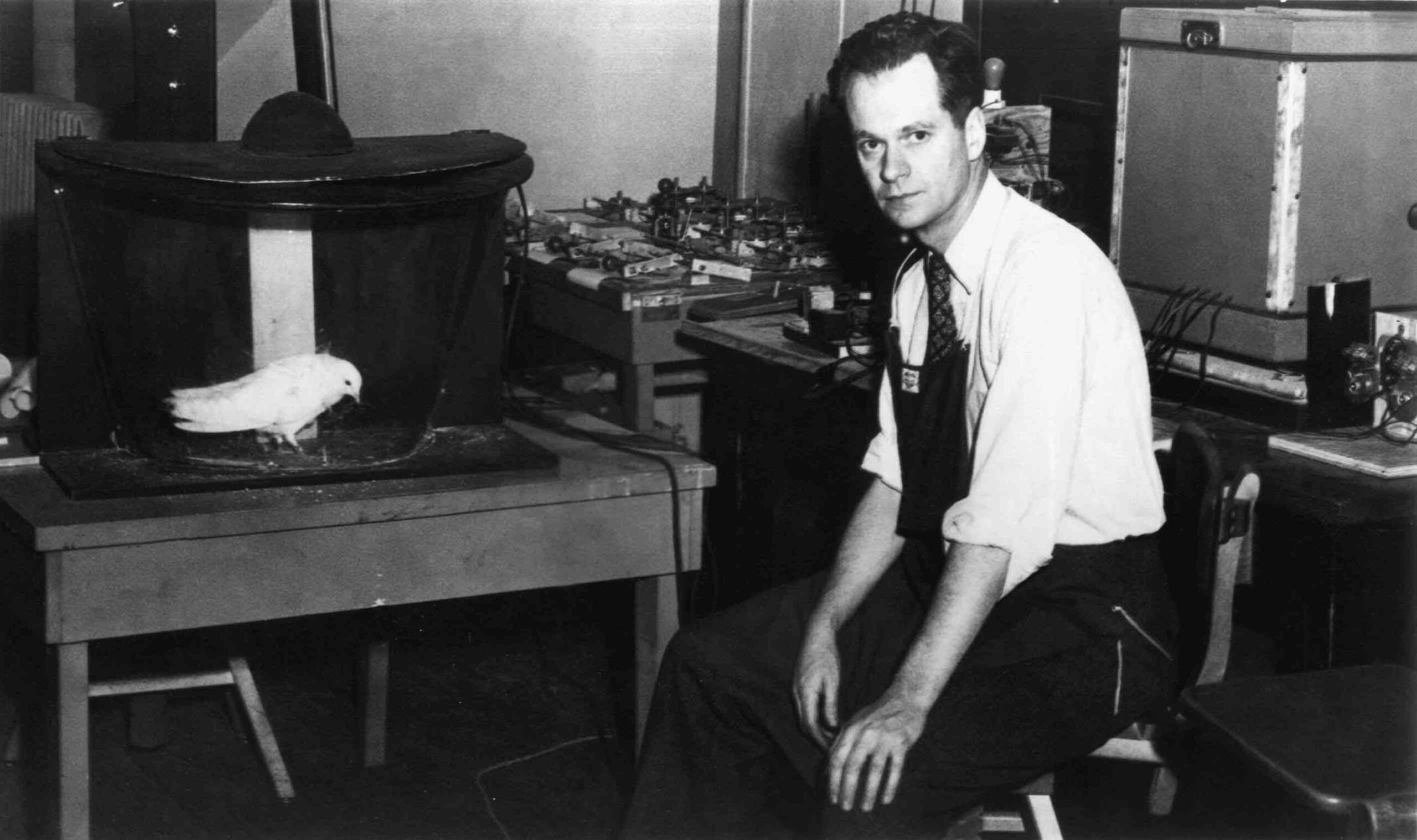
- B.F. Skinner’s work on operant conditioning showed how reinforcement and punishment shape behavior.
- Sigmund Freud introduced talk therapy and highlighted the role of cultural differences in psychology.
- Jean Piaget’s theory of cognitive development transformed how we understand children’s intellectual growth.
Some of the most famous psychologists include figures like B.F. Skinner, Sigmund Freud, Ivan Pavlov, and Jean Piaget. Their contributions shaped our understanding of human thought and behavior. Drawn from rankings of the most influential psychologists of the 20th century, these figures represent diverse schools of thought and theories that continue to influence modern psychology.
Pioneering Famous Psychologists
The breadth and diversity of psychology can be seen in some of its best-known thinkers. While each theorist may have been part of an overriding school of thought, each brought a unique perspective to psychology.
The list below provides a snapshot of the careers of famous psychologists and their most important contributions to the field. In one study published by the American Psychological Association, the most eminent psychologists of the 20th century included B.F. Skinner, Jean Piaget, Sigmund Freud, and Albert Bandura.
While by no means exhaustive, the following list offers a glimpse of some of the major theoretical outlooks that have influenced not only psychology but also the broader culture.
B. F. Skinner
B.F. Skinner is one of history’s most famous psychologists. He was a staunch advocate for behaviorism, which made him a dominating force in psychology so much that he has been described as the most eminent psychologist of the 20th century.
Important contributions include:
- Operant conditioning: According to Skinner, all learning results from conditioning processes involving reinforcement and punishment. When a behavior is reinforced, it is more likely to occur again. If it is punished, it is less likely to occur again.
- Schedules of reinforcement: When reinforcement and punishment occur can influence the learning process, including the strength of the response.
Many therapy techniques based on his theories, including behavior modification and token economies, are still used extensively today.
Jean Piaget
Jean Piaget shaped our understanding of cognitive growth throughout childhood. His theory of cognitive development made him one of the most famous psychologists in history.
Piaget suggested that children go through four key stages of intellectual development:
- Sensorimotor stage: Infants learn about the world through their senses and actions as they develop object permanence.
- Preoperational stage: Children use language and symbols to represent ideas but think in egocentric ways.
- Concrete operational stage: Kids learn through hands-on experience and develop the ability to think logically.
- Formal operational stage: Abstract, hypothetical thinking emerges in adolescence.
His work had a particularly significant impact on the understanding of children’s intellectual growth. His research contributed to the growth of developmental psychology, cognitive psychology, genetic epistemology, and education reform.
Albert Einstein once described Piaget’s observations on children’s intellectual growth and thought processes as a discovery “so simple only a genius could have thought of it.”
Sigmund Freud
When people think of famous psychologists, their minds immediately go to Sigmund Freud. While many of his theories were controversial, his work supported the belief that not all mental illnesses have physiological causes.
His important theories include:
- The unconscious mind: He believed most human behavior is driven by unconscious desires, fears, and memories.
- Id, ego, and superego: He suggested the psyche is structured in three parts: the instinctual id, the rational ego, and the moralistic superego.
- Psychosexual states: He suggested that personality develops in a series of childhood stages where the id’s energy is focused on different erogenous zones.
His theories and work also introduced the idea that talking about psychological problems could help alleviate them. This introduced the idea of talk therapy, which has had a profound effect on how we view and treat mental illness.
Freud also offered evidence that cultural differences impact psychology and behavior. His work contributed to our understanding of human development, personality, clinical psychology, and abnormal psychology.
Albert Bandura
Albert Bandura’s work is considered part of the cognitive revolution in psychology that began in the late 1960s. Bandura’s social learning theory stressed the importance of observational learning, imitation, and modeling.
“Learning would be exceedingly laborious, not to mention hazardous, if people had to rely solely on the effects of their own actions to inform them what to do,” Bandura explained in his 1977 book ”Social Learning Theory.”
Bandura’s influence is still widely felt today as researchers continue to debate the effects of observed violence, such as in movies and video games, on adolescent behavior.
Ivan Pavlov
One of the individuals who is often regarded as one of the most famous psychologists wasn’t actually a psychologist at all. Ivan Pavlov was a Russian physiologist whose research on conditioned reflexes and classical conditioning influenced the rise of behaviorism in psychology.
According to Pavlov, when a stimulus is paired with an automatic, conditioned stimulus, the naturally occurring response is automatically triggered. Pairing a neutral stimulus with it will eventually lead to that stimulus triggering the same response via association.
Pavlov’s experimental methods helped move psychology away from introspection and subjective assessments to the objective measurement of behavior.
Carl Rogers
Carl Rogers was a pioneering psychologist who emphasized human potential and became a leading figure in the humanist movement in psychology. His approach emphasized empathy and self-awareness, particularly in client-centered therapy.
Client-centered therapy is a non-directive approach to therapy in which the client guides the treatment process. This therapy is based on the idea that the client is an expert in their own life, so they are in the best position to decide what they need and how to achieve it.
Famous Cognitive and Developmental Psychologists
Leon Festinger
Leon Festinger developed the theories of cognitive dissonance and social comparison to explain the ways in which social conditions influence human behavior.
Cognitive dissonance is the state of discomfort you feel when you hold two conflicting beliefs. For example, you may smoke even though you know it is bad for your health.
His social comparison theory says that you evaluate your ideas by comparing them with others’ beliefs. You are also more likely to seek out other people who share your beliefs and values.
Erik Erikson
Erik Erikson’s stage theory of psychosocial development focused on development over the lifespan. His theory, which is still popular today, made him one of the most famous psychologists in history.
An ego psychologist who studied with Anna Freud, Erikson expanded psychoanalytic theory by exploring development throughout the life cycle, including childhood, adulthood, and old age.
According to his theory, people progress through a series of eight life stages. At each stage, they face a developmental crisis, and successfully coping with that challenge can lead to the formation of qualities that affect future development.
Lev Vygotsky
Lev Vygotsky was a contemporary of some more famous psychologists, including Piaget, Freud, Skinner, and Pavlov, yet his work never achieved the same eminence during his lifetime. This is largely because much of his writing remained inaccessible to the Western world until quite recently.
His most influential theories include:
- Zone of proximal development: The range between what a child can do alone and what they can achieve with guidance.
- Scaffolding: Support that is provided by a more knowledgeable person, such as a teacher or peer, that is gradually removed as the person becomes more skilled.
- More knowledgeable other: A person with greater skill or knowledge who helps the person learn and progress.
- Social constructivism: The idea that learning is built through social interaction and collaboration.
Starting in the 1960s and through the 1990s, many of his writings were translated from Russian. As a result, his work has become enormously influential in recent decades, particularly in the fields of educational psychology and child development.
While his premature death at age 38 halted his work, he went on to become one of the most frequently cited psychologists of the 20th century.
Famous Founding Figures
William James
Psychologist and philosopher William James is often referred to as the father of American psychology.
- Early contributions: His teachings and writings helped establish psychology as a science.
- Influential textbook: Among his many accomplishments was the publication of the 1,200-page text “The Principles of Psychology,” which quickly became a classic in the field.
In addition, James contributed to functionalism and pragmatism and influenced many students of psychology during his 35-year teaching career.
Wilhelm Wunt
Wilhelm Wundt established the world’s first psychology lab in Leipzig, Germany, in 1879. He treated psychology as a scientific discipline distinct from philosophy and physiology and emphasized careful observation and experimental methods.
Key contributions include:
- Establishing psychology as a separate science
- Developing introspection as a method to study consciousness
- Investigating key topics like perception, reaction times, attention, and emotion
- Influencing other psychologists who later brought his methods to the U.S.
Famous Modern Psychologists
The 20th century was a time of tremendous growth in psychology and saw the emergence of many foundational figures. However, the field has continued to evolve, and new figures have emerged as significant influences on psychology. This includes famous psychologists who have introduced new theories and conducted research on topics such as motivation, cognition, social influence, and well-being. Some of these famous psychologists include:
- Elizabeth Loftus: A leading memory researcher who has focused on false memories and the malleability of eyewitness testimony
- Martin Seligman: A pioneer of positive psychology, focusing on learned helplessness, well-being, and resilience
- Carol Dweck: Developed a theory suggesting that a person’s mindset, whether fixed or growth, influenced motivation and learning
- Daniel Kahneman: A Nobel prize-winning researcher on topics like heuristics, cognitive biases, and decision-making
- Angela Duckworth: Known for her research on grit and perseverance and how these qualities affect achievement and long-term success
- Ellen Langer: Known for her influence on mindfulness and positive psychology as well as her research on the illusion of control
