

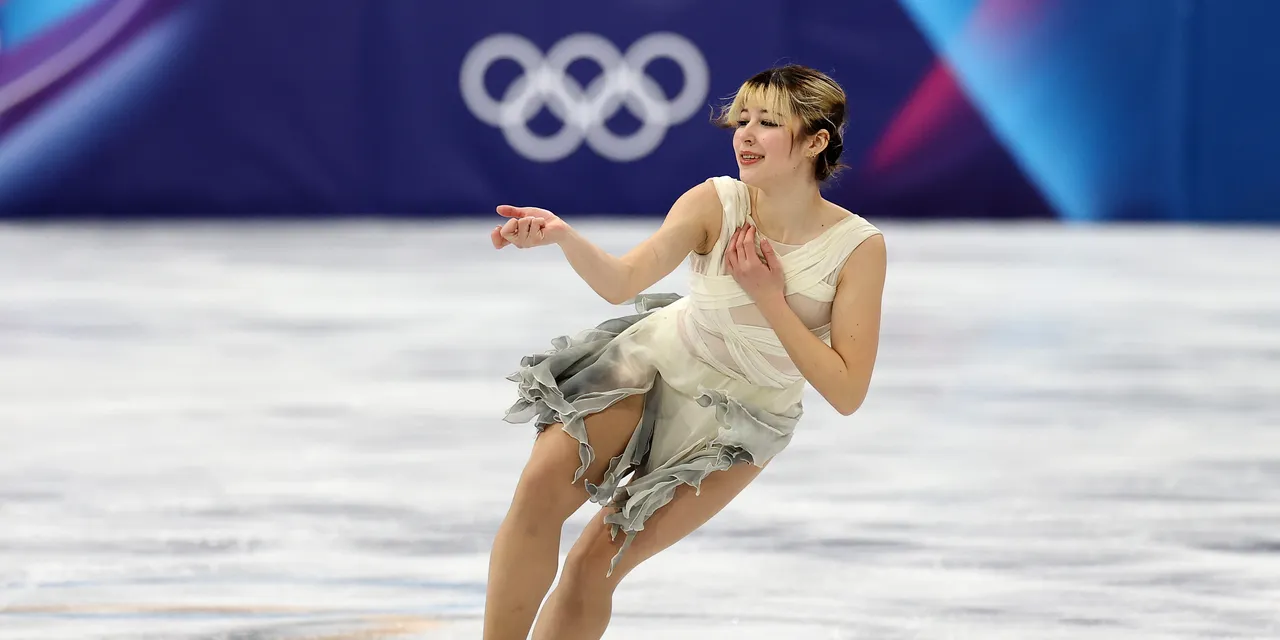
Welcome to your go-to guide to the 2026 Winter Olympics. We’re tracking everything—from real-life heated rivalries (yes, they exist) to under-the-radar sports and surprise standouts—so you can catch up on all of our coverage in one place.
Figure skating is one of the most mesmerizing Olympic sports—both for the breathtaking displays of athleticism and the intricate, elegant outfits.
But those crystal-laden getups are more than just visual entertainment: They’re crafted in accordance with specific rules. And athletes can get penalized—pretty heftily, actually—for breaking them.
With the 2026 Winter Games underway in northern Italy, we rounded up four figure skating outfit rules you probably didn’t know.
The athletes can’t look too naked.
According to the International Skating Union (ISU), which established the costume rules used in the 2026 Olympics, skaters’ outfits “must not give the effect of excessive nudity inappropriate for the discipline.” What constitutes “excessive nudity” is subjective, of course, but Lisa McKinnon, a costume designer in Los Angeles, says she avoids using see-through material and makes sure costumes fit well so that certain body parts (like butt cheeks, for example) aren’t revealed. Other than that, her only hard rule to ensure costumes don’t veer into the vulgar category is: “let’s not show nipples,” she says.
McKinnon designed 15 costumes for the 2026 Winter Games, including outfits for the three American women’s figure skaters—Alysa Liu, Amber Glenn, and Isabeau Levito—as well as American pair ice dancers Christina Carreira and Anthony Ponomarenko, and Korean figure skaters Haein Lee and Jia Shin.
Of course, the nudity rule doesn’t mean skaters are completely covered in fabric—that would be impractical for competition—or that they have to avoid all things sexy. McKinnon gives the example of the outfit she designed for Amber Glenn’s short program, which is set to Madonna’s “Like a Prayer.” The costume, which features lace, layered necklaces, and burgundy-colored fabric that drapes off her shoulders, “is in the direction of more mature and sexy without pushing it too much,” McKinnon explains.
Their clothing also can’t be “garish” or “theatrical.”
The ISU rules also states costumes “must be modest, dignified and appropriate for athletic competition—not garish or theatrical in design.” Again, these terms are all pretty subjective (in case you’re wondering, garish means “ clothed in vivid colors” or “excessively or disturbingly vivid,” per Merriam-Webster). But McKinnon says she adheres to this regulation by avoiding “gimmicky” elements, like an athlete changing some part of their costume mid-performance, for example.
