

- Without proper care, some household items can increase the risk of illness or other health concerns.
- Damaged cookware, plastic containers and worn cutting boards can leach microplastics into food.
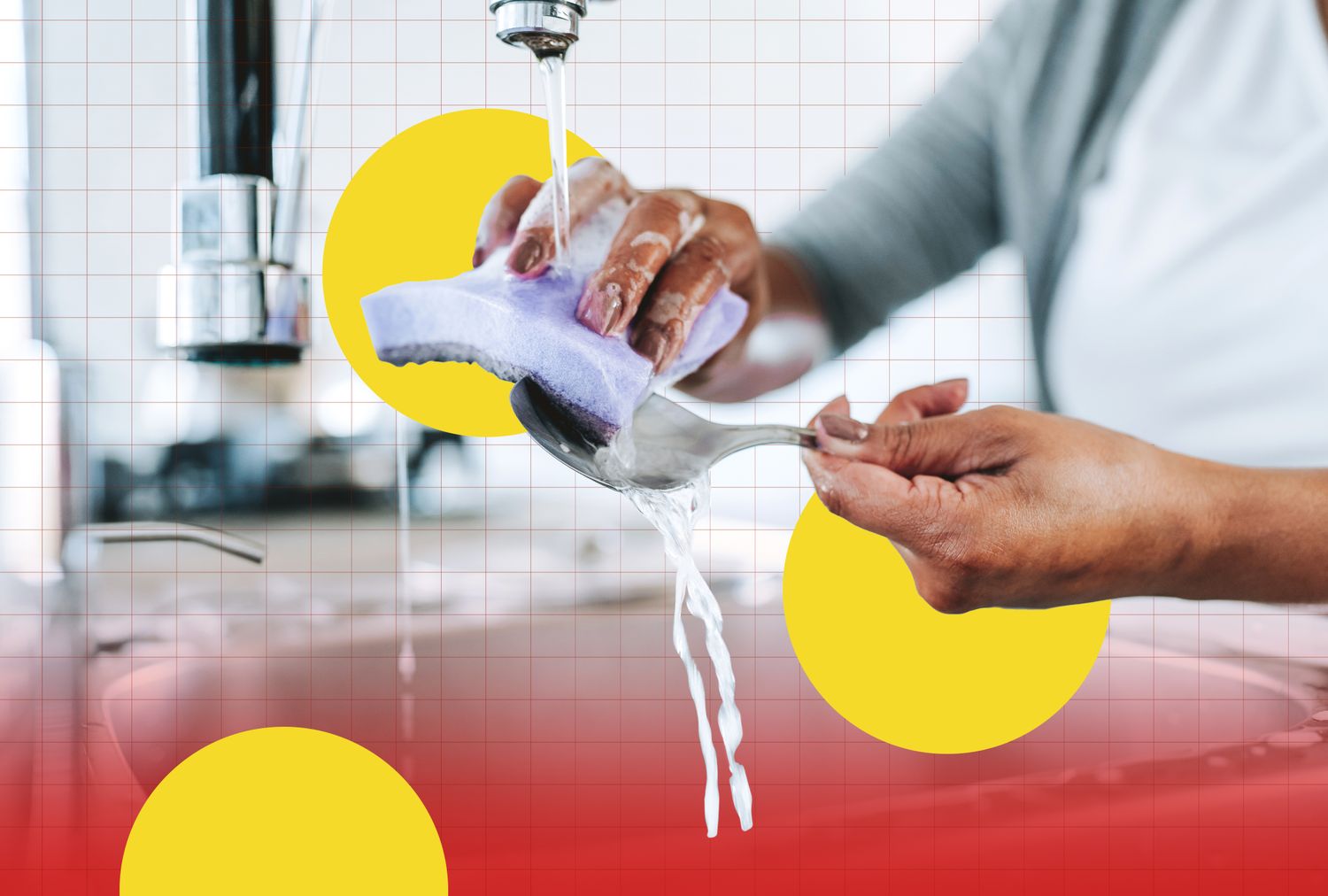
- Sponges and dishcloths can harbor bacteria, so they should be cleaned or replaced regularly.
You work hard to keep your kitchen clean and safe—sanitizing surfaces, scrubbing sinks and tossing leftovers that have lingered too long in the fridge. After all, safe food prep is just as important as making meals nourishing and delicious. But some everyday kitchen items could still be putting you and your family at higher risk of foodborne illness or other health concerns. We spoke with a food safety expert to uncover which common kitchen tools may be making you sick—and what safer alternatives to use instead.
Damaged Nonstick Cookware
Nonstick cookware is generally safe when used properly, but using pans with damaged nonstick coatings—like scratched or peeling Teflon—isn’t recommended. “When nonstick coatings become scratched or overheated, they can degrade, increasing the potential for chemical migration and particle release,” says Chamali Kodikara, chair of the Food Safety & Quality Management Division at the Institute of Food Technologists. “Research has shown that misuse or damage can accelerate coating breakdown, particularly at high temperatures.”
You’ll know that nonstick pans are ready for the trash when their surfaces are scratched, peeling or no longer nonstick during cooking. Kodikara recommends switching to ceramic, stainless-steel or cast-iron cookware. If you choose to buy a new nonstick pan, keep cooking temperatures below 475°F to help preserve the coating’s integrity.
Plastic Food-Storage Containers
Plastic food-storage containers are convenient—but they can release millions or even billions of microplastic and nanoplastic particles into your food, especially when heated. “Repeated heating, microwaving or long-term use of plastic food-contact materials can increase migration of additives or degradation products into food, especially when heat and fat are involved,” says Kodikara. She adds that while heating accelerates the release of microplastics, long-term storage of foods in plastic at room temperature or refrigeration temperatures may also contribute to exposure.
If you’re ready to move away from plastic food-storage containers, Kodikara recommends tossing any that are warped, cracked or discolored or repeatedly exposed to high heat. As safer alternatives, consider containers made from glass, stainless steel or food-grade silicone—especially for reheating or long-term storage.
Worn Cutting Boards
Plastic cutting boards have been shown to shed microplastics into foods like meat, fish and vegetables as they wear down over time. But heavily worn wooden cutting boards may also pose health risks. “Deep cuts and grooves in cutting boards, especially plastic and wood, can harbor bacteria and make thorough cleaning difficult,” says Kodikara. “Research shows these surfaces can act as reservoirs for pathogens, increasing cross-contamination risk between raw and ready-to-eat foods.”
If your cutting boards have deep grooves, visible wear or lingering odors even after cleaning, it’s time to replace them. To reduce cross-contamination risk, use separate cutting boards for raw meats and seafood and for produce or ready-to-eat foods. Also remember to thoroughly wash and sanitize boards between uses.
Sponges
You may wash dishes and wipe down counters regularly—but research shows that harmful bacteria like Salmonella can survive for more than a week in reusable kitchen sponges. “Their warm, moist structure promotes rapid microbial growth and easy transfer of bacteria to hands, dishes and surfaces,” explains Kodikara. She recommends sanitizing kitchen sponges daily or replacing them at least once a week to avoid spreading potentially harmful microbes.
Dishcloths
Even if you prefer using dishcloths to keep dishes and kitchen surfaces clean, improper laundering can increase health risks—especially if they’re stored while damp or used repeatedly without washing. “Launder cloths frequently at high temperatures and choose tools that dry quickly to limit bacterial growth,” suggests Kodikara. Always wring out dishcloths thoroughly and hang them to air-dry between uses to prevent bacteria from building up.
Our Expert Take
Rather than banishing these items from your kitchen altogether, focus on smart upkeep. Replace worn cutting boards and nonstick cookware when they show signs of damage, consider swapping plastic food-storage containers for glass and regularly sanitize, launder or replace dishcloths and sponges to keep harmful germs at bay.
