

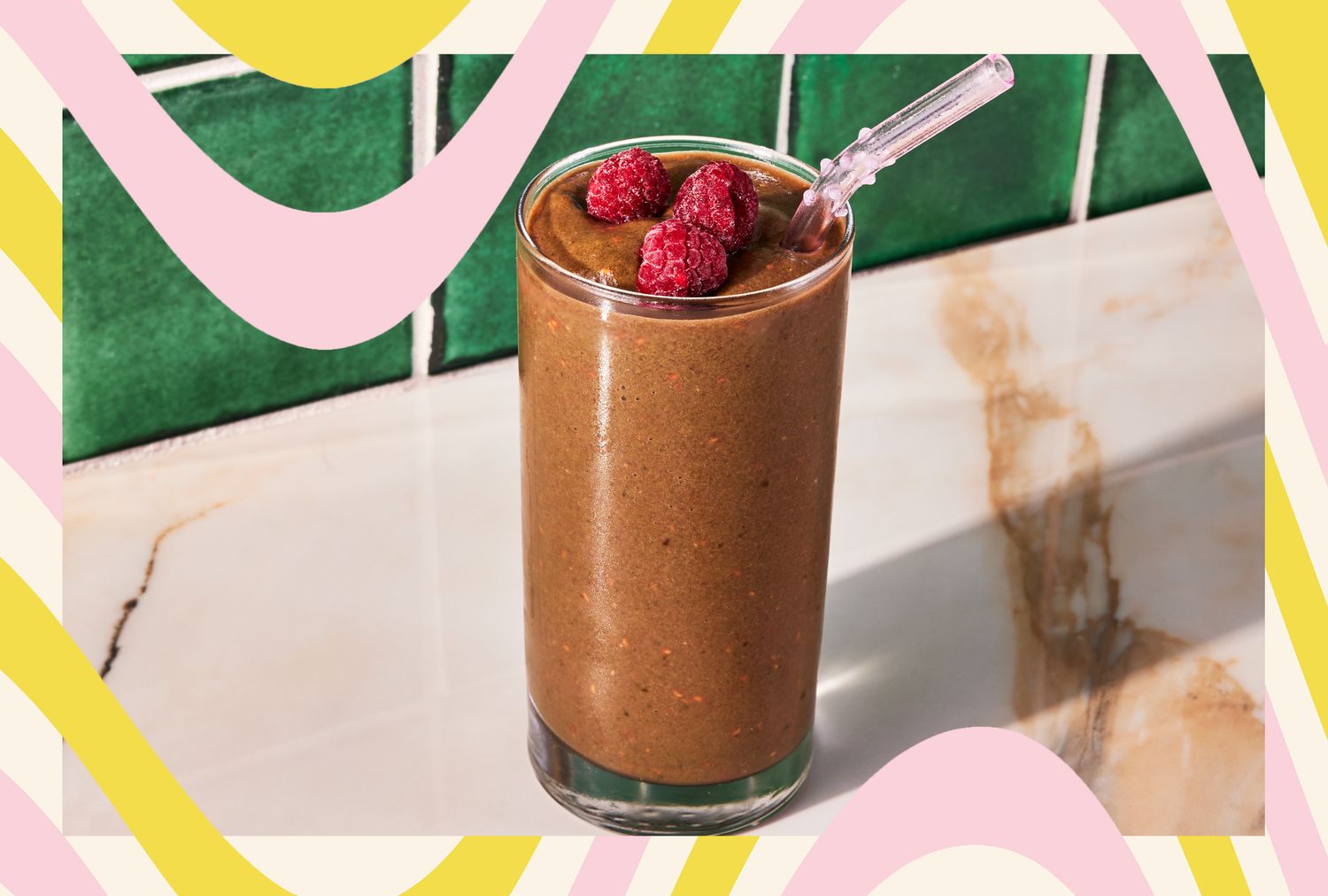
- Fruit is often given a bad rap due to its sugar content, but it’s natural sugar.
- Fruit contains a wealth of nutrients, like fiber, antioxidants, vitamins and minerals.
- Avocado, mango, blueberries, dates, pineapple and prunes are great smoothie additions.
There was a time when social media influencers touted no-fruit smoothies, claiming that fruit smoothies are full of sugar. Unfortunately, most of us are already fruit-deprived. Almost 9 out of 10 U.S. adults don’t meet the recommendation to eat 1½ to 2 cups of fruit per day. Fruit is a natural source of sugar, but it is also packed with vitamins, minerals and antioxidants that help your body feel and function at its best. And smoothies just so happen to be a perfect vehicle for getting more fruit into your day.
Where does this reluctance to eat fruit come from? “One of the main things I’ve observed in my practice is that people have been conditioned to fear carbs, and fruit is a carb-rich food,” says dietitian and health coach Jessica Cording, M.S., RD.
While fruits do contain natural sugar and carbohydrates, the nutrient density and fiber content of the entire fruit means that it’s not the same as cookies or chips. Plus, unlike juicing, blending fruit into a smoothie retains important nutrients. “You retain the fiber, which helps regulate blood sugar and keep you full. Fruit also provides important vitamins, minerals and antioxidants to support health in a number of ways,” says Cording.
Decades of research back this up, promoting the inclusion of fruits in the diet due to their role in disease prevention and health. For example, increased fiber intake from fruit is associated with a lower risk of cardiovascular disease, as well as dying from cardiovascular disease or any other cause (i.e. early death).
From their antioxidants that help fight disease to their fiber and vitamin and mineral content, nutrition experts recommend these six “bad” fruits that happen to blend up perfectly in a smoothie.
1. Avocado
Did you know that avocado is a fruit, not a vegetable? While this green beauty has taken toast to trendy new levels, it’s also a great addition to your smoothie. “People are sometimes scared of the calorie density and fat content, but adding avocado to a smoothie adds heart-healthy monounsaturated fats, fiber, potassium, magnesium, vitamin B6 and vitamin E, plus a creamy texture,” says Cording.
For reference, one-quarter of a medium avocado provides 80 calories and 3 grams of filling fiber. Plus, avocados act as a nutrient booster, meaning that thanks to their fat content, they help your body absorb fat-soluble vitamins A, E, D and K from the other foods in your smoothies. Research also suggests that people who eat an avocado every day may improve their diet quality.
Try our Spinach-Avocado Smoothie for a creamy, green start to your day.
2. Blueberries
These vibrant little gems are bursting with nutrition. “Blueberries are a regular addition to my smoothies,” says Natalie Rizzo, M.S., RDN.
A 1-cup serving of blueberries delivers 4 grams of dietary fiber for just 80 calories. Plus, blueberries offer a slew of antioxidants, as evidenced by their beautiful blue-purple hue. Anthocyanins, the main antioxidant found in blueberries, and what gives them their color, have been found to play a role in preventing diseases like type 2 diabetes, cardiovascular disease and obesity.
In addition to their nutrient content, blueberries have another thing going for them—they’re naturally sweet. Rizzo says that this allows her to add vegetables to her smoothies and still achieve good taste. “Pair them with riced cauliflower, milk, a half-cup of strained (Greek-style) yogurt and a tablespoon of peanut butter for a great post-workout drink,” says Rizzo. Another option? Combine two fruits on this list and create our Blueberry & Avocado Smoothie.
3. Dates
“Dates provide important nutrients like fiber, potassium, vitamin B6 and copper. They also contain antioxidants like flavonoids, carotenoids and phenolic acid,” says Cording. One pitted Medjool date contains roughly 70 calories, 16 grams of total sugars and 2 grams of fiber. Although the sugar content in dates and other dried fruit may look high, it’s all coming from natural sugars wrapped up in one nutrient-dense package. In fact, dates are often used as a replacement for added sugar like honey or maple syrup. We use dates to sweeten our Anti-Inflammatory Raspberry & Spinach Smoothie.
4. Mango
Mangoes get a bad rap at times because they are one of the highest-sugar fruits. For instance, a 1-cup serving of fresh mango has 23 grams of total (natural) sugar. But, don’t let that scare you off. That same serving of mango has just 100 calories and packs 3 grams of fiber. It also contains two-thirds of your Daily Value for vitamin C.
Another perk of the sunny fruit? Research shows that mangoes provide polyphenols that have antioxidant and anti-inflammatory properties that support the immune system and may even help protect against cancer, says Cording. Try our Mango & Kale Smoothie for a slightly sweet, slightly tart sip.
5. Pineapple
Another tropical fruit that is perfect for smoothies is pineapple. While pineapple also has a higher sugar content—a 1-cup serving contains about 16 grams of total sugars—it also packs 2.5 grams of dietary fiber and nearly a day’s quota for vitamin C for just 80 calories.
The natural sweetness of this beautiful yellow fruit comes with a slew of health perks. “Pineapple contains antioxidants like vitamin C, manganese, flavonoids and phenolic compounds to support healthy immune system function, promote healing and fight disease,” says Cording. “They also contain an enzyme called bromelain, which has been shown to support healthy digestion.” You can’t go wrong giving this Pineapple Green Smoothie a try.
6. Prunes
Prunes—aka dried plums—are a must-add to your smoothie routine, and it’s not just for regularity. Tiny but mighty, five pitted prunes have an impressive 3.5 grams of filling fiber for just under 100 calories. While their sugar content is roughly 18 grams, it’s coming from natural sources. One of those is sorbitol, a sugar alcohol that is not absorbed by the body. Sorbitol can also help get your GI tract moving.
One of the surprising benefits of prunes is their ability to bolster bone health, especially for postmenopausal women. “Adding two to three prunes into my smoothie delivers a touch of sweetness alongside important nutrients I know my bones will benefit from,” says Rizzo. “I like to toss them with peanut butter, cow’s milk and a banana for a creamy post-run snack.”
Dietitian Tips to Make a Balanced Smoothie
Both Cording and Rizzo recommend these tips to get the most balanced bang-per-sip out of your smoothie creations.
- Aim for a 2-to-1 ratio of non-starchy veggies to fruit. Frozen riced cauliflower makes a great addition to your smoothie and adds a frothy texture. Also, leafy greens, like spinach and kale, are great to boost antioxidants and fiber intake, too.
- Incorporate a source of protein. Low-fat plain strained (Greek-style) yogurt, cottage cheese, cow’s milk, kefir, unsweetened soymilk or pea protein milk or a protein powder are great selections.
- Add a healthy fat source. Avocado, chia seeds, ground flaxseed, hemp hearts, nuts or nut butter will round out your smoothie while helping you absorb the fat-soluble vitamins from the produce in the mix. Another benefit of adding fat and protein to your smoothie is that it will take longer to digest, which helps balance blood sugar and provides a steadier stream of energy.
Healthy Smoothie Recipes to Try
Our Expert Take
Contrary to what the internet may be telling you, nutrition experts recommend adding fruits to your smoothies. Avocados, blueberries, dates, mango, pineapple and prunes are all great additions to toss into your blender as you whip up your favorite smoothie combos. Make sure to also add protein and fat sources to yield a smoothie with some staying power to fuel your busy day. Get creative in the kitchen and experiment with your favorite fruit combos.
