

- Experts agree that taking care of your kitchen knives can help them last longer.
- Skip the dishwasher, use a stable cutting surface and store properly for the best care.
- Choose a high-quality blade and regularly sharpen your knives for safety and longevity.
There may be no tool more important in the kitchen than a chef’s knife. It is the multipurpose slicer and dicer of ingredients, capable of breaking down thick-skinned winter squash, yet precise enough to filet a side of salmon. Too often, however, chef’s knives are taken for granted, misused or even neglected.
Whether you just picked up a brand-new, expensive Japanese blade or have used the same one passed down from family, it’s important to keep that knife well cared for and protected. There are some simple mistakes you may be making that are actually ruining your knives, but fear not, we have you covered. EatingWell reached out to chefs and knife manufacturers across the country to learn the most common mistakes people make that ruin knives and how to avoid them.
Mistake 1: Using the Wrong Cutting Surface
Before we get into the blade itself, let’s start with the cutting surface. Everyone we spoke with agreed that using the wrong surface is one of the most common ways to dull your knives. Chris Piro, owner and chef of Again., says the wrong cutting board can ruin your knives.
“Stop using glass cutting boards and those thin foldable boards,” Piro says. “Nothing wears down a knife faster than a surface that fights back. Glass, stone and even the cheap plastic boards that slide around on the counter all take a toll on the finely crafted edge of the knife. A knife is meant to meet something that has a little give. That is why the cutting board matters almost as much as the knife itself.”
“Pay attention to your cutting surface,” says Marc Wade, executive vice president of chef-knife maker Messermeister. “If the cutting surface is as hard as your blade, it will damage your edge.”
Mistake 2: Not Washing Your Knife Properly
Cleaning your knife is important, of course, but you can damage the knife if you do it improperly. “It’s better to always hand-wash your kitchen work knives, hands down,” says Kim de la Villefromoy, vice president of business development and chef at Mercer Culinary. “Always dry your blades as soon as you have washed them. Don’t put your knives away wet or moist, as they can rust.”
And while we are talking about cleaning your knives, there’s something home cooks often do that a professional would never. “Putting knives in the sink, period,” says Evan Hennessey, chef and owner of Stages at One Washington and The Living Room in Dover, New Hampshire. “This has disaster written all over it in so many ways.”
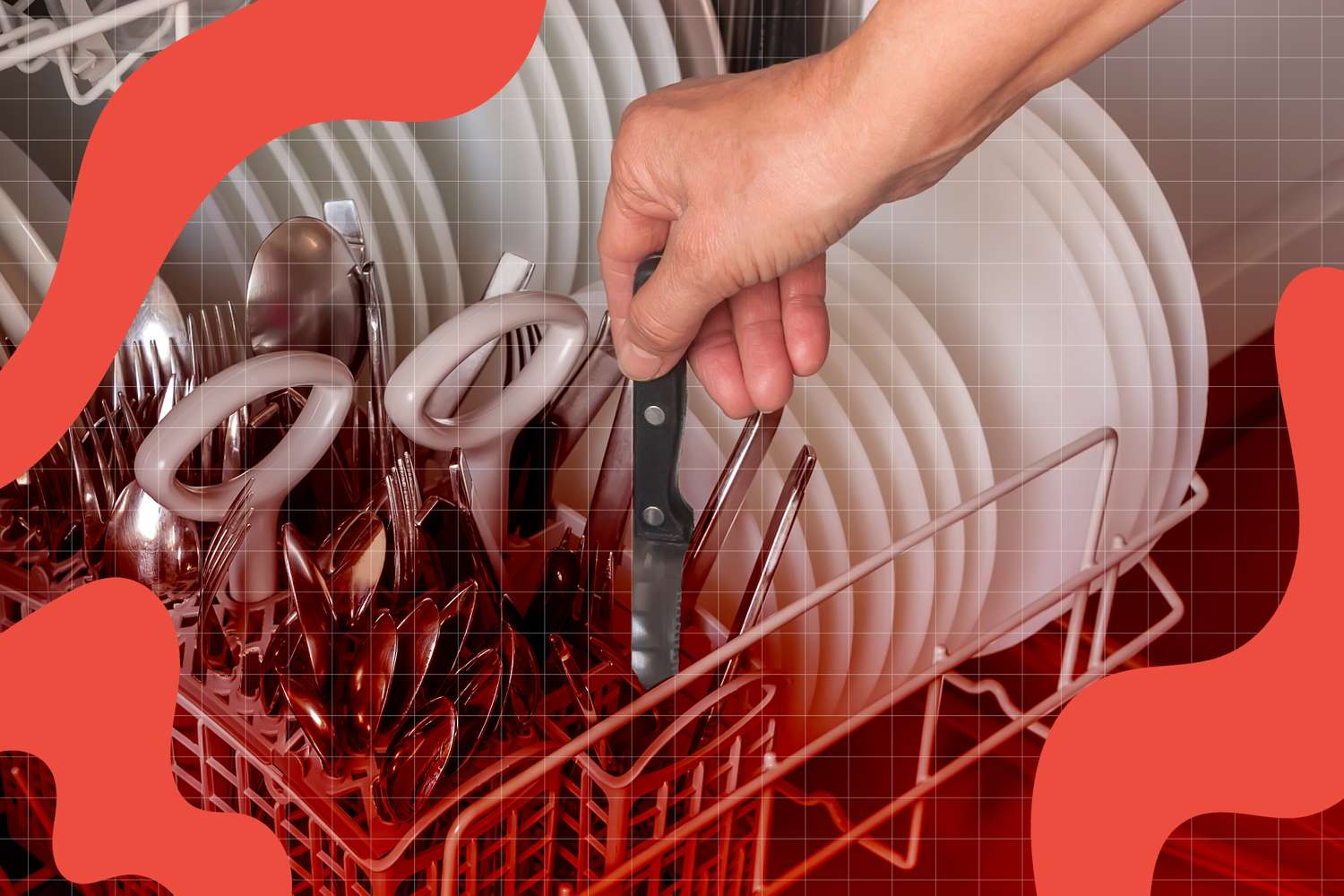
Mistake 3: Putting Knives in the Dishwasher
Speaking of cleaning knives, stop putting them in your dishwasher. “Always hand-wash your knife, never in the dishwasher,” says Paul Farmer, executive chef at The Archer in Charleston, South Carolina. “Not only does the dishwasher dull it much faster, but it can also be a safety hazard if someone doesn’t know it’s in there.”
“It may be convenient to pop that beauty into the dishwasher, but the aggressive water tossing and cleaning agents can destroy your knife,” says Matt Abdoo, executive chef of Pig Beach BBQ, with locations in New York and Florida. “It can potentially dull the blade, cause it to warp or bend, crack the handle or even break the tips from it sloshing around.”
Wade explains that the dishwasher soap is so strong that it can actually damage the blade. “Most dish detergents contain lye, a strong alkaline substance, which is highly caustic,” Wade says. “Lye is used to break down food particles in the dishwasher and is the perfect catalyst for breaking down the carbon structure of your blade. Lye can cause caustic cracking in carbon-rich steel, especially at elevated temperatures. This reaction leads to stress corrosion cracking, which can weaken the steel and result in structural failure.”
Mistake 4: Storing Knives Loose in a Drawer
Now that you know to skip the dishwasher and hand-wash (and dry well) your knives, where should you store them? This is another common mistake many home cooks make that can not only dull the blade but may also be dangerous. “The dreaded knife drawer: It’s sharp things constantly clanging into each other and damaging the blades,” Hennessey says. Yes, storing knives loose in a drawer can damage the blade and you.
“If you place your nice knives into a drawer, every time you open and close that drawer, the knife has the potential to get jostled and tossed around, which could potentially chip or damage the blade,” Abdoo says. “Always store your knives with a protective blade guard if storing in a drawer or in a knife block to prevent the blades from getting damaged while being stored.” Wade agrees, adding that edge guard or wooden storage devices “are an excellent investment.”
Mistake 5: Not Sharpening and Honing Your Knife
Failing to regularly sharpen and hone your knives was another of the most common mistakes the pros said many home cooks make. Either learn how to sharpen your knives at home, or take them to a professional.
“There is no such thing as a knife that never needs to be sharpened,” de la Villefromoy says. “If you cannot cut a tomato easily with your knife, your knife is blunt and no longer your friend. You have to own a honing steel. It’s the least you can do if you like your knives. If you are a little bit serious, you need a sharpening steel or at least a sharpening device.”
“It takes a ton of practice to learn how to properly sharpen your knife on a wet stone, so if you don’t know how to do it, you can potentially ruin your knives,” Abdoo says. “It’s best to use an older knife to practice sharpening on or send them out or bring them to a professional to keep them sharp.”
Wade says many people forget to hone their knives. “Honing is the simple process of aligning the edge so that it is free of any micro deflections that occur during use,” he explains. “When the edge is straight, it is very strong and sharp. When the edge rolls over, the knife doesn’t feel as sharp because you are actually cutting with the weakened side of the blade. Honing is usually done with a few gentle passes along a steel or ceramic rod. This simple maintenance will produce dramatic improvements in the performance and longevity of your edges.”
Mistake 6: Using It as a Scraper
We’ve all seen videos of celebrity chefs using their knives to scrape up ingredients like mashed garlic from the cutting board. But this can quickly ruin the edge of your blade. Abdoo says, “Dragging the blade sideways across the board will dull your knife.” Hennessey agrees, saying this is a sure way to dull or damage the blade. “Invest a few dollars in a bench scraper and save the blade,” he says.
Mistake 7: Using It as a Multitool
Speaking of using your knife for tasks other than chopping or slicing, you can do a number on the blade if you use it as a multitool. “I can’t believe I’m even saying this one; a knife is for cutting, slicing and chopping, not opening cans or turning screws or any other household chores,” Hennessey says.
The same goes for using your knife to smash frozen or hard objects. “If you need to try to cut through something frozen or something hard like a coconut, use a thicker, heavier knife like a cleaver or allow the item to thaw first,” Abdoo says. “Cutting into a hard object will have the same effect as cutting into a hard surface. It can potentially break or chip your blade and will certainly dull your knife.”
While a chef’s knife is multipurpose, it’s a good idea to have a few different blades. “Owning a few different blades will help keep your knives sharp as you’re not constantly using the same one,” Hennessey says. “This is also a safety issue. Imagine cutting a shallot with a huge chef’s knife. The knife doesn’t fit the task. This calls for a paring, or utility, knife.”
Mistake 8: Picking a Low-Quality Blade
“One of the biggest mistakes people make with knives is simply not choosing the right one,” says Christian Frangiadis, James Beard–nominated chef of One by Spork in Pittsburgh, Pennsylvania. “I’m a big believer in high-quality carbon steel—especially Japanese-style blades. Stainless-steel knives are popular because they’re low-maintenance, but carbon steel gives you a finer edge and more control.”
The Bottom Line
A good-quality knife is worth the investment. It is the multipurpose cutting, chopping, dicing and slicing tool you really can’t live without. And if you take care of them, your knives will last a lifetime. Take the advice from the pros and skip the dishwasher, and hand-wash instead. Dry your knives well before storing them safely with protective guards, and be sure to sharpen and hone your blades. Finally, use your knives as intended, avoid whacking them against frozen or dense items and scraping them against the cutting board. Follow these expert tips, and you are on your way to protecting your blades.
