

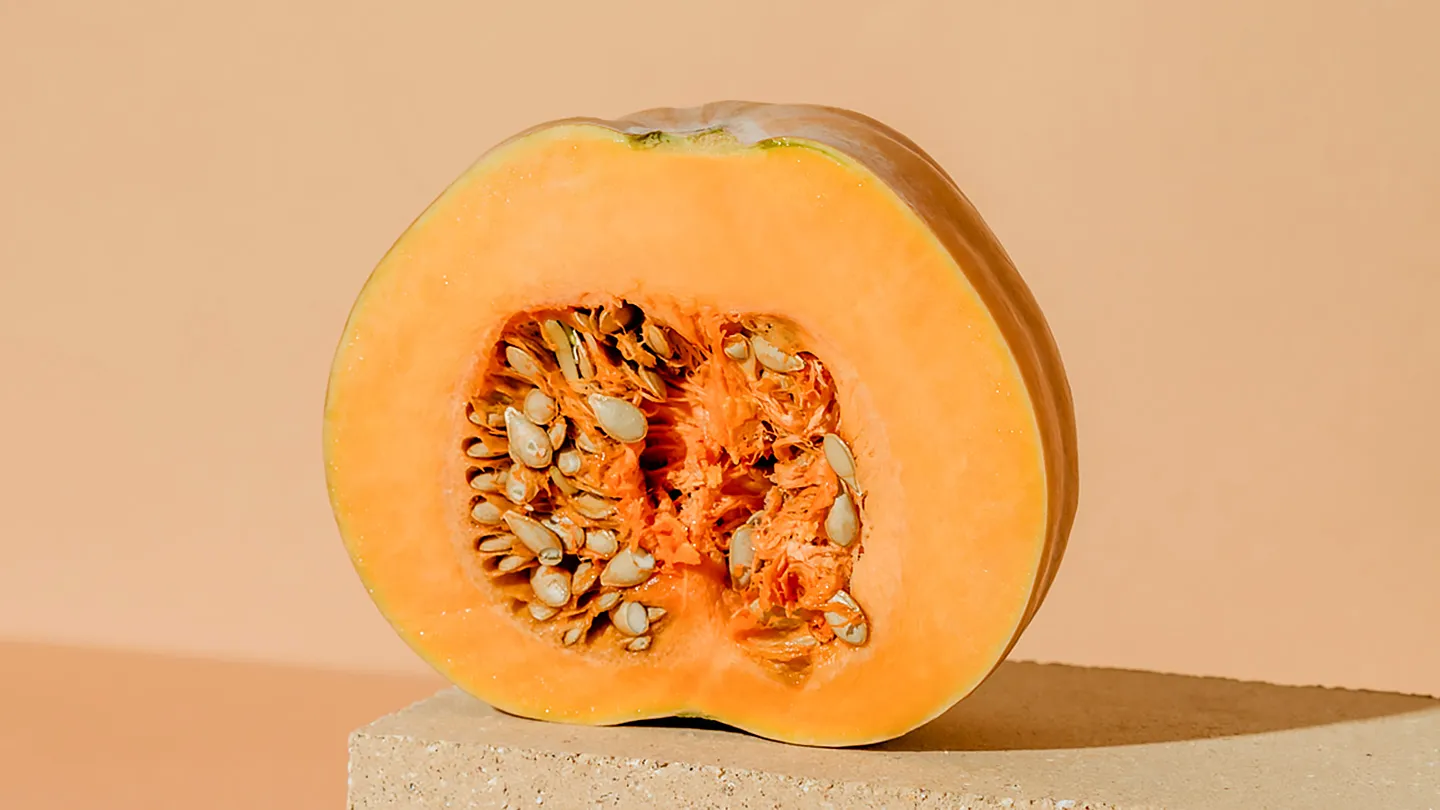
7 Possible Health Benefits of Pumpkin You Should Know About
From immune support to healthy digestion to cardiovascular health, potential pumpkin benefits are vast — and there’s research to back them.
1. Fiber and Pectin in Pumpkin Flesh May Aid Digestion
Dietary fiber is an essential nutrient that’s mostly associated with fueling the digestive tract and preventing constipation, but its benefits go far beyond that. In addition to improving gut health, fiber supports cardiovascular and metabolic health and encourages longevity.
[3]
Despite the many benefits of fiber, many people don’t get enough of this nutrient, constituting a public health concern.
[4]
One cup of cooked pumpkin flesh packs 2.7 g of fiber, making it an excellent source. Pumpkin flesh is also rich in pectin, a type of soluble fiber. “Pectin is a natural prebiotic, which helps feed the good, healthy probiotic microbes in the gut,” says Jenna Volpe, RDN, who’s based in Austin, Texas. She adds that this is why pumpkin tends to be well tolerated in low-FODMAP and irritable bowel syndrome-friendly meal plans. The prebiotic strains in pectin may support the gut microbiome by stimulating the growth of beneficial bacteria, according to lab studies.
[5]
2. Potassium in Pumpkin May Help Lower Blood Pressure
Bananas aren’t your only option when it comes to getting enough potassium. One cup of cooked pumpkin provides 564 mg of this nutrient, which can help lower blood pressure levels — and in turn help reduce the risk of heart disease and stroke.
[6]
“A diet plentiful in potassium helps lower blood pressure in those with or at risk of hypertension by causing the kidneys to excrete excess sodium,” Blake explains.Potassium is an essential nutrient, yet Americans aren’t getting enough of it. According to the National Institutes of Health, potassium is considered a nutrient of public health concern, since the U.S. population consistently consumes less than the recommended amount.
[7]
The American Heart Association recommends 4,700 mg of potassium per day for the average adult. There is such a thing as too much potassium, since it can be harmful to anyone with kidney disorders.
[8]
3. Pumpkin’s Beta-Carotene Converts to Vitamin A, Which Has Antioxidant Properties
If you’ve ever wondered what gives the classic jack-o’-lantern its notorious orange color, you can thank a red-orange pigment called beta-carotene, which the human body converts to antioxidant-rich vitamin A. Beta-carotene is a type of carotenoid, a class of pigments found in fruits and vegetables that also act as antioxidants.
“Pumpkin is a naturally abundant food source of the potent antioxidant beta-carotene, which supports healthy eyes, skin, and immunity,” Volpe says. While it can vary by pumpkin species, beta-carotene is the major carotenoid in most pumpkin varieties, and it’s more concentrated in the peel and pulp than the seeds.
[9]
Other food sources include sweet potatoes, carrots, orange bell peppers, and cantaloupe — see what they all have in common?Vitamin A is an essential nutrient, and it’s mostly associated with vision, immunity, reproduction, and development, but a diet rich in vitamin A or beta-carotene may also reduce the risk of certain cancers.
[10]
The high antioxidant content in pumpkins may contribute to their potential cancer-fighting properties, but more research is needed.
4. Pumpkins Pack a Solid Source of Immune-Boosting Vitamins and Minerals
Your immune system is responsible for keeping your body safe from external invaders that could cause you harm. Needless to say, that’s pretty important, especially during cold and flu season. Certain nutrients are beneficial for your immunity, and pumpkin contains quite a few.
Pumpkin is a rich source of immune-boosting nutrients like iron and vitamins A, C, and E.
[11]
It’s particularly rich in vitamin C and iron, with 11.5 mg and 1.4 mg per 1 cup of cooked pumpkin, respectively.
[2]
Vitamin C may also contribute to the increased absorption of iron.
[12]
And iron helps support immune cell development and function and fights invading pathogens, so consuming iron-rich pumpkin may contribute to feeling healthier.
[13]
5. Also Thanks to Beta-Carotene, Pumpkins May Help Reduce Inflammation
Like getting sick, experiencing inflammation is an inevitable part of life. It’s the body’s response to offending agents or injuries. Acute inflammation is typically short term, such as when you accidentally cut your finger, and usually goes away within a few days.
[14]
But chronic inflammation, which is often linked to stress, isn’t something to ignore.Chronic inflammation can lead to diseases linked to disability and mortality, such as diabetes, heart disease, cancer, kidney disease, and autoimmune disorders.
[15]
Researchers are still studying the ways that food can affect levels of inflammation in the body, but a nutrient-dense diet may help.
[16]
People in many countries use pumpkin for its anti-inflammatory properties. The rich beta-carotene in pumpkins may be partially responsible. Beta-carotene has known anti-inflammatory activity and may have potential use as a therapeutic agent for inflammatory diseases.
[17]
6. Nutrients in Pumpkin May Reduce the Risk of Heart Disease
Heart disease is the leading cause of death in the United States.
[18]
Medical conditions like high blood pressure, high cholesterol, diabetes, and obesity can put you at an increased risk, but so can lifestyle choices like smoking, alcohol use, poor diet, and lack of exercise. Adding nutrient-rich foods like pumpkin, with fiber, potassium, and antioxidants, may help promote heart health.In addition to eating the right amount of calories, exercising regularly, and living tobacco-free, the American Heart Association recommends eating a variety of fruits and vegetables and cutting down on excess sodium for heart health.
[19]
Potassium is a key player in processing sodium, so eating foods high in potassium like pumpkin can help keep your sodium levels in check. Dietary fiber has consistently been shown to reduce the risk of heart disease and improve cholesterol levels.
[20]
Pumpkins are also full of antioxidants, which prevent disease by fending off damage from free radicals — unstable molecules that can cause cell damage.
[21]
7. Pumpkins May Support Eye and Skin Health
Eye and skin health inevitably change with age, but certain nutrients can offer support. Beta-carotene isn’t the only carotenoid found in pumpkin — it also contains lutein and zeaxanthin. “The carotenoids lutein and zeaxanthin are known to help decrease the risk of age-related macular degeneration,” Volpe says. They may also help reduce cataracts.
[9]
Both vitamins and carotenoids act as antioxidants, which may also play a role. “They help combat cell damage, which is responsible for the aging of cells,” Volpe explains, noting that this process can affect the appearance of skin. “Vitamins C and E can prevent processes that cause the acceleration of skin aging,” she adds.
