

Key Takeaways
- Codependency refers to a relationship in which one partner focuses so much on the other partner’s needs that they neglect their own well-being.
- Signs of codependency include feeling like you have to walk on eggshells and always putting others’ needs before your own.
- To overcome codependency, focus on self-awareness and learn to say “no” confidently.
Codependency in a relationship is when each person involved is mentally, emotionally, physically, and/or spiritually reliant on the other. A codependent relationship can exist between romantic partners, but also with family members and friends.
It’s important for us to be able to depend on our friends and loved ones, but past a certain point, it can lead to dysfunctional relationship patterns.
This type of dependence is common in relationships where one of the parties has an addiction, such as to alcohol or other substances. In fact, it is within the field of chemical dependency that the term codependency was born.
“The term was originally coined in the 1950s, in the context of Alcoholics Anonymous” explains Dr. Renee Exelbert, a licensed psychologist and author based in New York, “to support partners of individuals who abused substances, and who were entwined in the toxic lives of those they cared for.”
Codependency is not a clinical diagnosis or formally categorized personality disorder on its own. Generally speaking, it incorporates aspects of attachment style patterns developed in early childhood. Codependency can also overlap with other personality disorders, including dependent personality disorder.
Causes of Codependency
What is the root cause of codependency? “Foundationally, it is due to poor concept of self and poor boundaries,” says Dr. Mark Mayfield, a licensed professional counselor (LPC), “including an inability to have an opinion or say no.”
Research suggests that there may be biological, psychological, and social elements that contribute to codependency:
- Biological: The prefrontal cortex part of a codependent person’s brain may fail to suppress empathic responses. This would create an overabundance of empathy, making it easier to become codependent.
- Psychological: People who are codependent may be psychologically predisposed to care for others. They might also be affected psychologically by negative life experiences, such as growing up with parents who fought a lot or if they are a victim of neglect or emotional abuse.
- Social: Codependency may result from changes in how society views women’s roles or the increased exposure of substance abuse within family units.
Codependency can come in all shapes and sizes, with varying severity levels. It can also develop in all sorts of relationships, says Dr. Mayfield. It can exist in parent-child, partner-partner, spouse-spouse, and even coworker-boss relations.
Signs of Codependency
Codependency refers to an imbalanced relationship pattern. In this pattern, one person assumes responsibility for meeting another person’s needs to the exclusion of acknowledging their own needs or feelings.
Dr. Exelberg
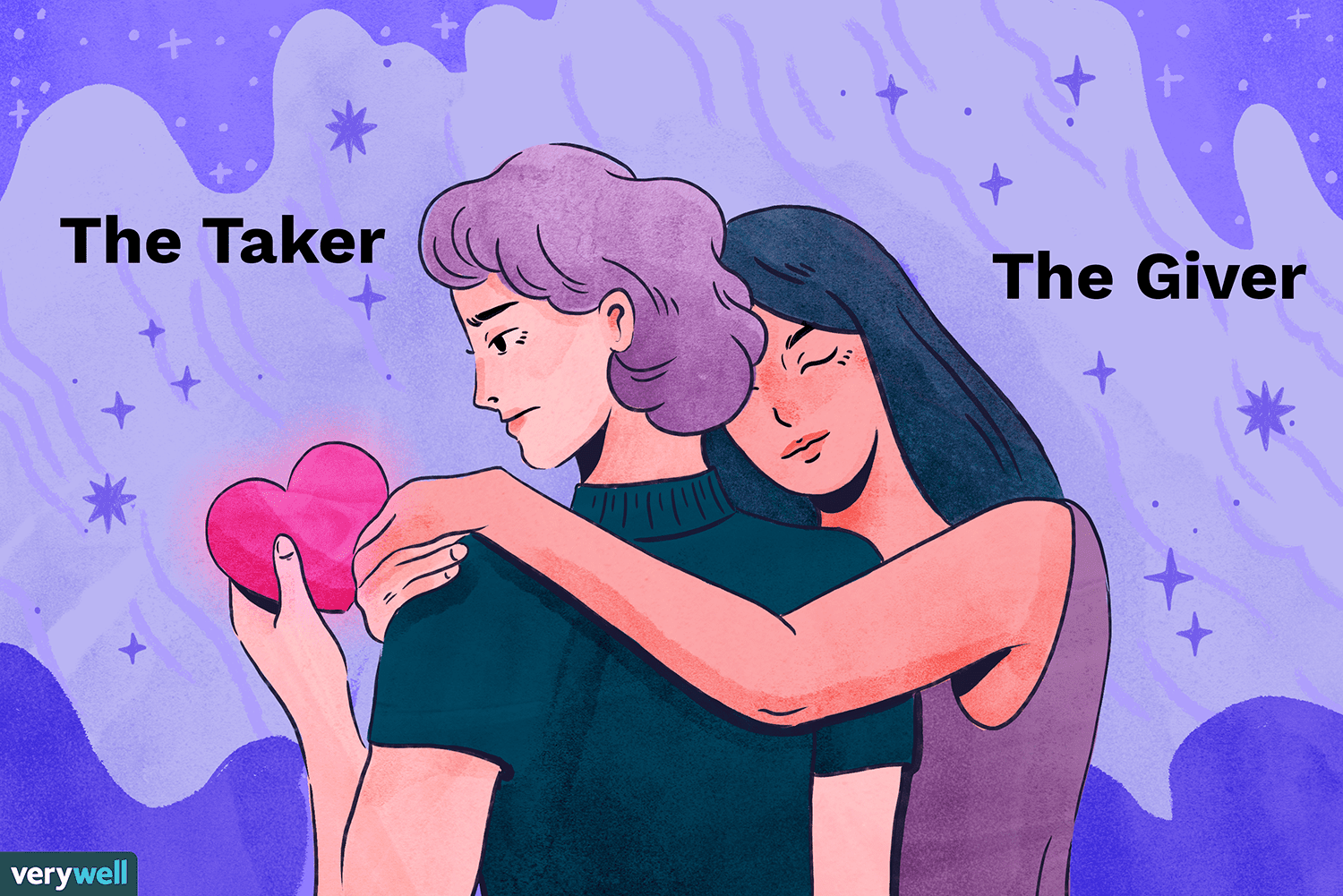
“Codependency is a circular relationship in which one person needs the other person, who in turn, needs to be needed. The codependent person, known as ‘the giver,’ feels worthless unless they are needed by — and making sacrifices for — the enabler, otherwise known as ‘the taker.’
— Dr. Exelberg
Codependent relationships are thus constructed around an inequity of power that promotes the needs of the taker. This leaves the giver to keep on giving, often at the sacrifice of themselves.
Drs. Mayfield and Exelbert share that there are several signs of codependency. If you experience any of the following, you might be the giver in a codependent relationship:
- Having a sense of “walking on eggshells” to avoid conflict with the other person
- Feeling the need to check in with the other person and/or ask permission to do daily tasks
- Often being the one who apologizes—even if you have done nothing wrong
- Feeling sorry for the other person, even when they hurt you
- Regularly trying to change or rescue troubled, addicted, or under-functioning people whose problems go beyond one person’s ability to fix
- Doing anything for the other person, even if it makes you feel uncomfortable
- Putting the other person on a pedestal, despite the fact that they don’t merit this position
- A need for other people to like you in order to feel good about yourself
- Struggling to find any time for yourself, especially if your free time consistently goes to the other person
- Feeling as if you’ve lost a sense of yourself within the relationship
Why Codependency Is Unhealthy
While everyone has loved ones and feels responsible for them, it can be unhealthy when your identity is contingent upon someone else. “Codependency does not refer to all caring behavior or feelings,” says Dr. Exelbert, “but only those that are excessive to an unhealthy degree. Responsibility for relationships with others needs to coexist with responsibility to self.”
Dr. Exelbert goes on to say, “This dynamic has also been referred to as a ‘relationship addiction’ because people with codependency often form relationships that are one-sided, emotionally destructive, and/or abusive.”
In this sense, the inherent issue with codependency is that the giver loses their true sense of self since they’re pouring so much into the taker. Even if the giver doesn’t feel this way immediately—they likely enjoy giving their love and being relied upon—it can develop to unhealthy degrees as the relationship progresses.
Another issue with codependency is that it becomes difficult for the giver to remove themselves from the relationship since they might feel the other person relies on them so much, even if they know in their gut it is the right thing to do. Conversely, the taker will feel so reliant on the giver that they can have difficulty leaving a toxic relationship as well.
Codependency vs. Healthy Interdependence
Simply being reliant on someone else does not mean that you are codependent. In a healthy relationship, each person can rely on the other for a variety of needs. Codependency exists when one person gives more than the other, creating an imbalance of met needs.
How to Overcome Codependency
The first step in overcoming codependent tendencies is to focus on self-awareness. This can be done on your own, of course. But Dr. Mayfield also stresses the importance of therapy to help you really unravel your codependent tendencies.
“Many who struggle with codependency don’t seek help until their life begins to fall apart,” says Dr. Mayfield. “My advice is to be proactive and seek help.”
Once you’re on that journey, try your best to do the following:
- Become the president of your own fan club. “Learn to speak lovingly and positively to yourself,” says. Dr. Exelbert, “and resist the impulse to self-criticize.”
- Take small steps toward some separation in the relationship. Seek activities outside of the relationship and invest in new friendships. Focus on figuring out the things that make you who you are, then expand upon them.
- Actively turn your attention inward when tempted to think or worry about someone else. This takes practice, so be kind to yourself along the way.
- “Stand up for yourself if someone criticizes, undermines, or tries to control you,” says Dr. Exelbert. By working on building your self-esteem, you’ll find more strength in yourself.
- Don’t be afraid to say “no” to someone when you don’t really want to do something.
- Consider trying a support group or group psychotherapy if one-on-one therapy doesn’t appeal to you, suggests Dr. Exelbert.
There’s even an organization called Codependents Anonymous (CoDa) that addresses “needing to be needed” and past relationship dynamics.
Thanks for your feedback!
What is your feedback?
Helpful
Report an Error
Other
