

Key Takeaways
-
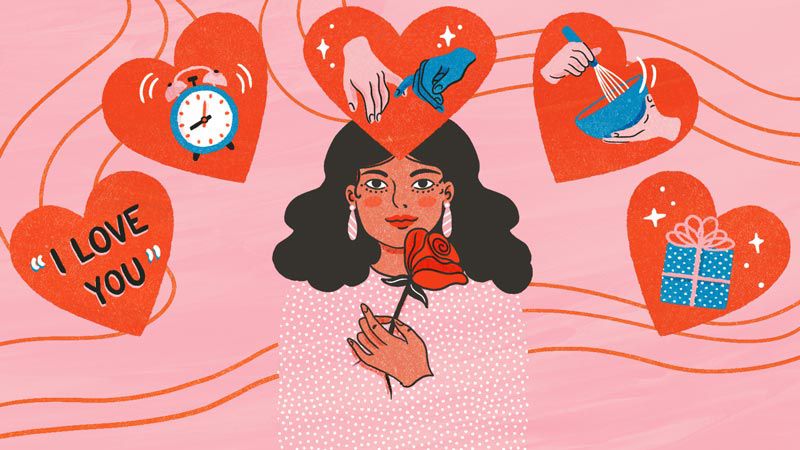
The five love languages (words of affirmation, quality time, physical touch, acts of service, and receiving gifts) describe how people naturally give and receive love.
-
Understanding your own and your partner’s love language may help strengthen communication, connection, and emotional intimacy.
-
While this framework is popular, it has also been criticized for being overly simplistic, so be sure to use it as a helpful guide and not a strict relationship rule.
The five love languages are distinct ways that people tend to receive and express love in a relationship. They are: words of affirmation, quality time, physical touch, acts of service, and receiving gifts.
Knowing your partner’s love language and letting them know yours is a way to help both of you feel loved and appreciated. Identified by author and pastor Gary Chapman, these love languages can serve as a simple framework for expressing love in a way that resonates most with your partner.
The Five Love Languages
Chapman’s book “The 5 Love Languages” was first published in 1992. Before writing the book, Chapman began to notice patterns in couples he was counseling. He realized that the couple was misunderstanding each other’s needs.
That led him to develop five love languages, or ways that people in relationships express love. They are:
1. Words of Affirmation
“Words of affirmation” is about expressing affection through spoken words, praise, or appreciation. When this is someone’s primary love language, they enjoy kind words and encouragement, uplifting quotes, love notes, and cute text messages. You can make this person’s day by complimenting them or pointing out what they do well.
2. Quality Time
Someone with this love language values your full presence when you are together. They feel most loved if you give them your undivided attention and spend time together in meaningful and interactive ways. This means putting down the cell phone, turning off the computer, making eye contact, thoughtfully interacting, and actively listening.
People with this love language are looking for quality over quantity.
3. Physical Touch
A person with physical touch as their primary love language feels love through physical affection. Aside from sex, they feel loved when their partner holds their hand, touches their arm, or gives them a massage at the end of the day, for example.
This person’s idea of a wonderful date night might be cuddling on the couch while watching a movie, slow dancing together with a lot of physical contact, or taking a long walk together while holding hands. They feel most loved when physically interacting with their partner.
4. Acts of Service
Acts of service are nice things you do for your partner that make them feel loved and appreciated, such as:
- Helping with the dishes
- Running errands
- Vacuuming
- Putting gas in the car
If your partner’s main love language is acts of service, they’ll notice and appreciate the little things you do for them. They tend to perform acts of service and kindness for others, too.
5. Receiving Gifts
For someone who resonates with this love language, gifts symbolize love, care, and affection. They treasure not only the gift itself but also the time and effort the gift-giver put into selecting it.
People who enjoy receiving gifts as part of their primary love language do not necessarily expect large or expensive presents; it’s more the effort and thoughtfulness behind the gift that counts.
When you take the time to pick out a gift specifically for them, it tells them you are thoughtful and really know and care about them and their preferences. People with this love language can often remember every little gift they have received from their loved ones because it makes such an impact on them.
Are There Other Love Languages?
According to Chapman’s framework, the original five love languages have stayed the same, but that doesn’t mean there aren’t other ways to express and receive love.
This is just one framework, and there have been several proposed additions over the years. For example, ideas like shared experiences and emotional security. The more we think about ourselves and what fills our relationship tank, the more ways we have to help our partner love us in the way we most want to be loved.
How to Identify Your Love Language
In a relationship, do you feel more loved when your partner:
- Tells you, “I love you,” or praises something you did?
- Surprises you with a meaningful gift?
- Plans a trip for just the two of you?
- Runs the errands or does the laundry?
- Holds your hand while you’re walking?
Answering these questions could give you a hint as to what your love language might be. You could also try to recall the sorts of things you ask for in a relationship or consider how you express love to your partner.
How do I know my partner’s love language?
The easiest way to determine your partner’s love language is to have them take the quiz. You could also consider what they ask for or do most in a relationship. Do they frequently bring you thoughtful gifts? Or tell you they love you? This could be a hint as to what their love language might be.
Your partner’s love language might not be the same as yours. When couples have different primary love languages, there are bound to be misunderstandings. However, if your partner learns to speak your love language (and you, theirs), they will likely feel loved, appreciated, and, ultimately, happier in the relationship.
Take our fast, free quiz to find out your love language:
This love languages quiz was reviewed by Sabrina Romanoff, PsyD.
How Love Languages Can Improve Your Relationship
We all express and receive love in different ways. Learning and understanding those differences can have a meaningful impact on your relationship. According to Chapman, this is one of the simplest ways to improve your relationships.
Learning your respective love languages could also help:
- Promote selflessness: When you are committed to learning someone else’s love language, you are focused on their needs rather than your own. The entire purpose of exploring your love languages together is to learn how to love your partner in a way that is meaningful to them.
- Create empathy: As you learn more about how your partner experiences love, you learn to empathize with them. It helps you step outside of yourself for a moment and take a look at what makes another person feel significant and loved. This can increase their emotional intelligence and learn how to put someone else’s needs above their own.
- Maintain intimacy: Regularly discussing what fills your love tanks can foster greater understanding and intimacy, helping you connect in more meaningful ways. A 2016 review published in the Global Journal of Health Science concluded that improving communication skills can aid intimacy in a marriage.
- Aid personal growth: Loving your partner in ways that are outside your comfort zone can inspire and motivate you to grow and change, and to explore ways of thinking and being that extend beyond yourself.
- Share your love in meaningful ways: When couples start speaking each other’s love language, the things they do for one another become more intentional and meaningful. They are saying “I love you” in ways that make sense to their partners, who then receive that love and feel more noticed, content, and appreciated.
Some research suggests that making the effort to respond to your partner’s love language may have positive effects. One 2022 study found that responding to a partner’s love language was associated with greater relationship and sexual satisfaction.
Using Love Languages in Everyday Life
According to Chapman, love languages also apply to relationships between parents and children, among coworkers, and among friends. For example, if your child’s primary love language is words of affirmation, they’d like to hear verbal praise or “I love you.”
It’s highly individual: A coworker might feel more appreciated if you use one love language instead of another.
Your love language can also change occasionally. For instance, if you had a bad day at work, you might prefer a hug from your partner rather than an encouraging word.
The key is to regularly communicate and ask what your partner needs to feel cherished, heard, appreciated, and loved. Once you have checked in, you can take the information learned and put it into practice.
What Critics Say About the Theory
Though learning the love languages helps many people communicate better with their partners, there are limitations to the theory and how people apply it to their relationships.
Many People Misuse the Languages
Some people get a bit competitive about using love languages, which can actually strain a relationship. For example, you might start keeping track of all the times you use your partner’s love language and compare it to how many times your partner used yours.
The love languages are intended to give you more awareness and options when it comes to giving and receiving intimacy, not to be used for control, punishment, or manipulation.
Love languages can be a way to open up communication and compassion, but you shouldn’t use them as games or weapons against your partner. Some people continue to use their own language (instead of their partner’s) to show they care—and that’s OK.
You can be in a relationship with someone who doesn’t share your love language. Try to be understanding and open. You can recognize and appreciate your partner’s actions even if they don’t match your own language perfectly.
They Don’t Fix Other Relationship Problems
The five love languages won’t fix all of your relationship issues; they are simply one tool of many you can use to improve communication with your partner.
Research shows that couples who use each other’s love languages feel the happiest within their relationships when they also use self-regulation tools to handle their own emotions. While the love languages were a tool, the couples’ accountability for their emotions and behavioral changes contributed the most to their overall happiness.
Your love language can change, too. It’s important to accept and expect that love languages can change over time, especially given life stressors or major changes such as having children.
They May Lead to Pressure on Partners
Many people talk about love languages in the context of committed relationships or marriage. Remember that learning and understanding your own love language is an important tool for you to practice self-love.
You want to avoid putting too much pressure on your partner to consistently express your love language to you.
One study found that the biggest obstacle for couples who were using each other’s love languages was that the recipient often didn’t recognize that their partner was trying to use their love language.
It’s important for the giver to communicate and for the recipient to recognize and show appreciation for their partner’s efforts, even if they don’t exactly meet expectations. This positive feedback will allow learning to happen and changes to continue instead of shaming which leads to shutdown
They Perpetuate Heteronormativity
Chapman’s original model focuses on heterosexual couples even though the theory can apply to any partnership regardless of their sexual orientation. If you’re reading “The 5 Love Languages” and you aren’t in a heterosexual relationship or you aren’t heteronormative, it might feel frustrating to be excluded from the text.
Heteronormativity is the assumption that all people are straight and that romantic and sexual relationships are always between one man and one woman. It assumes that heterosexuality is the default sexual orientation and that it’s the only normal or natural way to express sexuality and attraction.
Certain Relationship Behaviors May Matter More
When it comes to fostering a healthy relationship, certain behaviors may be more important than responding to your partner’s perceived love language. According to at least one study, directly stating how you feel and spending time with your partner may matter most.
While proponents suggest that using the love languages can foster better relationships, a 2025 study found that they were not linked to better relationship satisfaction or perceived love. In fact, the study found that words of affirmation and quality time were most strongly associated with perceived love and relationship satisfaction, regardless of the individual’s primary love language.
