

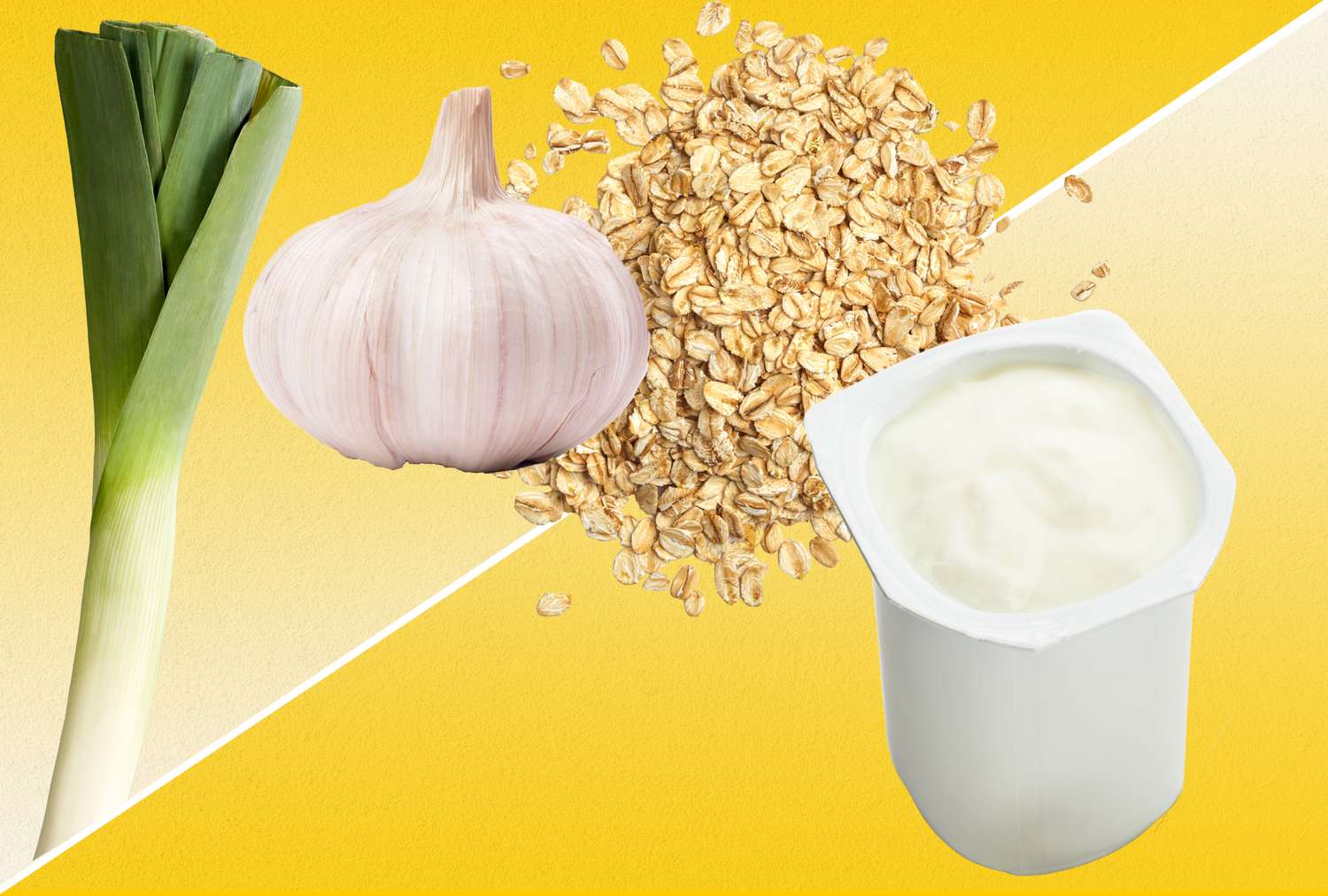
- Both prebiotics and probiotics support a happier, healthier gut.
- If you’re wondering which is better, prebiotics help promote longer-term gut health.
- You can get prebiotics from oats, garlic, onions, leeks, asparagus and bran cereal.
Gut health has officially gone mainstream. Between January 2018 and October 2019 alone, more than 830 articles on the topic were published in the U.S. and Canada. Yet, while many headlines hype the latest gut-health trends, few actually break down the science behind them.
That’s where we come in. With gut health in the spotlight, it seems like every supplement brand has a prebiotic or probiotic product it claims is essential for your well-being. But what are prebiotics and probiotics—and is one any better for you than the other?
To get to the bottom of these questions, we dug into the science to see which of these gut-health heroes reigns supreme. The answer might surprise you.
Are Prebiotics or Probiotics Better for Gut Health?
Both prebiotics and probiotics are important for gut health, but prebiotics may offer more long-term benefits. But before we dive into that, it’s helpful to know the differences between the two. Probiotics are beneficial live microorganisms that, when consumed in sufficient quantity, provide a health benefit to the host (that’s you). They are usually bacteria, but can also include some types of yeast. Prebiotics, on the flip side, are unique fibers that feed the good bacteria that already reside in your gut. So, basically, prebiotics are the fuel that keeps your good gut bacteria happy and healthy.
“Both prebiotics and probiotics play an important role in gut health, but I tend to place a greater emphasis on prebiotics,” explains Kara Hochreiter, M.S., RDN, LD. “While probiotic-rich foods provide beneficial bacteria for the gut microbiome, these microbes are transient, meaning they pass through the digestive tract rather than taking up long-term residence.”
“Not to mention, supplementing with random probiotics doesn’t do much good unless you know exactly which strains your body actually needs,” she says. “When you eat a diverse, prebiotic-rich diet, you naturally create a healthy and robust ecosystem that makes additional probiotic supplementation less essential.”
Benefits of Prebiotics
The interesting thing about prebiotics and probiotics is that they are often studied together. That makes it difficult to tease out whether one is better than the other, since they can work together synergistically. However, research does show that prebiotics have a few pretty stellar advantages. When they reach your gut, they increase the production of beneficial compounds, called short-chain fatty acids. Because SCFAs support the gut lining and immune system and reduce inflammation, they keep your gut healthy over the long haul. Prebiotics also improve stool consistency and regularity, promoting bowel health. If that weren’t enough, certain types of prebiotics, like the beta-glucan fiber in oats, can also help lower cholesterol.
“Prebiotics are foundational because they enhance the health of your existing microbiome,” says gut-health expert Jessie Wong, M.Acc., RDN, LD. “Almost everyone can benefit from gradually increasing prebiotic-rich foods—especially when combined with regular hydration, stress management and movement.”
The best way to reap the benefits prebiotics offer is by eating a wide variety of plant foods. However, if you’re looking for the top sources, think garlic, leeks, onions, Jerusalem artichokes, asparagus and bran cereal.
Benefits of Probiotics
Probiotics have multiple benefits, such as easing some of the symptoms of irritable bowel syndrome or providing protection from diarrhea while traveling or after a course of antibiotics. But they aren’t one-size-fits-all. “The benefits of probiotics are strain-specific,” says Wong. “That means one strain might help with bloating, while another helps constipation—and others may do nothing at all or even make symptoms worse. That’s why selecting a probiotic based on marketing usually doesn’t work.”
While probiotics supplements may be flying off store shelves, you can get these good-for-you bacteria from some foods, especially yogurt and kefir. “These foods deliver beneficial bacteria in their natural form, along with extra nutrients you won’t find in a capsule,” says Hochreiter. What about other fermented foods, like tempeh and miso? While these may offer some health benefits, they don’t provide enough beneficial live bacteria to technically qualify as probiotics.
Other Strategies to Support Gut Health
Prioritizing gut health is key to building and supporting a healthy lifestyle for the long haul. While eating lots of prebiotic- and probiotic-rich foods is a great start, these expert-backed strategies can further promote better gut health.
- Eat a Wide Variety of Plants: A diverse, plant-rich eating pattern helps beneficial gut bugs thrive! Plants are naturally packed with gut-healthy fiber. A good rule of thumb is to aim for 25 to 38 grams of fiber per day from a variety of vegetables, fruits, nuts, seeds, whole grains and legumes. If you’re new to the fiber train, proceed slowly to reduce bloating, and be sure to drink lots of water to keep things moving.
- Slow Down: How you eat is equally as important to your gut health as what you’re eating. Take time to sit down and chew thoroughly to allow your body to digest and absorb nutrients.
- Stay Consistent: Just like a toddler, your microbiome loves rhythm and predictability. Focus on a consistent eating schedule, eating meals at regular times each day. If possible, try to avoid late-night eating to support better digestion and promote sounder sleep.
- Support the Gut-Brain Connection: Psychological stress, sleep quality and physical activity can affect the relationship between your gut and your brain. “When you calm your nervous system, you calm your gut,” says Wong. Focus on stress-management techniques that promote a well-rounded, centered you. Consider deep, diaphragmatic breathing to reduce stress and improve digestion. Try gentle movement (like a 10-minute walk) after meals to enhance digestion. And don’t forget those seven to nine hours of nightly sleep for better overall health and mood.
Our Expert Take
While probiotics may seem to reign supreme over prebiotics, gut-health experts suggest this may not be the right hierarchy. Prebiotics feed the beneficial bacteria that already live in your gut, helping to build a more resilient microbiome. And you don’t need a supplement to get your fill. Focusing on prebiotic-rich foods, like oats, garlic, onions, leeks, asparagus and bran cereal, is an easy way to feed your gut the prebiotics it needs to stay in tip-top shape. While you’re at it, don’t forget to add in some probiotic-rich yogurt or kefir. Even though prebiotics may have a slight edge over probiotics, combining the two doubles your chances of gut-health success.
