

- Getting your digestive system to settle might involve getting your nervous system to settle.
- If you’re prone to stress-related digestive troubles, try a pre-eating breathing exercise.
- Drinking cold water, humming or using a stimulation device might also help with digestion.
There’s no denying the connection between stress and digestion. Whether you sometimes get butterflies in your stomach from anxiety or are among the one-third of people with irritable bowel syndrome (IBS) who experience stress-related symptom flares, it’s not uncommon for your mental state to impact your gut.
We can’t always wave a magic wand and eliminate stress in our lives, but there’s a simple habit experts say is worth a try for soothing digestion: a brief pre-meal mindful breathing routine. “Slow, deep diaphragmatic breathing for a couple of minutes before meals actually switches off the stress mode and activates the ‘rest and digest’ mode, which improves digestive function,” says Alyssa Simpson, RDN, CGN, CLT.
The Role of the Vagus Nerve in Digestion
The beneficial effects of breathing on digestion stem from activation of the vagus nerve. This longest cranial nerve in the body, originates at the base of the brain and extends down through the abdomen, connecting to major organs, including those in the digestive system. It’s something of a superhighway between gut and brain. “It allows the brain to communicate with the gut about things like the release of digestive enzymes, stomach acid and bile, and how quickly or slowly food should move through the digestive tract,” says Simpson.
When we’re stressed, though, the messaging between gut and brain can get disrupted. “Stress pinches off this signaling [of the vagus nerve], which can lead to digestive symptoms, changes in motility and decreased nutrient absorption,” says Simpson.
Fortunately, the right breathing exercises can get things back on track. “When you are in a more centered state from deep breathing, your vagus nerve will send out signals to tell your body to go into rest and digest mode,” says integrative psychiatrist Claire Brandon, M.D. “This helps with re-regulating digestion and sensations in the gut.”
Breathing Exercises to Try
Ready to put stress to rest before you eat? Try any of these exercises before a meal.
Diaphragmatic Breathing
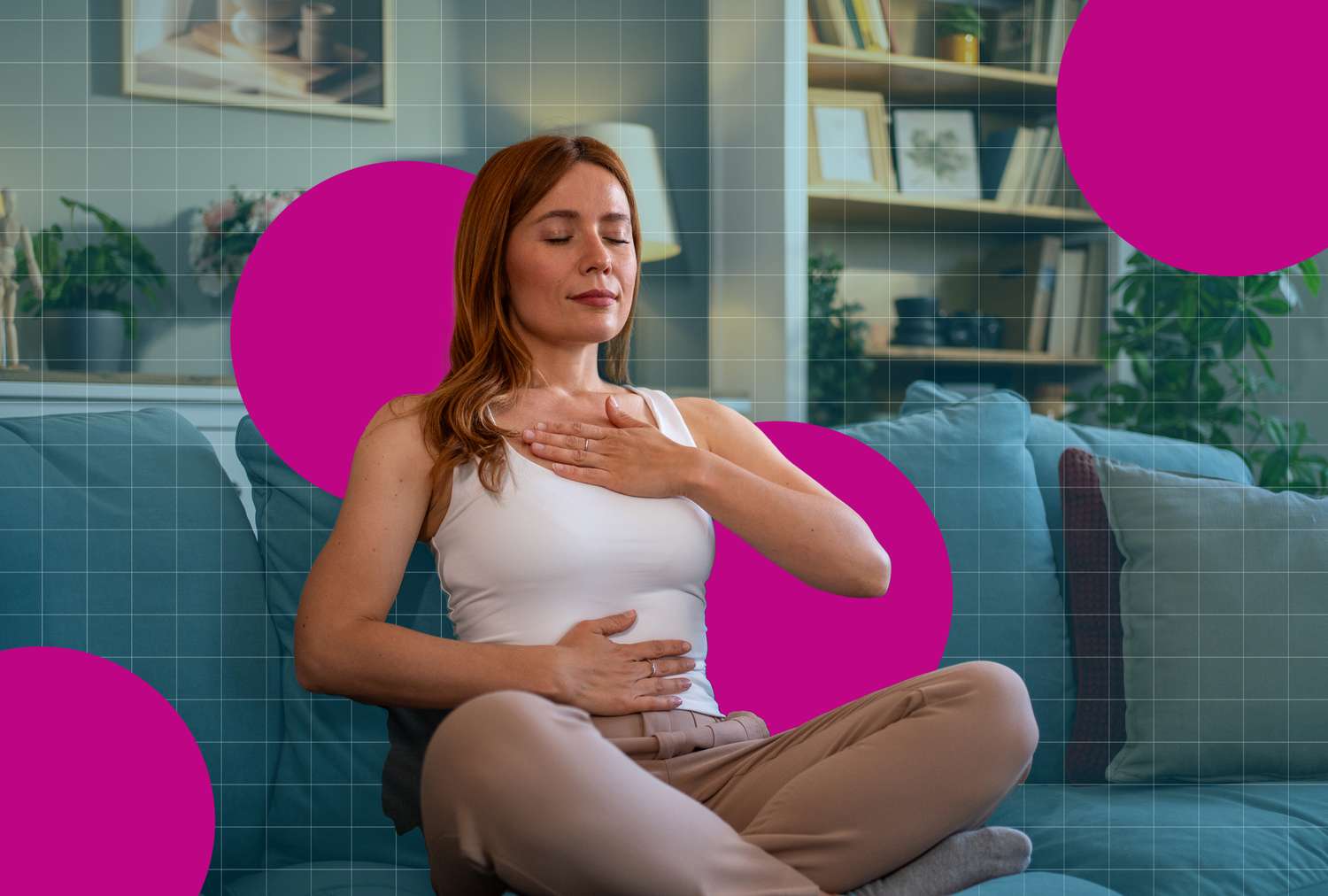
True to its name, this type of breathing uses the diaphragm to create deep, relaxation-inducing inhales and exhales. “This is where you breathe deeply into your belly, with the exhale being longer than the inhale,” says Simpson. (Try it lying down—if you can see your belly lifting upward and outward, you’re doing it correctly.)
The really good news for digestion: Diaphragmatic breathing has been linked to improvements in IBS and better quality of life in people with gastroesophageal reflux disease (GERD).,
Resonance Breathing
Bringing mealtime stress under control might mean syncing your breath to a specific rhythm. Resonance breathing involves inhaling softly for five and a half seconds, then exhaling for five and a half seconds to empty your belly and lungs. You can picture each breath as a circle.
According to Simpson, there’s good clinical evidence for resonance breathing as a tool for better digestion. A recent study found that resonance breathing was effective for shifting the body into a parasympathetic (aka “rest and digest”) state. “This rhythm has a regulating effect on your heart rate and gives the vagus nerve a predictable pattern to follow, which helps you to feel calmer and less tense even after just a couple of minutes,” says Simpson.
Box Breathing
If resonance breathing is like drawing a circle, box breathing is like drawing a square. Picture your breaths forming a four-sided box: inhale for 4 seconds, hold for 4 seconds, exhale for 4 seconds, then hold for 4 more seconds.
Though there’s not a lot of research showing this specific type of breathing regulates digestion, but Simpson says it’s likely, given that box breathing can enhance mood and reduce anxiety. “Those pauses where you’re holding your breath actually help to downshift your nervous system and deactivate that fight-or-flight mode,” adds Simpson.
4-7-8 Breathing
4-7-8 breathing involves inhaling to the count of 4, holding your breath to the count of 7, and exhaling to the count of 8. Brandon says it’s “a pretty direct path” toward activating the vagus nerve. “If you do this before eating, you’re telling your body it’s safe to take it slow as you eat—there is no threat.” A study found that people who performed this style of breathing after bariatric surgery improved their anxiety levels and overall quality of life.
Other Ways to Stimulate Your Vagus Nerve
You can perform mindful breathing anywhere, anytime—so it may be the best go-to for stress reduction before a meal. However, it’s not the only way to stimulate your vagus nerve. Consider these strategies, too.
- Humming. There’s good reason why humming is often seen as a cheerful practice. As the vocal folds engage, they stimulate the vagus nerve, promoting the communication between gut and brain. So go ahead and hum along with the radio (or any other music you like)!
- Drinking a glass of cold water. A study found that cold stimulation (especially at the neck) stimulated the vagus nerve and improved heart rate variability—a sign of reduced stress. Brandon says drinking cold water can do the trick. “The temperature change will target the vagus nerve and slow down your autonomic nervous system,” she says.
- Using a vagus nerve stimulation device. If you’re really serious about perking up the vagus nerve, you might invest in a vagus nerve stimulation device. Emerging research shows these noninvasive vibration devices could modulate the nervous system for a sense of greater calm.
Meal Plan to Try
7-Day 1,200 Calorie Meal Plan for a Healthy Gut, Created by a Dietitian
Our Expert Take
Getting your digestive system to settle might involve getting your nervous system to settle—a process you can start before you even sit down to a meal. If you’re prone to stress- or anxiety-related digestive troubles, consider taking a few moments for mindful pre-eating breathing. By sending a sense of calm to the vagus nerve in your brain, you’ll signal to your gut that all is well.
