

Key Takeaways
- Natural remedies, including St. John’s wort, milk thistle, n-acetylcholine, 5-HTP, inositol, and kava, have shown mixed or limited results in studies for reducing OCD symptoms.
- Always talk to your doctor before trying natural remedies for OCD to avoid potential side effects and interactions.
Alternative medicines such as herbal remedies have been growing in popularity especially as treatments for anxiety disorders such as obsessive-compulsive disorder (OCD). When you examine the science behind each treatment, it’s important to take research quality and the consistency of research results in mind. It’s also smart to consider potential side effects and safety concerns.
Natural Treatments for OCD
Nutritional supplements are available for OCD and anxiety. But you should inform yourself about the evidence-based benefits and potential side effects before you decide to take one.
Currently, there is limited evidence that herbal remedies like those mentioned here are beneficial in reducing the severity of OCD symptoms. But research is ongoing.
Most herbal remedies are available at drugstores without a prescription. However, it’s important to talk to your doctor before taking any supplement. In addition to having side effects, many of these nutritional supplements can interfere (enhance or decrease) the actions of prescription medications.
St. John’s Wort
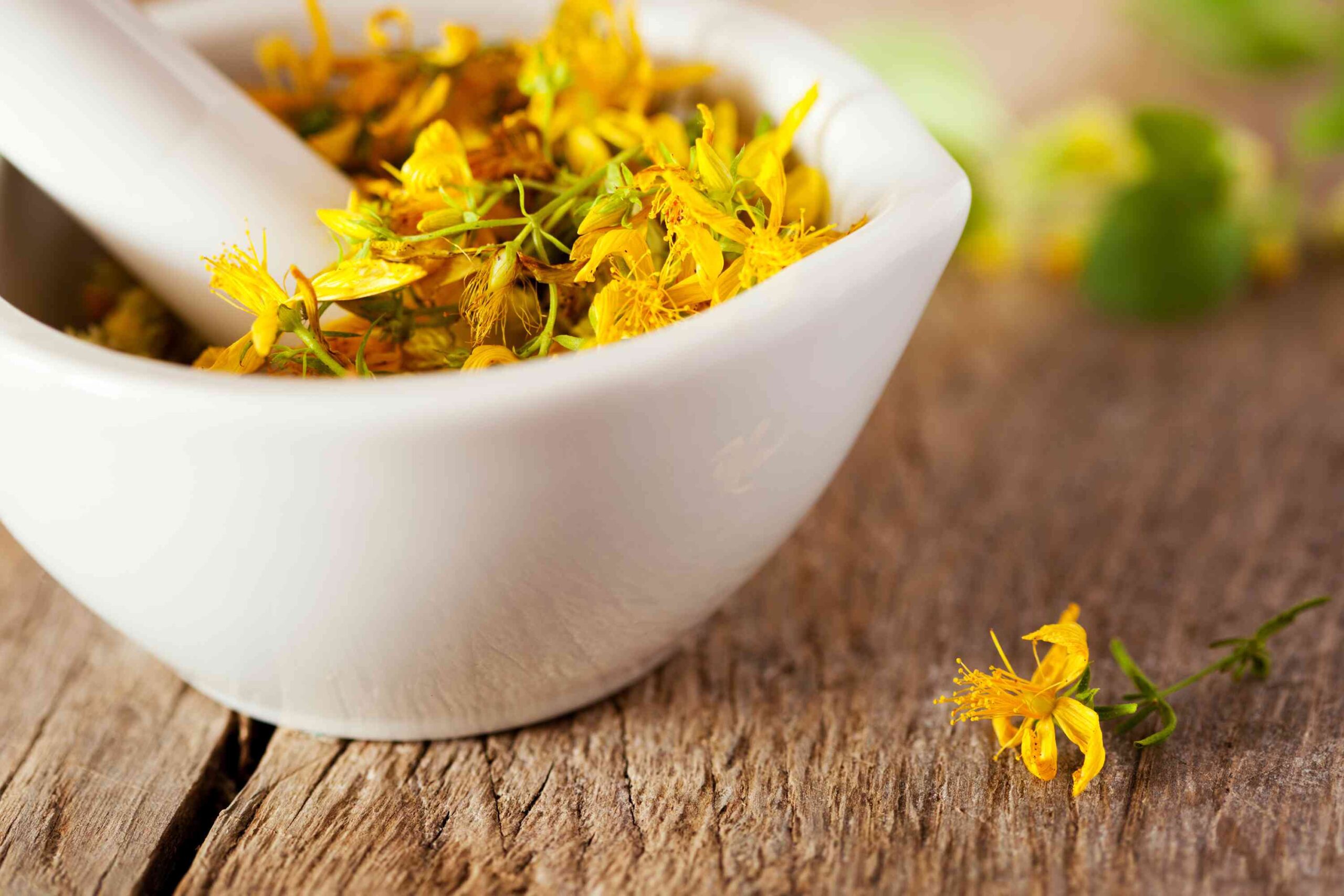
St. John’s Wort (Hypericum perforatum) is best know as an herbal anti-depressive, although its effectiveness in treating depression and other forms of mental illness is controversial. St. John’s Wort has been widely used (and in some cases, licensed) in Europe for decades to treat mood and anxiety disorders.
An analysis has found that hypericum—the chemical that’s thought to be the key ingredient in St. John’s Wort—appears to affect the serotonin system. Disruptions in the serotonin system are thought to be important in the development of symptoms of OCD.
Given that antidepressant medications such as Paxil (paroxetine) and Anafranil (clomipramine) that target the serotonin system are also effective in treating OCD, it has been suggested that St. John’s Wort could be an alternative therapy for reducing OCD symptoms. But, the evidence that St. John’s Wort is an effective treatment for OCD is limited.
A case study (one patient) suggested that St. John’s Wort was effective in reducing symptoms. A second study (12 people with OCD) found that it produced a significant reduction in symptoms that were similar to what would be expected with treatment with a selective serotonin reuptake inhibitor (SSRI) antidepressant medication. Neither study properly accounted for the placebo effect.
In both cases, the people participating in the research studies were told upfront that they were going to be receiving St. John’s Wort in the hopes of reducing their OCD symptoms. Simply knowing that they were receiving a potentially beneficial treatment could have been enough to cause people to feel better.
At least one randomized-controlled trial looked at whether St. John’s Wort was effective in reducing OCD symptoms. In the study, 60 people randomly received either St. John’s Wort or placebo.
The reduction in symptoms among those who took St. John’s Wort was no different than it was in those who took a placebo. Results like this question the effectiveness of St. John’s Wort as an OCD treatment.
Milk Thistle
Milk thistle (Silybum marianum) is an herbal remedy that has long been used in Iran. In 2010, a double-blind, placebo-controlled study compared the effects of milk thistle to the antidepressant Prozac (fluoxetine) in treating OCD (600 milligrams of milk thistle vs 30 milligrams of Prozac daily).
It was found that there was no significant difference between milk thistle and Prozac for OCD symptoms.
N-Acetylcysteine
N-Acetylcysteine is an amino acid that moderates glutamine in the brain. N-acetylcysteine helps produce glutathione, an important antioxidant. A single study of a single person found that N-acetylcysteine improved the actions of the SSRI Luvox (fluvoxamine), resulting in a significant decrease in OCD symptoms.
5-HTP and Inositol
Since the dysregulation of serotonergic and glutamatergic pathways in the brain appears to occur with OCD, other herbs that work in this pathway have also been considered for their possible benefits. Some of these include 5-hydroxytryptophan (5-HTP) and inositol.
A 2020 double-blind, randomized controlled trial with a placebo control found that 5-HTP could be effective as an augmentative treatment for moderate-to-severe OCD.
Kava (Piper Methysticum)
Kava is an herbal medication found in clinical trials to reduce anxiety, nervous tension, restlessness, and mild depression. It has been used for hundreds of years in Polynesia, the Micronesia Islands, and Hawaii.
The key constituent in Kava is kavalactone, which stimulates production of both serotonin and gamma amino butyric acid (GABA) in the body which produce a calming effect to the body. It’s best to take Kava from a water-based extract at less than 250 mgs per day. Kava is not recommended during lactation or pregnancy.
Kava has been banned or restricted in some countries after suggestions that it may cause liver problems in some individuals.
Herbal Remedy Research Standards
There are special considerations to take into account when looking at scientific studies that investigate the effectiveness of herbal remedies for OCD, anxiety disorders, or any other mental health condition. Sometimes, study results sound impressive because basic research standards were compromised.
Lack of Standardization
First, studies using herbs that are not in a standardized form may have varying activity levels of chemical components. Studies must consider the plant’s accurate identity and whether the active constituents come from the plant’s leaf, root, seed, or stem.
Lack of Placebo Comparisons
Studies evaluating the effectiveness of medications should also include a placebo treatment group that receives a “sugar pill” that is inactive and could not possibly account for any reduction in symptoms. By using a placebo treatment, it is possible to tell if the actual drug had an effect or not.
Potential for Bias
Lastly, it is important that neither the researchers nor the study participants know who is receiving what treatment until the study is over to avoid bias.
A medical study in which neither the patient nor the physicians know who is using the medication or supplement and who is receiving a placebo is called a double-blind study.
Natural Treatments for OCD Can Have Side Effects
Although many consumers believe that herbals are safer and have fewer adverse effects than prescription medications, treatments like St. John’s Wort are not regulated as closely as conventional medications are and they may cause unpleasant or even dangerous side effects in some people.
Herbal treatments can also interfere with prescription medications that you may already be taking.
For example, if you are currently taking an SSRI to treat OCD, it is essential that you consult your treating physician before taking St. John’s wort, as it could affect your body’s ability to metabolize it. This could lead to a problem known as serotonin syndrome.
Because kava may harm the liver, taking this herbal remedy with alcohol may increase this risk.
Other Complementary Therapies
Don’t forget that there are other alternatives for treating the symtoms of OCD. Beyond supplements, lifestyle interventions such as mindfulness meditation, acupuncture, and yoga may be effective as well.
Unfortunately, there have been few clinical trials looking at these interventions for people with OCD and those that have been done are of fairly poor quality. Yet, unlike prescription drugs and herbal medications, lifestyle interventions rarely have significant side effects and may also help reduce stress.
Keep in Mind
Complementary treatments are often most effective when they are used to augment other evidence-based interventions. Treatments for OCD typically include medication and therapy.
Medicines that may be prescribed include selective serotonin reuptake inhibitors (SSRIs) or tricyclic antidepressants (TCAs). Therapies that may be helpful include cognitive-behavioral therapy (CBT) or acceptance and commitment therapy (ACT).
Research suggests that around 32% to 70% of people with OCD can achieve symptoms remission with long-term treatment.
If you do decide to try a natural treatment for OCD in addition to your regular treatment, always talk to your doctor first. You will need to tell them about any medications, supplements, or substances you are also taking to prevent potential drug interactions.
