

Key Takeaways
- Suboxone withdrawal symptoms usually last for a week, but some can last up to 10 days.
- Do not change your dose or stop taking Suboxone without talking to your doctor first.
- It’s important to reach out for help to manage feelings like anxiety and depression during withdrawal.
Suboxone (buprenorphine/naloxone) is a prescription medication used to treat opioid use disorder(OUD). While it doesn’t produce psychoactive effects, Suboxone is still an opioid—which means that you will experience withdrawal symptoms if you try to quit it suddenly, aka “cold turkey.” Your doctor may recommend tapering your dose over time to minimize withdrawal symptoms.
How Long Does Suboxone Withdrawal Last?
If you are planning to stop taking Suboxone, it can be helpful to know what to expect in terms of how long withdrawal symptoms might last.
Symptoms of Suboxone withdrawal usually last for a week but may last up to 10 days.
Specific withdrawal symptoms may occur at different times, so while some might fade quite quickly, others may linger for a bit longer. For example, muscle aches and joint pain typically decline after the first 72 hours, while feelings of restlessness and anxiety may last for up to a week. Other physical cold-like symptoms, such as a runny or stuffy nose, generally disappear after 10 days.
However, you may experience feelings of general discomfort and opioid craving for a few months. Talk to your doctor about what you can do to manage these continued feelings. Your doctor can prescribe medications that may help, or you might try counseling, support groups, and lifestyle changes to help manage continued discomfort and cravings that you might experience.
Symptoms of Suboxone Withdrawal
If you are using Suboxone as directed for the treatment of opioid addiction or to treat pain, you can expect to experience withdrawal symptoms if you miss a dose or try to quit abruptly.
Physical Symptoms of Withdrawal from Suboxone
Suboxone causes most of the physical symptoms typical of opioid withdrawal. These include:
- Chills
- Goose bumps
- Muscles aches and pains
- Nausea or vomiting
- Runny nose
- Stomach cramps or diarrhea
- Sweating
- Tremors or twitching
- Teary eyes
If you take Suboxone to treat opioid addiction, then your withdrawal symptoms should be less severe than what you have experienced in the past.
To get a better idea of how mild to moderate opioid withdrawal symptoms compared to more intense symptoms, you can check out the Clinical Opiate Withdrawal Scale (COWS). Health professionals use this scale to determine the severity of opioid withdrawal syndrome.
Psychological Symptoms of Suboxone Withdrawal
Some psychological symptoms of Suboxone withdrawal include:
- Anxiety
- Depression
- Restlessness
Additionally, the psychological challenges associated with withdrawal are not always caused by withdrawal itself. Withdrawal can trigger the return of mental health problems that were muted by drug use, such as anxiety and depression.
After withdrawal, people are also forced to take a good look at the damage that their drug addiction has wrought. It is not unusual to struggle with issues of guilt and regret.
Figuring out how to get your life back on track can feel overwhelming and emotionally exhausting. That’s why it’s so important to reach out for help.
Suboxone Withdrawal Timeline
The timeline of Suboxone withdrawal is also a bit different from withdrawal from other opioids. Suboxone is a long-acting opioid, which means withdrawal symptoms can take several days to appear.
Suboxone Withdrawal Timeline
Suboxone withdrawal typically begins within two to four days after taking the last dose, peaks around days three to five, and resolves within seven days.
Sometimes, however, psychological symptoms can linger for several weeks. This may include depression and an inability to feel pleasure.
Recap
Suboxone withdrawal can lead to a number of withdrawal symptoms including cold-like symptoms, anxiety, stomach issues, and muscle aches. Such symptoms usually peak within five days and largely resolve within a week.
Coping With Suboxone Withdrawal
You can avoid the symptoms of withdrawal from Suboxone by working with your doctor to taper down your dose. Tapering means gradually reducing your dose over time.
Tapering Schedule
Suboxone tapering schedules typically take place over the course of 7 to 28 days.
Some studies have shown that overall success (measured by a period of prolonged abstinence) tends to be better with a shorter, seven-day taper. However, one study found that many people attempt to self-taper without medical supervision, which is associated with poor success rates.
Other studies have found that withdrawal symptoms are managed best by a slow, flexible tapering schedule. With a flexible taper schedule, your doctor can slow the dose reduction if you experience any uncomfortable symptoms.
Do Not Taper On Your Own
If you have been acquiring your Suboxone illicitly or do not have a close relationship with your doctor, it can be tempting to try tapering down on your own. Tapering on your own increases the likelihood of failure. Unsuccessful attempts to quit are discouraging and psychologically distressing.
If you are still struggling with withdrawal despite the Suboxone taper, your doctor may recommend one or more support medications.
Withdrawal Medication Treatment
Lucemyra (lofexidine hydrochloride) is a medication approved by the FDA in May 2018. It is the first non-opioid medication approved to treat the symptoms of withdrawal. Lucemyra works by reducing the release of norepinephrine, a neurotransmitter believed to play a role in withdrawal symptoms.
Because it does not contain an opioid agonist, Lucemyra treatment can begin immediately after your last dose of Suboxone. It is currently approved to treat healthy adults for a maximum of 14 days following opioid cessation.
Lifestyle Changes
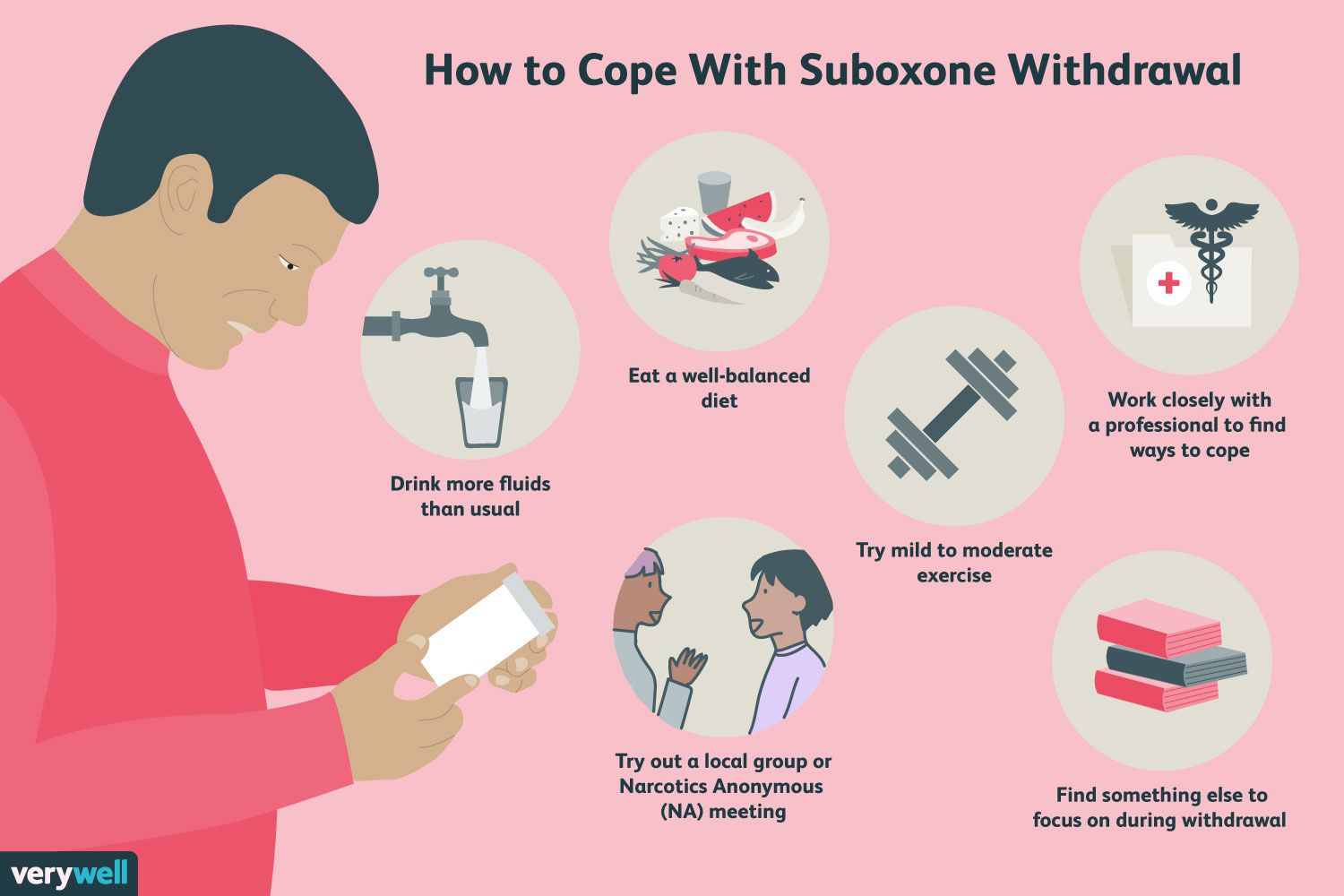
If you are struggling with Suboxone withdrawal it may help to drink more fluids than usual to prevent dehydration. It’s also important to eat a well-balanced diet to keep vitamin and electrolyte levels up.
Work closely with a doctor, counselor, or physical therapist to develop new ways of coping with pain during and after withdrawal. Practice relaxation techniques (meditation, listening to music, etc.,) to help you deal with anxiety and agitation. Try mild to moderate exercise to help you deal with restlessness.
Find something else to focus on during withdrawal, such as a television show, book, or hobby. Get support and encouragement from a local community group or Narcotics Anonymous (NA) meeting.
Recap
Following the tapering schedule recommended by your doctor is the best way to minimize or avoid Suboxone withdrawal. In some cases, your doctor may prescribe other medications to help you with your withdrawal symptoms.
Suboxone Relapse Potential
Opioid withdrawal is often unpleasant, but it is very rarely dangerous. When it comes to Suboxone, complications are even more unlikely. Still, it is important to work closely with a medical professional during your Suboxone taper.
The biggest threat to people withdrawing from Suboxone is the risk of relapse.
Relapse is common among people with opioid use disorders and is generally considered a normal part of the recovery process. But people who have been taking Suboxone are typically further along on the path to recovery.
A relapse at this point can be both discouraging and dangerous because your tolerance will have dropped substantially. Relapsing after your tolerance has decreased can lead to a dangerous or potentially fatal opioid overdose.
Overdose Help
If you are in immediate danger or experiencing severe medical symptoms, please get to your nearest emergency room immediately.
Quitting Suboxone During Pregnancy
If you are quitting Suboxone because you’re pregnant or breastfeeding, you should definitely talk to a doctor.
Suboxone is not recommended during pregnancy, but buprenorphine without naltrexone is. Depending on your situation, your doctor may recommend an accelerated taper or a switch to buprenorphine or methadone, which have been proven safe during pregnancy.
Long-Term Treatment for Opioid Use Disorder
If you have been using Suboxone to treat your addiction, you are already ahead of the game. Suboxone allows you to develop a long-term treatment strategy without being distracted by the discomfort of withdrawal.
Treatment Plan
After Suboxone, a long-term treatment plan should focus on preventing future relapse. Talk therapy plays a very important role in relapse prevention. Once you come off Suboxone, you will have beaten your physical dependence on opioids, but not the psychological aspects of addiction.
Talk therapy can help you figure out why you began using drugs in the first place. You can learn to identify specific situations and feelings that have led you to use in the past. Identifying these triggers helps you recognize and eliminate the negative thought patterns that cause you to make poor decisions.
Research shows that combining talk therapy with medication management is more effective at treating opioid addiction than medication alone.
There are many ways to explore talk therapy. You might consider working one-on-one with a psychologist or mental health counselor in private practice. You can meet with a mental health or addiction counselor at a local community clinic. Or you can explore group therapy programs, which are offered at many hospitals, clinics, and addiction treatment facilities.
