

Key Takeaways
- The symptom stages for alcohol withdrawal vary, but usually follow a typical timeline that peaks within a few days of quitting.
- The severity of withdrawal symptoms can range from mild discomfort to severe, potentially dangerous complications like seizures or delirium tremens.
- Talking to your healthcare provider can help you manage symptoms and improve outcomes.
People can experience a wide range of symptoms when they quit drinking alcohol, which can range from mild to moderate to severe. The decision to quit drinking is a big one, but you might wonder what the symptom stages for alcohol withdrawal are, so that you know what to expect.
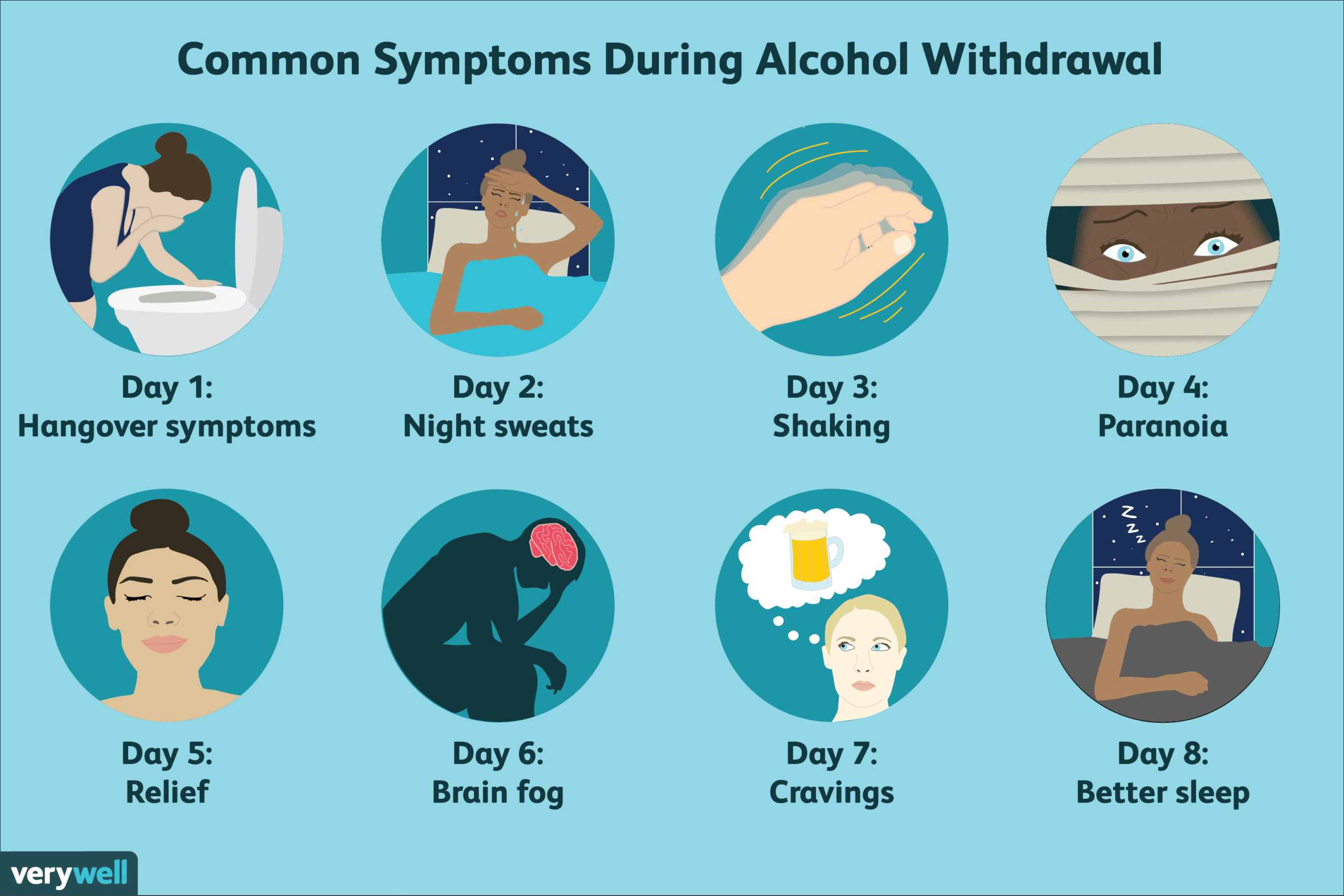
However, know that there is no “normal” when it comes to alcohol withdrawal. Not everyone experiences withdrawal the same way, and symptoms can stop and start at different times for each person. Read on to see our readers’ comments about what they experienced in the first 30 days after quitting.
Verywell / Brianna Gilmartin
Symptoms During Each Stage of Alcohol Withdrawal
Alcohol withdrawal usually follows a three-stage timeline of symptoms ranging from mild to severe. Not everyone experiences all three stages, and a person’s experience will depend on their drinking history and other factors.
The symptom stages of alcohol withdrawal are:
- Stage 1 – Mild withdrawal: Stage 1 is considered mild withdrawal and involves symptoms such as headache, reduced appetite, insomnia, and heart palpitations. This stage usually starts within 6 to 12 hours of having your last drink.
- Stage 2 – Moderate withdrawal: This stage is characterized by symptoms seen in stage 1, along with other symptoms like excessive sweating, fever, increased systolic blood pressure, rapid breathing, and anxiety. Such symptoms tend to appear 12 to 24 hours after having your last drink.
- Stage 3 – Severe withdrawal: In addition to stage 2 symptoms, people in stage 3 also experience severe tremors and anxiety. Without treatment, this stage can progress to more complicated withdrawal characterized by potentially life-threatening symptoms like seizures and delirium tremens.
What Helps Alcohol Withdrawal Symptoms?
Your body and mind are undergoing enormous change as you adjust to sobriety. A healthcare provider can prescribe medications that can help you manage symptoms such as shakes, anxiety, and insomnia.
Those who sought help from their healthcare providers and were given medications to alleviate their symptoms reported milder, shorter-lived symptoms overall than those who quit on their own. Benzodiazepines are typically used to treat seizures, but your healthcare provider may prescribe other medications to help treat other symptoms.
Press ‘Play’ for Advice On Getting Sober
Hosted by therapist Amy Morin, LCSW, this episode of The Verywell Mind Podcast, featuring Dirty Heads vocalist Jared Watson, shares the strategies that helped him overcome addiction. Click below to listen now.
Subscribe Now: Apple Podcasts / Spotify / Google Podcasts
Readers Share Firsthand Experiences with Alcohol Withdrawal
Almost 8,000 responses were gathered to the question, “What were your toughest withdrawal symptoms and how did you cope?” The comments reveal a wide variety of symptoms and experiences, even within the same days, from days one to 30 and beyond.
Whereas some experienced mild symptoms in the early days, others reported severe, sometimes frightening ones. Most of those who experience severe alcohol withdrawal symptoms do so because they’re going through their detoxification period “on their own” without the benefit of medical help.
Before you try to quit on your own, talk to your provider for advice and support. Attempting detox on your own can be scary and potentially dangerous. Your provider can supervise this process and may be able to prescribe medications that can help.
Tips for Getting Help
A healthcare provider can help you navigate or even minimize withdrawal symptoms. Be sure to:
- Look for an experienced, reputable professional who specializes in alcohol withdrawal.
- Be completely honest with them so that they can develop an accurate treatment plan for your situation.
- Follow their advice exactly.
If you try to detox on your own, ask someone trusted, healthy, and responsible to keep an eye on you as you go through withdrawal. They can help you get medical attention should you have severe symptoms.
Either way, consider adding a few of these tried-and-true strategies to your efforts:
As time passes, time with someone close or even a pet may help you tame anxiety, negativity, and temptation.
