

Key Takeaways
- Certain medications used to treat depression can lead to antidepressant fatigue.
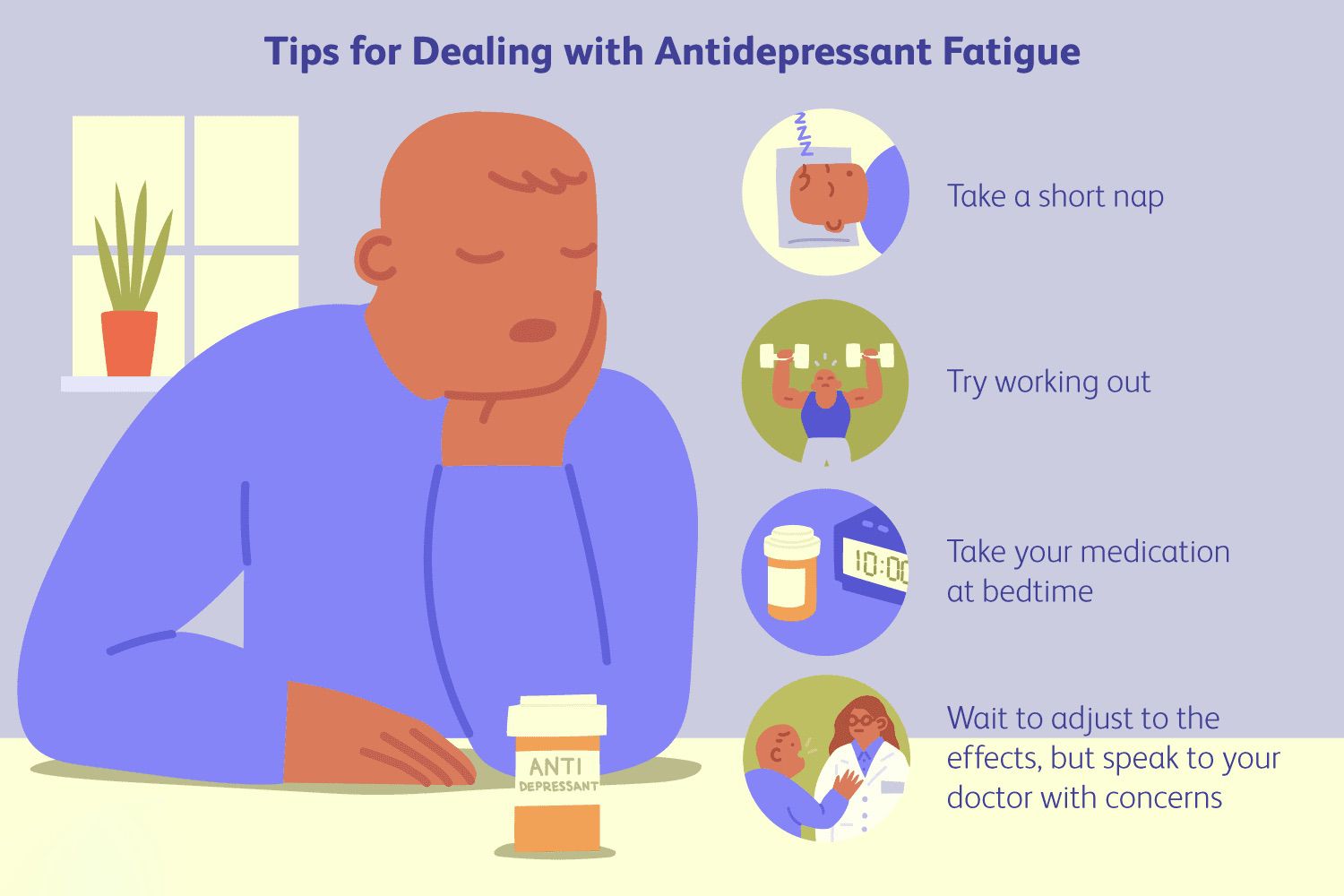
- Practicing good sleep hygiene, engaging in regular exercise, taking your medication at night, and giving your body time to adjust can help reduce fatigue.
- Always talk to your doctor if you are concerned about side effects, including if they are severe or if your depression is worsening.
Antidepressant fatigue happens when medications used to treat depression, like SSRIs, SNRIs, MAOIs, and NDRIs, make you feel tired. Given that depression itself can make you feel exhausted, it can be frustrating to find that the medication you’re taking to treat it isn’t helping your fatigue.
Antidepressants affect certain neurotransmitters that can cause fatigue and other unpleasant side effects. The good news is that you may still be able to take your antidepressant without constantly feeling like you need a nap.
Verywell Mind / JR Bee
What Is Antidepressant Fatigue?
Depression can be exhausting. Fatigue is a common symptom of this condition, but it turns out that it can be a side effect of the treatment as well. Antidepressants can be an important part of a treatment plan, but it’s important to recognize that they can also leave you feeling tired or sleepy.
Luckily, many of the side effects of antidepressants tend to subside as your body adjusts to the medication. Until that happens, however, it can be helpful to know what to expect and how to handle the feelings of fatigue that you might experience.
Whether you’re taking selective serotonin reuptake inhibitors (SSRI) such as Prozac (fluoxetine) or serotonin and norepinephrine reuptake inhibitors (SNRI) such as Cymbalta (duloxetine), you may notice your energy levels feel much lower than usual.
Which Antidepressants Cause Fatigue?
Fatigue is a common side effect of an older class of antidepressants known as tricyclic antidepressants. They include:
- Asendin (amoxapine)
- Elavil (amitriptyline)
- Norpramin (desipramine)
- Tofranil (imipramine)
However, doctors don’t often prescribe tricyclic antidepressants due to their other side effects, which include disorientation or confusion, increased heart rate, and the increased risk of seizures in people who already have seizures.
But, even the newer classes of antidepressants—including SSRIs and SNRIs—often cause fatigue. Some of the major SSRIs that cause fatigue include:
- Aropax, Brisdelle, Paxil (paroxetine)
- Celexa (citalopram)
- Lexapro (escitalopram)
- Prozac (fluoxetine)
- Remeron (mirtazapine)
- Zoloft (sertraline)
Some of the major SNRIs that cause fatigue include:
Monoamine oxidase inhibitors (MAOIs) are another type of antidepressant. While they’re generally not the first to be prescribed (as newer classes of medications generally produce fewer side effects), a doctor may prescribe an MAOI if other antidepressants aren’t working.
MAOIs that may cause fatigue include:
- Emsam (selegiline)
- Marplan (isocarboxazid)
- Nardil (phenelzine)
- Parnate (tranylcypromine)
Wellbutrin (bupropion) is another type of antidepressant known as a norepinephrine and dopamine reuptake inhibitor (NDRI). Wellbutrin may also cause fatigue.
Why Antidepressants Make You Tired
Certain antidepressants work by acting on brain chemicals called neurotransmitters—in particular norepinephrine and serotonin—causing them to linger in the spaces between nerve cells where they carry out their job of regulating mood.
At the same time, these medications affect other neurotransmitters, including histamine and acetylcholine, sometimes leading to unpleasant side effects such as dry mouth, blurry vision, weight gain, and sedation.
It’s that last side effect—sedation—that may be responsible for the fatigue you experience when you take an antidepressant.
What to Avoid If Your Antidepressant Causes Fatigue
If you’re truly fighting to keep your eyes open, there are some important things to avoid doing. Excessive daytime fatigue can be dangerous if you don’t take precautions.
Do not get behind the wheel of your car. Let someone else do the driving, call a car service or cab, or use public transportation until you’ve found a workaround for your fatigue.
Steer clear of alcohol and any medications that also tend to be sedating. The combo of either with your antidepressant could make your fatigue worse.
How to Cope With Antidepressant Fatigue
You may be tempted to give in to exhaustion and set up camp on your couch, but there are other things you can do if your antidepressant is wiping you out. Here are some possibilities.
- Practice good sleep hygiene: Research suggests that having good sleep hygiene plays a big role in combating fatigue and excessive daytime sleepiness. This means not napping during the day if you can help it (so that you’re tired at night and ready for a whole night’s rest), and avoiding electronic devices a couple of hours before bed.
- Nap when needed: Of course, if you’re extremely tired, you may find it beneficial to take a quick nap. The National Sleep Foundation advises that the optimal length of a nap for adults is about 20 minutes and no more than 30 minutes (Napping too long may make you groggier).
- Exercise: Get some exercise. It sounds counterintuitive—how could moving possibly be helpful when it’s the last thing you feel like doing? Research has shown that light to moderate exercise may help reduce fatigue and increase energy levels. When fatigued, try going for a walk around your neighborhood or doing a low-impact activity like yoga or swimming.
- Take medications at night: You may be able to use fatigue to your advantage by taking your antidepressant at night. First, check with a doctor to be sure that it’s OK for you to take your medication at night; but, taking it at night may help you fall asleep more easily—you’ll get the rest you need to feel more alert during waking hours.
- Give it time: Typically, fatigue from antidepressants lasts for a few weeks after you start taking the medication. For most people, the side effects of antidepressants wear off as their bodies become adjusted to the medication.
If you’re experiencing fatigue for longer than a few weeks after starting an antidepressant, be sure to talk to a doctor.
A doctor will likely have you check back in with them after the first few weeks of taking the antidepressant to see if the fatigue continues. If it does, a doctor can formulate a solution for your excessive fatigue—either by changing your dosage or changing your prescription altogether.
When to See a Healthcare Provider
It’s best to report any side effects of antidepressants that you’re experiencing to your prescriber right away. They may tell you to check in after two to three weeks to see if the fatigue you’re experiencing has reduced.
Never stop taking an antidepressant without talking to a provider first, so that you can safely wean off your dosage. Stopping suddenly may worsen your depression symptoms.
If your fatigue hasn’t improved after a few weeks, they may lessen your dosage or prescribe a slower-release preparation of antidepressant.
Or, they may have you try a different antidepressant altogether. Because there is no one-size-fits-all antidepressant, it may take some trial and error before you are able to find a medication and dosage that work best.
In some cases, the provider may supplement your medication with a second drug that’s stimulating, such as Provigil (modafinil). However, there are additional side effects linked with stimulant use that include:
- Diarrhea
- Dry mouth
- Eye pain
- Gas
- Headache
- Loss of appetite
- Muscle shaking
- Nausea
- Nosebleeds
- Sleep problems
More serious side effects of Provigil include rash, blisters, mouth sores, hives, difficulty breathing, frenzied mood, chest pain, hallucinations, anxiety, depression, and suicidal ideation. Be sure to contact your prescriber if you experience these or any other side effects.
Safety Notes to Keep In Mind
Because antidepressants and stimulants increase serotonin levels, in rare cases, taking both types of medications together may result in serotonin syndrome. Symptoms of serotonin syndrome include:
- Agitation
- Restlessness
- Hyperthermia
- Nausea
- Vomiting
- Tremors
- Muscle rigidity
Most cases of serotonin syndrome are successfully treated by discontinuing the medications causing the illness. Benzodiazepines are sometimes used to treat symptoms like tremors. Cyproheptadine may also be used as an antidote.
If you’re experiencing any symptoms of serotonin syndrome, contact a healthcare provider immediately or call emergency services. Moderate to severe cases require hospitalization.
You’re not alone if you find the side effects of antidepressants frustrating to deal with. But remember to always consult with your prescriber before making any changes to your current dosage. Under their supervision, you may try out different dosages, medications, and sometimes, combinations of medications to alleviate your symptoms.
