

Key Takeaways
- Signs of low self-esteem include negative self-judgments, low confidence in your abilities, and a tendency to see yourself negatively.
- Having low self-esteem is linked to worse mental health, low goal achievement, and a lack of social support.
- Strategies such as self-care, self-forgiveness, and seeking outside support can strengthen self-esteem.
Low self-esteem means struggling to see your own worth, which can lead to self-doubt, lack of confidence, and feeling you don’t belong. It involves more than just generally disliking yourself and affects how you value your needs, trust your abilities, and even how you let others treat you.
Verywell / Madelyn Goodnight
How to Recognize Low Self-Esteem
While not a mental illness, poor self-esteem can still affect a person’s thoughts, emotions, and patterns of behavior. Sometimes, its signs can be fairly apparent. Other times, low self-esteem symptoms are much more subtle.
For example, some people with low self-esteem talk negatively about themselves, while others go out of their way to make sure other people are pleased with them. In either case, a lack of personal worth and value can have a negative impact on life and wellness.
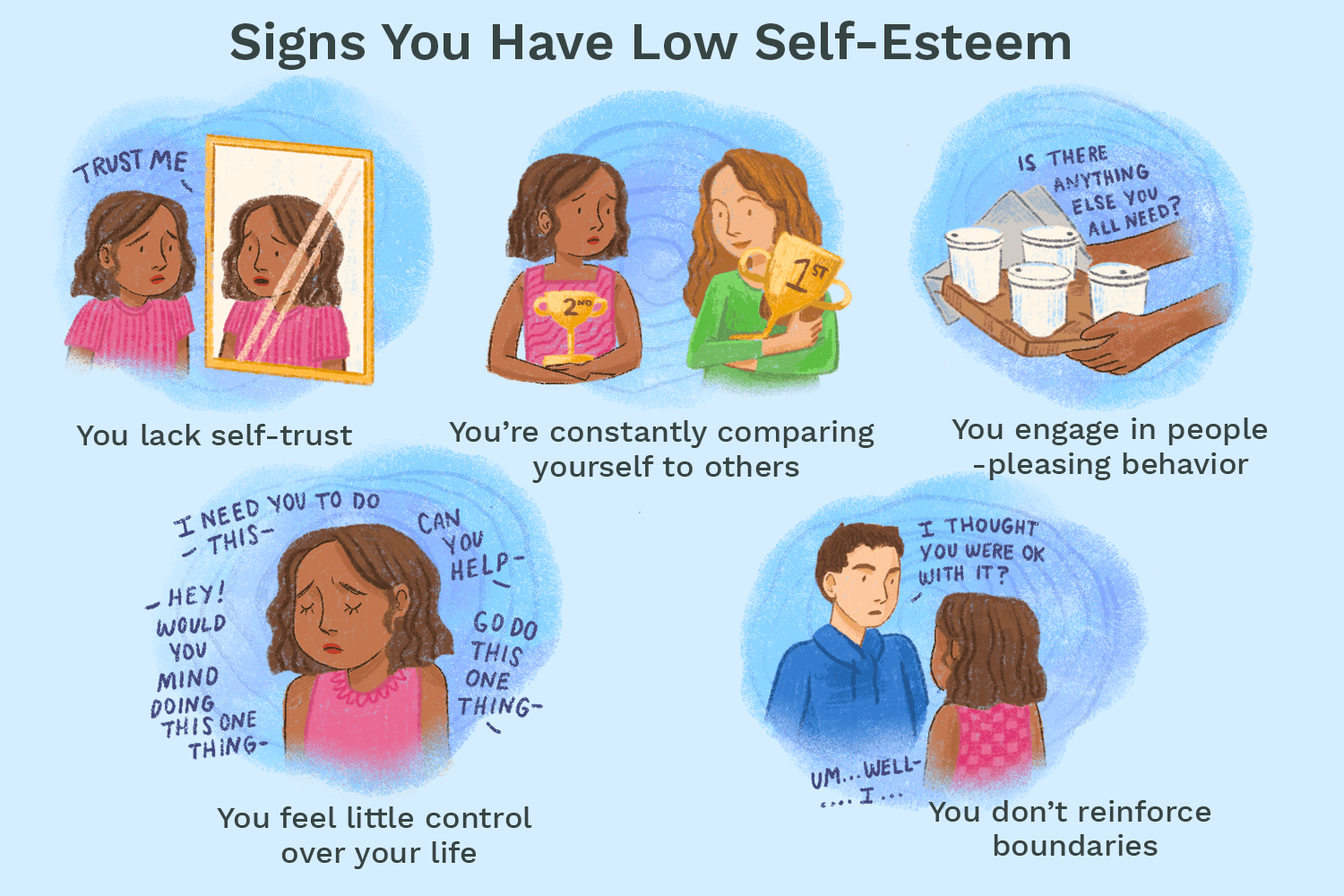
Some common signs or symptoms of low self-esteem include:
- Lack of confidence
- External locus of control
- Negative social comparisons
- Trouble asking for help
- Worry and doubt
- Difficulty accepting compliments
- Negative self-talk
- Fear of failure
- Poor outlook for the future
- Lack of boundaries
- Being a people-pleaser
You can also find online self-esteem tests to help determine whether your self-worth may be low. For instance, the Open-Source Psychometrics Projects offers free access to a version of the Rosenberg Self-Esteem Scale, which is a test used to measure self-esteem in research.
Poor Confidence
People with low self-confidence tend to have low self-esteem, and vice versa. Low self-esteem can play a role in causing a lack of confidence, but poor confidence can also contribute to or worsen poor self-esteem.
Being confident in yourself and your abilities allows you to know that you can rely on yourself to manage different situations. This self-trust means that you feel comfortable and confident navigating many different things you might encounter in life, which can play an important role in your overall well-being.
Finding ways to gain confidence in yourself and your abilities can be helpful. Acquiring and practicing new skills is one tactic you might try. This may even help reduce feelings of anxiousness as research connects a lack of confidence with higher anxiety levels, especially when under stress.
Lack of Control
People who have low self-esteem often feel that they have little control over their lives or what happens to them. This can be due to the feeling that they have little ability to create changes in themselves or in the world. Because they have an external locus of control, they feel powerless to do anything to fix their problems.
Research has found that in situations where people have little control over what happens, having higher self-esteem can help relieve some of the negative effects of this loss of control, which ultimately benefits mental health.
If you feel like you have no control over your life or situation, finding ways to improve your self-esteem may be helpful for your well-being.
Negative Social Comparison
Social comparison can sometimes serve a positive function, enhancing a person’s sense of self. But comparing yourself to others can also damage self-esteem. People with low self-esteem may be more likely to engage in upward social comparison, or comparing themselves to people they think are better than them.
Upward social comparison isn’t always bad. For instance, these comparisons can be a source of information and inspiration for improvement. When people are left with feelings of inadequacy or hopelessness, however, it can inhibit self-esteem.
Social media can also contribute to such comparisons, exacerbating low self-esteem. If you often compare yourself unfavorably to others on social media sites like Facebook and Instagram, your self-esteem may take a hit.
Problems Asking for What You Need
When a person has low self-esteem, they may struggle to ask for what they need. Trouble asking for what you need can be caused by feeling embarrassed. Or you may feel that a need for assistance and support is a sign that you are incompetent.
Because their self-regard is low, someone with low self-esteem might also feel that they don’t deserve help. They don’t prioritize their own desires, so they struggle to assert themselves when they are in need.
Worry and Self-Doubt
Even after making a decision, people who have low self-worth often worry that they’ve made the wrong choice. They doubt their own opinions and may defer to what others think instead of sticking to their choices.
This can lead to a great deal of second-guessing and self-doubt. This makes it harder for people with low self-esteem to make decisions about their lives.
Trouble Accepting Positive Feedback
A 2017 study published in the Journal of Experimental Social Psychology found that low self-esteem is directly correlated to not being able to accept or capitalize on compliments from others.
Positive feedback is often met with suspicion and distrust. Complimentary words do not align with their self-beliefs, so people with self-esteem issues may feel that the other person is being flippant or even cruel.
Because they don’t have a positive opinion about themselves, people who have low self-esteem find it difficult to accept compliments from others.
Negative Self-Talk
Low self-esteem causes people to focus on their flaws rather than their strengths. Rather than build themselves up with positive self-talk, they always seem to have something negative to say about themselves, engaging in negative self-talk instead.
When things go wrong, people with low self-esteem often blame themselves. They find fault with some aspect of themselves, whether it is their appearance, their personality, or their abilities.
Fear of Failure
Because they lack confidence in their abilities, people with low self-esteem doubt their ability to achieve success. Because they fear failure, they tend to either avoid challenges or give up quickly without really trying.
This fear of failure can be seen in behaviors such as acting out when things go wrong or looking for ways to hide feelings of inadequacy. People with low self-esteem might also make excuses, blame external factors, or try to downplay the importance of the task.
Poor Outlook
Low self-worth can cause people to feel that there is little chance that the future will be any better than the present. These feelings of hopelessness can make it hard for people with low self-esteem to engage in behaviors that will bring about positive changes in their lives.
Self-sabotage is a common way of coping with such feelings. By finding obstacles to prevent success, people with low self-esteem are able to find something else to blame for not achieving their goals or finding greater levels of happiness in their lives.
Lack of Boundaries
The ability to set boundaries is often established early in life. Children with caregivers who show them that they are respected and valued are better able to create good boundaries in adult relationships. They are also more likely to have a more positive view of themselves in general.
People with low self-esteem can have a difficult time setting boundaries with others. They may feel guilty or fear that people will stop liking them if they try to establish or maintain a boundary.
A lack of healthy boundaries can create problems when others don’t respect a person’s space and time. The lack of respect not only adds to the person’s stress levels but may also make them feel less valued.
Trying to Please Others
People-pleasing is another common symptom of low self-esteem. In order to gain external validation, people who don’t feel good about themselves may go above and beyond to make sure that others are comfortable and happy.
Pleasing others often involves neglecting their own needs. The person with low self-esteem winds up saying yes to things they may not want to do and feeling guilty about saying no.
How Having Poor Self-Esteem Might Affect Your Life
Self-esteem plays an essential role in your ability to pursue goals, develop healthy relationships, and feel good about who you are. While everyone struggles with their confidence once in a while, low self-esteem can affect your ability to feel happy. It can even make you more susceptible to mental health conditions such as anxiety and depression.
Research suggests that low self-esteem has numerous effects. For instance, having lower levels of self-esteem is linked to a number of mental health issues, including:
Low self-esteem may even play a role in the development of certain mental health conditions, such as depression. Research has also shown that people with low self-esteem are more likely to be at risk for suicidal thinking.
Another effect of low self-esteem is that you may find it more difficult to achieve your goals and form healthy, supportive relationships. It might also make you more sensitive to criticism or rejection.
Where someone with high self-esteem is likely to be able to shake off negative feedback, someone with poor self-value might take it more personally. This can also make people with self-esteem issues more likely to give up when faced with challenges or obstacles.
Research has found that people with low self-esteem often engage in behaviors that are designed to help preserve their limited self-worth. Actions such as acting sad or sulking are used to garner support from others.
Unfortunately, these behaviors tend to backfire. Instead of getting the support and encouragement they desire to help boost their self-esteem, the person often ends up generating negative reactions from other people.
Why Your Self-Esteem Might Be Low
What causes lower self-esteem in some individuals? Several factors could be at play, some of which include:
Some studies connect high amounts of social media use with lower self-esteem in adolescents. However, others warn that social media use, in general, doesn’t always have this effect. Instead, it’s more a matter of the purpose behind its use.
Specifically, social media can have negative effects if it is used as a way to measure your popularity or likability. But if you use social media to share your interests with like-minded individuals, its impact can be more positive.
Physical health and appearance are additional factors contributing to low self-esteem. For instance, one study found that having missing teeth or untreated dental decay negatively contributes to self-esteem.
Ways to Cope When Your Self-Esteem Is Low
Building or fixing low self-esteem often takes time. But there are things you can do to help protect your mental well-being while taking steps to improve your self-regard.
Focus on Hopeful Thoughts
Spend a little time each day focusing on positive, hopeful thoughts. Notice the little things that you are good at and allow yourself to feel proud of them.
Also, think about times in the past when you made it through something really difficult. Remind yourself that even though you might not feel your best right now, you have the ability and strength to get through it.
Care for Yourself
Poor self-esteem can sometimes leave you feeling like you don’t deserve care and consideration. Work on reminding yourself that you need care and look for things that you can do to show kindness to yourself, no matter how small they may be.
One way to practice self-care is to spend some time doing something that you enjoy. Go for a walk, chat with a friend, or engage in a hobby. Caring for yourself also involves regularly making time to rest and relax, giving your body and mind time to recoup and regroup.
Investing in your own care and comfort isn’t an indulgence or reward you have to earn—it’s absolutely vital to both your physical and mental health.
Get Outside Support
If you have low self-esteem, it can be helpful to share your struggles with someone who offers unconditional support. This might be a friend or family member, but it can also be a healthcare provider, therapist, teacher, or clergy member.
Having a network of caring people who value you and want you to value yourself can be beneficial as you work toward improving your self-esteem.
Steps to Build Stronger Self-Esteem
If you are dealing with low self-esteem, there are several things you can do to help improve how you feel about yourself.
- Notice your thoughts: Start paying attention to the automatic negative thoughts you have each day. When these negative thoughts take hold, work to actively identify cognitive distortions, such as all-or-nothing thinking and jumping to conclusions. Then, replace these distortions with more positive thoughts.
- Forgive yourself: If you tend to ruminate over your mistakes or failures, learn how to forgive yourself and move on. Doing so can keep you focused on what you can do better in the future rather than on the negative things that have happened in the past.
- Practice self-acceptance: Let go of the idea that you need to be perfect to have value. If this is how you feel, it can be helpful to work on accepting who you are today. Self-acceptance can still mean there are things you want to work on, but it allows you to it’s recognize that you are worthy of love and esteem—from yourself and from others—exactly as you are right now.
- Value yourself: Spend time reflecting on the things you have accomplished and are proud of. Allow yourself to appreciate your worth and talents without comparing yourself or focusing on areas you’d like to improve. You don’t need to be better to value yourself—but learning to value yourself can help you work toward your goals.
It can be helpful to think of yourself as you would a friend. How would you treat someone you care about who was in the same situation? In many cases, you may find yourself giving them understanding, patience, empathy, and kindness. Show yourself the same unconditional support instead of beating yourself up.
Additional Ways to Increase Low Self-Esteem
Here are a few additional things you can do to help boost your self-esteem:
- Do something that makes you feel good.
- Stay physically active—exercise can help improve mood.
- Think about something you are good at.
- Keep a gratitude journal.
- Challenge negative thoughts.
- Spend time with people who make you feel good about yourself.
- Volunteer to help others.
- Remember that everyone makes mistakes.
- Celebrate your accomplishments, both the big and the small achievements.
If you are experiencing symptoms of poor self-esteem, help is available. Consider talking to a healthcare provider or mental health professional to learn your treatment options. A therapist can help you change the thought patterns that contribute to low self-esteem, boosting your confidence and opinion of yourself and your abilities.
Raising your self-esteem may take some time and effort. But over time, you can learn to better see and appreciate yourself for who you are.
