

Key Takeaways
- DHA is important for brain and heart health, especially during pregnancy and early childhood.
- Pregnant people are advised to take 200 – 300mg of DHA to help with their babies’ brain, eye, and overall development.
- DHA may improve symptoms of ADHD and help protect against age-related cognitive decline.
Docosahexaenoic acid (DHA) is an omega-3 fatty acid essential for brain development during pregnancy and early childhood. It is also linked to improved heart health, better vision, and reduced inflammatory response. This long-chain fatty acid is found in cell membranes throughout the body and helps to transmit messages between nerves.
Adequate levels of DHA help nerve cells communicate with each other efficiently. Consuming adequate levels is crucial for many of your body’s systems and organs—most notably, your brain and heart.
Sources of DHA
The human body produces small quantities of DHA naturally but not enough. The rest must come through other sources such as coldwater fish, grassfed meat, dairy products, omega-3-enriched or pasture-raised eggs, and supplements such as fish oil.
Health Benefits of DHA
DHA offers a wide range of critical health benefits. Here are a few.
Supports Fetal Development
Healthcare providers generally advise pregnant people to take prenatal supplements containing 200–300mg DHA for its effects on brain development. DHA supplementation during pregnancy has been linked to neurological development in infants, as well.
- Autism and ADHD: Higher DHA levels at birth have been associated with better childhood neurodevelopmental health, whereas lower DHA levels were linked to higher rates of autism spectrum disorders and attention-deficit/hyperactivity disorder.
- Brain development: Children of mothers who supplemented during pregnancy demonstrated better problem-solving abilities during the first year of life than control subjects. Likewise, recent research shows a link between mothers’ DHA status and kids’ performance on language and short-term memory tasks at ages 5 and 6.
- Eye health: Babies of mothers who supplemented with DHA had better early visual acuity than those whose mothers did not supplement.
Improves Pregnancy Outcomes
Supplementation with DHA during the later weeks of pregnancy is linked to a decreased risk of early preterm labor. In addition, supplemented pregnancies had lower rates of infants born at 34 weeks or earlier and shorter hospital stays for infants born preterm.
In the study, 350 people were given 600mg DHA or a placebo daily during the last half of pregnancy. Those taking the DHA had longer pregnancies and birthed babies with greater weights, lengths, and head circumferences than those given a placebo.
Essential for Brain and Nervous System Development
The brain is a fatty organ, and 10–20% of its total fats are DHA. Of the polyunsaturated fatty acids in the brain, 90% are DHA, which is especially concentrated in the brain’s gray matter.
In the first six months of life, DHA is crucial for nervous system development. Breastfeeding parents are encouraged to continue taking 200–300mg DHA a day. Most infant formulas also contain DHA.
Low levels of DHA in early childhood are associated with lower literacy ability, whereas higher levels are linked to enhanced cognitive development and performance, memory, and speed of performing mental tasks.
May Alleviate Symptoms of ADHD
Although study results are mixed, some have shown that supplementing with DHA may help ease the symptoms of ADHD.
A small study published in European Child and Adolescent Psychiatry in 2019 found that six months of supplementation with DHA had positive effects on behavioral and cognitive difficulties. Those who took DHA supplements had small improvements in psychosocial functioning, emotional problems, and focused attention.
May Support Brain Health
DHA may help protect against age-related cognitive decline, suggests a 2010 research review from Current Alzheimer’s Research. Analyzing data from previously published clinical trials, the authors found that taking 900mg supplements containing both DHA and EPA (eicosapentaenoic acid), another omega-3 fatty acid found in fish oil, may help treat mild cognitive impairment, but not Alzheimer’s disease.
A 2013 study found similarly promising results but had a small pool of subjects. A retrospective study with more participants (about 800) also showed an association between supplementing with fish oil and reduced cognitive decline—but not in patients who already had Alzheimer’s disease.
May Protect Against Depression
A 2019 review of 26 studies on polyunsaturated fatty acid levels and supplementation in people with depression “showed an overall beneficial effect of omega-3 polyunsaturated fatty acids on depression symptoms.” More research is necessary to understand how DHA and EPA work, together and separately, in managing depression.
May Reduce Risk of Heart Disease
While there was hope for many years that DHA supplementation might improve outcomes in people with heart disease, more recent evaluation has not been able to demonstrate a mortality benefit. However, a 2019 study showed a link between low levels of DHA and EPA and increased incidence of heart attack, stroke, and cardiovascular disease.
May Reduce Inflammation
Lab, animal, and human studies all suggest that DHA plays a role in helping the body mount a response to inflammation. For example, a 2013 review of research concluded that DHA could be a “key tool” in preventing metabolic syndrome, which is associated with inflammation. Metabolic syndrome can lead to type 2 diabetes, heart disease, and stroke.
Possible Side Effects
Although DHA is generally considered safe, taking DHA in the form of fish oil is known to cause a number of side effects, including bad breath, heartburn, and nausea.
What’s more, there’s some concern that fish oil might reduce immune system activity and weaken the body’s defense against infection. In addition, taking fish oil in combination with certain medications (such as blood pressure drugs) may produce harmful effects in some cases. It’s important to consult your physician before combining fish oil with medications.
Fish oil has a blood-thinning effect and should be taken with caution and only after consulting with a physician by people who are on blood thinners or anti-platelet medications.
Dosage and Preparation
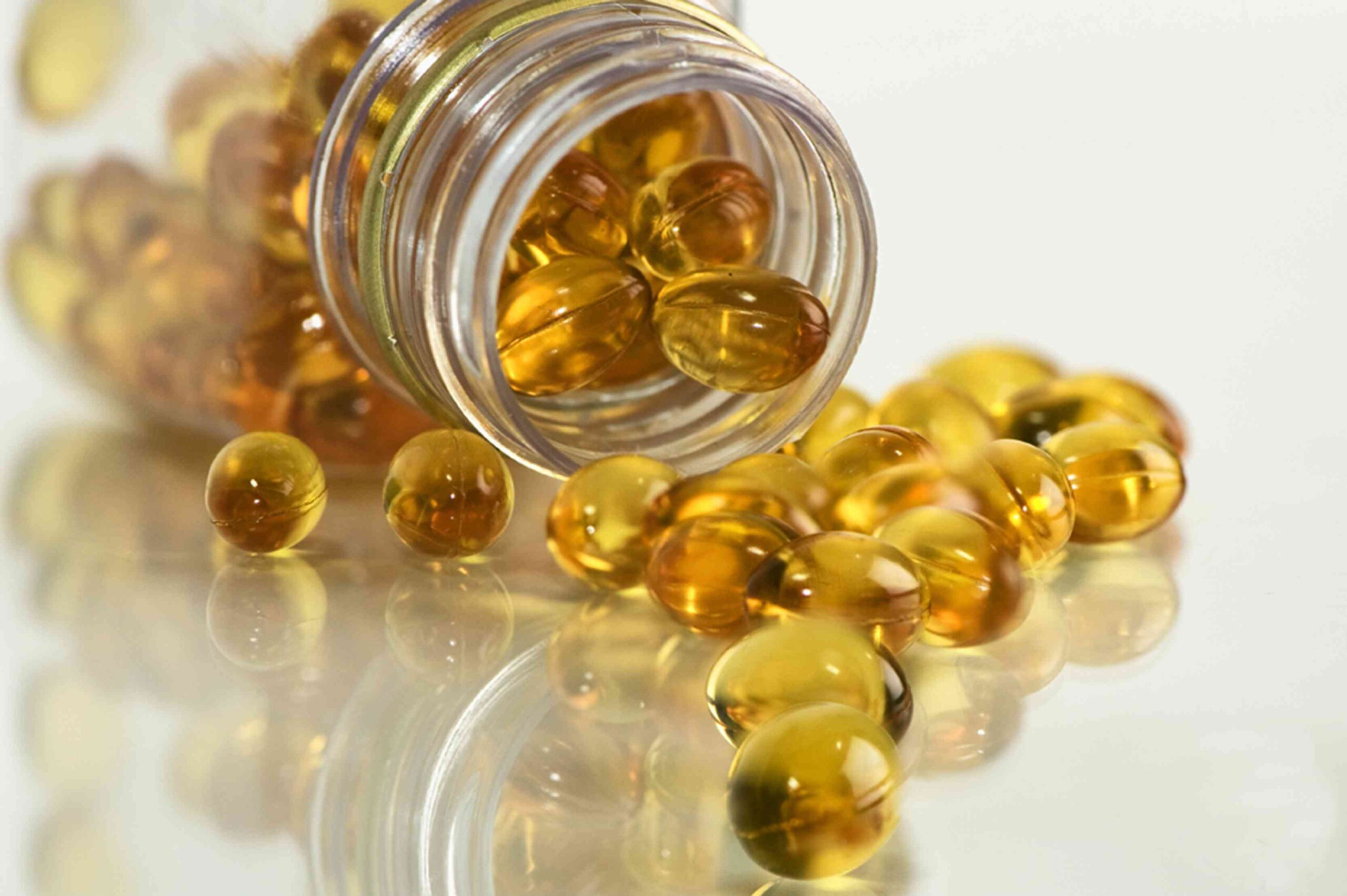
DHA is sold as a gel cap supplement, a gummy chewable, or a liquid. Many dietary supplements contain a combination of DHA and EPA. A typical fish oil supplement provides about 1g fish oil, containing 180mg EPA and 120mg DHA, but check labels because doses can vary.
Most studies use larger amounts of DHA (1,000mg to 2,500mg). If you prefer to avoid fish, you can purchase a DHA supplement made from algae.
Consuming two to three servings of fatty fish, such as salmon, tuna, sardines, mackerel, and herring, per week will provide about 1,250mg EPA and DHA per day. However, people who are pregnant and young children should avoid tuna and other fish that is high in mercury, including shark, tilefish, swordfish, and king mackerel. There is also a small amount of DHA (0.03g per serving) in eggs.
There are no established recommended daily values or adequate intake levels for DHA, except for in babies under 1 year old (who should get 0.5g of total omega-3 fatty acids daily).
What to Look For
Widely available for purchase online, DHA supplements are sold in many drugstores, grocery stores, natural-food stores, and stores specializing in dietary supplements. Supplements are not regulated by the FDA. To ensure you are getting a quality brand, look for an independent third-party seal, such as U.S. Pharmacopeia, NSF International, or ConsumerLab.
While taking DHA supplements may offer certain health benefits, it’s too soon to recommend DHA as a treatment for any condition. It’s important to note that DHA supplements should not be used as a replacement for the standard care of a chronic condition. Avoiding or delaying treatment for a chronic condition in favor of self-treating with DHA may have serious health consequences.
Frequently Asked Questions
-
What are EPA and ARA?
EPA (eicosapentaenoic acid) is an omega-3 fatty acid that is important for health. Many fish oil supplements contain both EPA and DHA.
ARA (arachidonic acid) is an omega-6 polyunsaturated fatty acid. It is also an important nutrient and is added to baby formula. But too much DHA might limit the benefits derived from ARA, so balance is important.
-
When during pregnancy do I start taking DHA?
If you are trying to conceive, you can take a prenatal vitamin containing DHA. This will ensure that you and your baby are getting the benefits of DHA (and other essential nutrients, such as folic acid) from the moment of conception. If your pregnancy was unplanned, start taking a prenatal vitamin as soon as you learn you are pregnant.
While many experts recommend 200mg a day of DHA in pregnancy, recent research suggests that a higher dose may be beneficial. Talk to your doctor to determine how much DHA you need and how best to get it.
-
How long does it take to see results from DHA supplements?
While blood levels of DHA and other omega-3 fatty acids rise quickly when you take supplements, you may not see results right away. Results also depend on what symptoms or conditions you hope to relieve with DHA supplements. You may see changes in mood or pain between 6 weeks and 6 months after you start taking DHA supplements.
