

Key Takeaways
- The peripheral nervous system includes all the nerves outside the brain and spinal cord.
- The somatic nervous system is part of the peripheral system and controls voluntary movement.
- The autonomic nervous system regulates involuntary body functions like heartbeat and digestion.
The peripheral nervous system (PNS) is the system of nerves and ganglia outside the brain and spinal cord. The PNS consists of the peripheral nerves, neuromuscular junctions, cranial nerves, and spinal nerves. This system also carries information to and from the central nervous system. It’s responsible for many body functions, from sensing body temperature to controlling muscle movements.
When you think about the body’s nervous system, the brain and spinal cord probably come to mind. Beyond those vital command centers, however, is an intricate network of nerves that stretch throughout your entire body—the peripheral nervous system. The PNS is responsible for relaying essential messages to and from the brain and spinal cord.
The peripheral nervous system (PNS) is made up of two divisions: the somatic nervous system and the autonomic system. Each part of this system plays a vital role in how information is communicated throughout the body.
Keep reading to learn more about what the peripheral nervous system is, how it works, and its influence on how the body functions, including what happens when there is a problem affecting the PNS.
What Is the Peripheral Nervous System, Exactly?
The body’s nervous system is divided into two parts: the central nervous system and the peripheral nervous system.
- The central nervous system (CNS) includes the brain and spinal cord
- The peripheral nervous system (PNS) includes all the nerves that branch out from the brain and spinal cord and extend to other body parts, including muscles and organs.
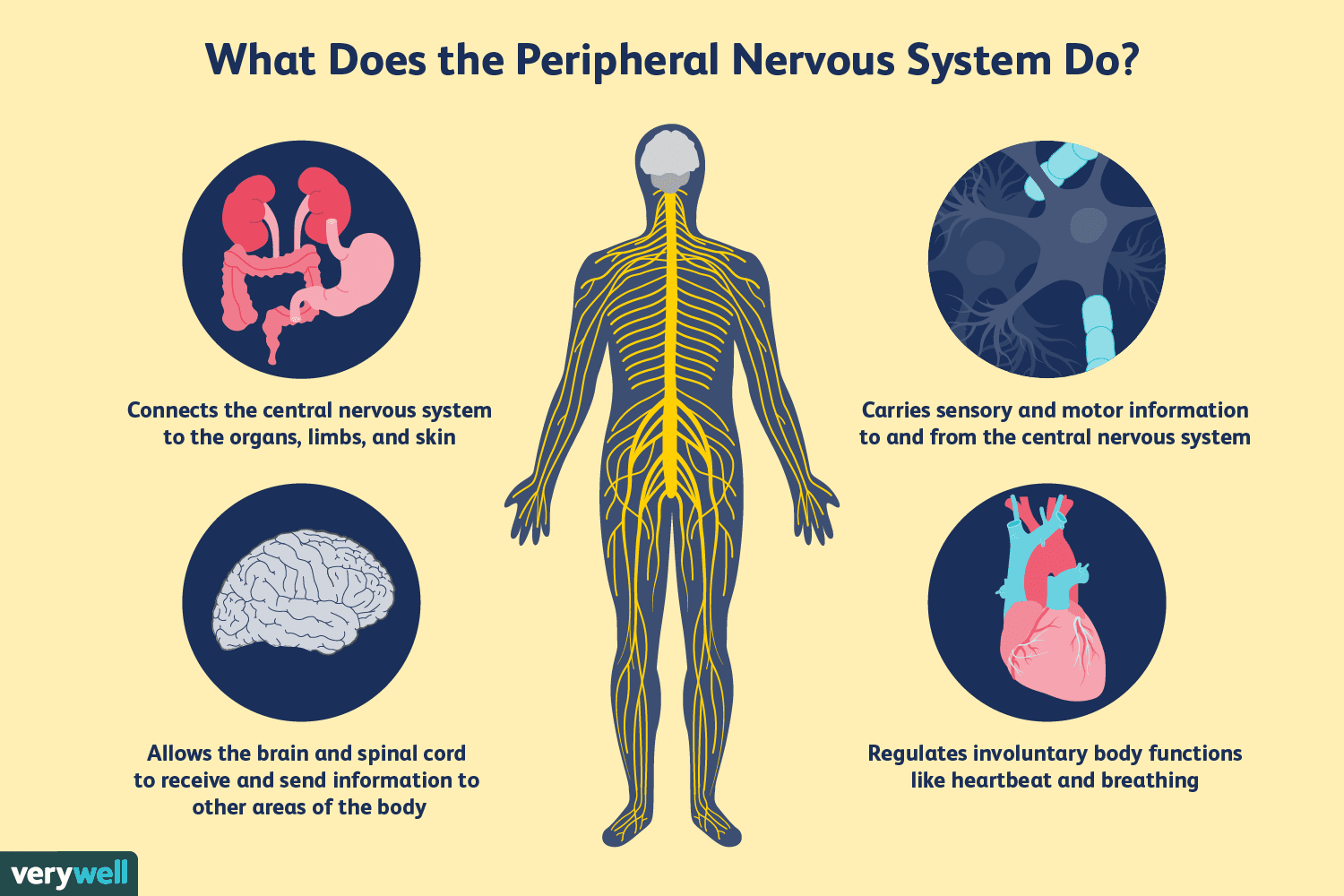
The primary role of the PNS is to connect the CNS to the organs, limbs, and skin.
The nerves of the PNS extend from the central nervous system to the outermost areas of the body. The peripheral system allows the brain and spinal cord to receive and send information to other areas of the body, which allows us to react to stimuli in our environment.
Key Functions of the Peripheral Nervous System
The four primary functions of the PNS are to:
- Control autonomic body functions
- Control motor movements
- Digestion
- Relay sensory information to the central nervous system
Examples of processes controlled by the peripheral nervous system include dilating or constricting the pupils in response to light, stimulating digestion, activating the sweat response, controlling blood flow, and regulating heart rate.
The nerves that make up the peripheral nervous system are actually the axons (or bundles of axons) from nerve cells or neurons. In some cases, these nerves are very small, but some nerve bundles are so large that they can be seen by the human eye.
Structures of the Peripheral Nervous System
The peripheral nervous system itself is divided into two parts: the somatic nervous system and the autonomic nervous system. Each of these components plays a critical role in how the peripheral nervous system operates.
The Somatic Nervous System
The somatic system is the part of the peripheral nervous system responsible for carrying sensory and motor information to and from the central nervous system.
The somatic nervous system derives its name from the Greek word soma, which means “body.”
The somatic system is responsible for transmitting sensory information as well as for controlling voluntary movement. To accomplish this, the somatic system contains two major types of neurons:
- Motor neurons: Also called efferent neurons, motor neurons carry information from the brain and spinal cord to muscle fibers throughout the body. These motor neurons allow us to take physical action in response to environmental stimuli.
- Sensory neurons: Also called afferent neurons, sensory neurons carry information from the nerves to the central nervous system. The sensory neurons allow us to take in sensory information and send it to the brain and spinal cord.
The Autonomic Nervous System
The autonomic nervous system (ANS) is the part of the peripheral nervous system that’s responsible for regulating involuntary body functions, such as blood flow, heartbeat, digestion, and breathing.
The ANS controls aspects of the body that are usually not under voluntary control.
This system allows these functions to take place without needing to consciously think about them happening. It functions automatically, behind the scene, to regulate vital body functions such as your heart rate, respiration, and digestion. It allows your body to run smoothly without conscious effort.
The autonomic system is further divided into two branches:
- Sympathetic system: By regulating the flight-or-fight response, the sympathetic system prepares the body to expend energy to respond to environmental threats. When action is needed, the sympathetic system triggers a response by accelerating heart rate, increasing breathing rate, boosting blood flow to muscles, activating sweat secretion, and dilating the pupils.
- Parasympathetic system: This helps maintain normal body functions and conserve physical resources. Once a threat has passed, this system will slow the heart rate, slow breathing, reduce blood flow to muscles, and constrict the pupils. The parasympathetic nervous system allows the body to return to a normal resting state, which is why it is sometimes known as the rest-and-digest system.
Recap
The PNS is made up of two divisions: the somatic nervous system and the autonomic nervous system. The somatic system contains sensory and motor neurons. It sends and receives sensory information and motor signals. The autonomic system is responsible for regulating involuntary body functions.
Nerves in the Peripheral Nervous System
The PNS is composed of nerves that are responsible for carrying signals between the central nervous system and the parts of the body that lie outside the CNS. This includes information from the senses, organs, and muscles.
The axons of these nerve cells are bundled together and can be found throughout the body. Information is received by the dendrites of these cells, the information travels down the axon to the cell body. The message can then be communicated to other cells.
The nerves that make up the peripheral nervous system connect with either the spinal cord or brain to transmit information to the CNS.
PNS Nerves
The main nerves that make up the peripheral nervous system include:
- Brachial plexus
- Femoral nerve
- Lateral femoral cutaneous nerve
- Peroneal nerve
- Sciatic nerve
- Spinal accessory nerve
- Tibial nerve
Spinal Nerves
Spinal nerves are responsible for transmitting information from the muscles, organs, and glands to the spinal cord. There are 31 spinal nerves that branch out to different areas of the body from the spinal cord.
Cranial Nerves
The cranial nerves are responsible for the receptors found in the head and neck area. Instead of connecting with the spinal cord, these nerves travel directly to the brain. There are 12 pairs of cranial nerves that transmit motor and sensory information from areas including the face, mouth, eyes, nose, and ears.
Recap
The PNS is made up of cranial nerves that connect directly with the brain and spinal nerves that connect with the spinal cord.
Diseases of the Peripheral Nervous System
There are a number of diseases and disorders that can affect the peripheral nervous system.
Problems with the sensory and motor neurons in the PNS can result in changes in sensation, muscle weakness, or muscle paralysis.
Some of the conditions that can affect the PNS include:
- Amyotrophic lateral sclerosis (ALS)
- Carpal tunnel syndrome
- Diabetes
- Epstein-Barr virus
- Guillain-Barre syndrome
- Lupus
- Peripheral neuropathy
- Peripheral nerve injuries
- Rheumatoid arthritis
- Thoracic outlet syndrome
- Tumors
- Vitamin deficiency
Symptoms of PNS diseases and disorders can include numbness, pain, tingling, burning, sensitivity to touch, and muscle weakness.
Recap
Disorders, injuries, toxins, and viruses can cause problems with the peripheral nervous system. Such conditions can lead to symptoms related to sensation, muscle strength, and muscle control.
Treatment for PNS Conditions
Treatment for peripheral nerve problems depends on the cause and focuses on treating the underlying disorder and offering supportive care. For example, some PNS conditions may be caused by injury while others may be related to underlying health conditions, viruses, toxins, or genetic disorders.
In addition to treating conditions that may be causing dysfunction or damage to PNS nerves, treatment may also involve surgery, physical therapy, occupational therapy, speech/language therapy, and respiratory support.
The peripheral nervous system plays a critical role in motor and sensory function. If you are experiencing symptoms such as muscle weakness, numbness, loss of sensation, or sensitivity, talk to a healthcare provider for further evaluation.
Verywell Mind uses only high-quality sources, including peer-reviewed studies, to support the facts within our articles. Read our editorial process to learn more about how we fact-check and keep our content accurate, reliable, and trustworthy.
-
Scott-Solomon E, Boehm E, Kuruvilla R. The sympathetic nervous system in development and disease. Nat Rev Neurosci. 2021;22(11):685-702. doi:10.1038/s41583-021-00523-y
-
Shortell DD, Porges EC. Autonomic nervous system. In: Gu D, Dupre ME, eds. Encyclopedia of Gerontology and Population Aging. Springer International Publishing; 2021:573-578. doi:10.1007/978-3-030-22009-9_666
-
Murtazina A, Adameyko I. The peripheral nervous system. Development. 2023;150(9):dev201164. doi:10.1242/dev.201164
-
National Cancer Institute. Peripheral nervous system.
-
Radić B, Radić P, Duraković D. Peripheral nerve injury in sports. Acta Clin Croat. 2018;57(3):561-569. doi:10.20471/acc.2018.57.03.20
-
Sabia M, Mathur R. Interventional Pain Procedures: Handbook and Video Guide. 1st ed. Springer Publishing Company; 2018. doi:10.1891/9781617052798
-
National Cancer Institute. Cranial nerves.
-
National Institute of Neurological Disorders and Stroke. Peripheral neuropathy.
-
Columbia University Irving Medical Center. Peripheral nerve disorders.
Additional Reading
-
Coon D, Mitterer JO. Introduction to Psychology: Gateways to Mind and Behavior With Concept Maps and Reviews. Cengage Learning.
-
Eysenck MW. Simply Psychology. Taylor & Francis.
Thanks for your feedback!
What is your feedback?
Helpful
Report an Error
Other
