

Key Takeaways
- Schizoaffective disorder is a mental health condition that has both psychosis and mood disorder symptoms.
- People with schizoaffective disorder have periods where symptoms get better and worse.
- If schizoaffective disorder is bipolar type, the person may have manic episodes along with depressive episodes.
Schizoaffective disorder is a chronic mental health condition that combines symptoms of psychosis (e.g., hallucinations and delusions) with symptoms of mood disorders (e.g., mania and/or depression). Depending on what type of mood symptoms are present, schizoaffective disorder is diagnosed as either bipolar type or depressive type.
The prevalence of schizoaffective disorder in the population is believed to be around 0.3%, which is less than for schizophrenia or mood disorders. Research suggests that women are slightly more prone to it, but men tend to develop the disorder at a younger age. It is usually first diagnosed between age 16 and 30 and is rare in children.
Individuals with schizoaffective disorder tend to have periods of improvement followed by periods of worsening symptoms.
Whether you have been diagnosed with schizoaffective disorder or are worried that someone you know may have this disorder or has been recently diagnosed, it is important to understand the common symptoms, how a diagnosis is made, and how treatment can help to reduce symptoms and improve functioning in daily life.
Symptoms of Schizoaffective Disorder
Symptoms of schizoaffective disorder tend to be severe and vary for each individual. They can be broadly categorized into depressive symptoms, manic symptoms, and schizophrenia symptoms.
Those with bipolar type will experience a manic episode and may also have depressive episodes, while those with the depressive type will only experience the depressive symptoms.
Depressive Symptoms
Depressive symptoms of schizoaffective disorder may be psychological or physical. Psychological symptoms include:
- Sadness
- Feeling worthless
- Hopelessness
- Restlessness
- Lack of energy
- Loss of interest in usual activities
- Trouble concentrating
- Guilt
- Self-blame
- Thoughts of death or suicide
Physical symptoms can include:
- Poor appetite
- Weight loss or gain
- Sleeping too much or too little
Manic Symptoms
People with bipolar type schizoaffective disorder may experience mania, which also has both psychological and physical symptoms.
Psychological symptoms can include:
- Risky or self-destructive behavior (e.g., spending sprees, reckless driving, risky sexual practices)
- Euphoria
- Irritable mood
- Racing thoughts
- Grandiosity
- Distractibility
Physical symptoms may include:
- Increased energy and/or activity (e.g., at work, socially, sexually)
- Talking more or faster than usual
- Reduced need for sleep
Psychotic Symptoms
Like the other groups of symptoms, psychotic symptoms may also be divided into psychological and physical effects.
Psychological symptoms can include:
Physical symptoms include slow movements or no movement (catatonia) and poor personal hygiene.
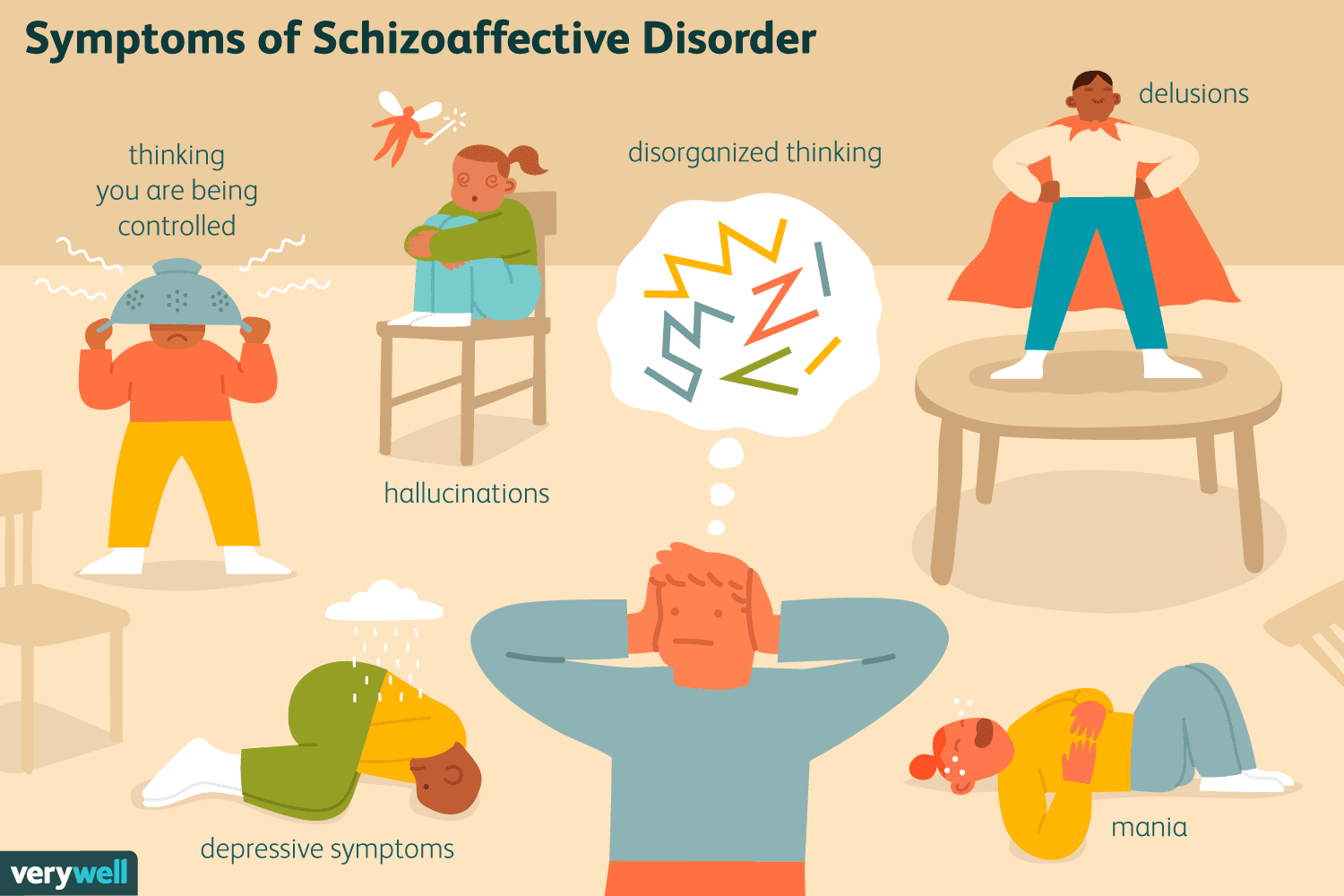
While the psychotic symptoms listed above describe how schizoaffective disorder appears to an outsider, it is also helpful to learn what these symptoms feel like to a person with the disorder.
Disorganized Thinking
If you are experiencing disorganized thinking, you may feel like your thoughts are fuzzy or everything feels disconnected. When you speak, you may not be able to remember what you were talking about, so it’s hard for people to follow what you say. You may also feel like your thoughts are not within your control.
Thinking You Are Being Controlled
You may think you are being controlled by outside forces like aliens, God, or the devil. You may feel someone is inserting thoughts into your head or that your thoughts are being removed. You might also feel like others can hear your thoughts or access them.
Hallucinations
You may hear one or more voices that sound real and seem to come from outside you but that nobody else can hear. You might start to talk to them or do things that they tell you to do. In fact, these voices are created by your brain and are not real.
Delusions
Delusions are things you believe to be true but that are not thought to be real by everyone else. They may begin all of a sudden or form over time. Sometimes they are related to the voices that you hear and seem to explain them in some way.
Most often delusions are paranoid, such that you think people are plotting against you or spying on you. You might choose to avoid those people as it can feel very scary.
Suicidal Ideation
Suicidal ideation and behavior can also be a problem for some people with schizoaffective disorder. If someone you know is in danger of attempting suicide or harming another person, stay with that person while you call 911 or your local emergency number. The other alternative is to take the person to the nearest hospital emergency room if you believe that you can do so safely.
Complications of Schizoaffective Disorder
There are a number of potential complications of having schizoaffective disorder, including:
- Health problems
- Homelessness
- Impaired academic and occupational functioning
- Interpersonal conflicts
- Poverty
- Social isolation
- Substance use
- Suicidal thoughts and attempts
- Trouble adhering to treatment
- Unemployment
Diagnosis of Schizoaffective Disorder
Schizoaffective disorder overlaps with other conditions so it can be difficult to diagnose. Sometimes, it is incorrectly diagnosed as simply bipolar disorder or schizophrenia, which is why it is important for mental health professionals to have a full history of symptoms prior to making a diagnosis.
The first step in diagnosing schizoaffective disorder may be conducting a physical exam to rule out any potential medical contributions to the symptoms. Depending on the suspected diagnosis, this may mean undergoing blood testing and brain imaging.
Next, a psychiatrist or psychologist will conduct a clinical interview to determine whether symptoms meet the criteria outlined in the “Diagnostic and Statistical Manual of Mental Disorders” (DSM-5). This includes a period of major mood disorder (depression or mania) and at least two of the following schizophrenia symptoms (at least one of the first three is required):
- Delusions
- Hallucinations
- Disorganized speech
- Disorganized or catatonic behavior
- Negative psychotic symptoms
In addition, delusions or hallucinations most occur for two or more weeks in the absence of a mood episode. The mood symptoms must also be present for most of the duration of the illness.
Causes of Schizoaffective Disorder
Researchers do not know precisely what causes schizoaffective disorder. However, some propose that it can result from a combination of risk factors that affect brain development prenatally and throughout childhood and adolescence. These include:
- Birth defects
- Brain chemistry and structure
- Genetics
- Life stressors (death in family, loss of job, end of marriage)
- Psychoactive or psychotropic drug use
- Viral infections including while in the womb
Related Conditions
People with schizoaffective disorder may also live with overlapping disorders such as attention-deficit hyperactivity disorder, post-traumatic stress disorder (PTSD), anxiety disorders, and substance and alcohol use.
A co-occurring disorder can exacerbate the symptoms of schizoaffective disorder and make a person less likely to follow their treatment plan. This is why proper diagnosis and integrated treatment is essential when it comes to managing and coping with a dual diagnosis.
Schizoaffective disorder is often confused with other mental illnesses, including schizophrenia and bipolar disorder. These are two distinct disorders, however, each with their own diagnostic criteria and treatment. While they do share many symptoms, the main difference is that there is a prominent mood component with schizoaffective disorder.
Recap
Genetics, brain development, brain chemistry, stress, and substance use may play a role in the development of schizoaffective disorder. It is also common for people with this condition to have co-occurring mental illnesses such as ADHD, anxiety disorders, and PTSD.
Treatment of Schizoaffective Disorder
Treatment can help people with schizoaffective disorder to live a more fulfilling life. Treatment may come in the form of medication, therapy, or hospitalization, depending on the particular symptoms.
Medication
Medications such as mood stabilizers (e.g., lithium), antipsychotics (e.g., paliperidone), and antidepressants (e.g., fluoxetine) may be prescribed for different aspects of schizoaffective disorder. Taking antipsychotic medication will help reduce hallucinations and delusions, lessen disorganized thinking, and soothe agitation.
It’s important for people with schizoaffective disorder to continue taking medication even if they feel well, as these medications help to stabilize symptoms and prevent a recurrence of them.
Often, people with schizoaffective disorder need to take medication for the rest of their lives.
Therapy
Therapy such as cognitive-behavioral therapy (CBT), family therapy, group therapy, or skills training may be used to treat schizoaffective disorder.
During therapy, a person with schizoaffective disorder may learn about their illness, set goals, determine how to manage daily issues, develop skills to interact with others, look for a job, and practice life skills like managing finances, home maintenance, and personal grooming.
Family members can participate in therapy to learn how best to support their loved ones.
Hospitalization
In the event of an acute psychotic episode, suicidal ideation, or threats to others, treatment in a hospital may be necessary. There is, unfortunately, no cure for schizoaffective disorder and long-term treatment and management is often required.
However, medication and therapy can help to reduce symptom relapse and disruption to a person’s life and the lives of those around them. This is why it is important for them to keep in contact with a psychiatrist to ensure that their treatment regimen is optimal.
Recap
Schizoaffective disorder is a serious and lifelong condition. Effective treatments are available that can help manage symptoms, improve functioning, and foster well-being. In the case of an acute psychotic episode, hospitalization may be necessary.
When to Get Help
If someone you know is displaying symptoms of schizoaffective disorder, it can be hard to know how to help. While you can try to talk to your friend or relative, you also can’t force them to seek treatment. Instead, try offering encouragement and practical advice such as looking up numbers of doctors to call or investigating avenues to receive treatment in the community.
In addition, people with this disorder may be disconnected from reality. In the event that the person is struggling with basic necessities of life such as food and shelter, or there are imminent safety concerns, you can call 911 and ask to have that person evaluated for treatment.
