

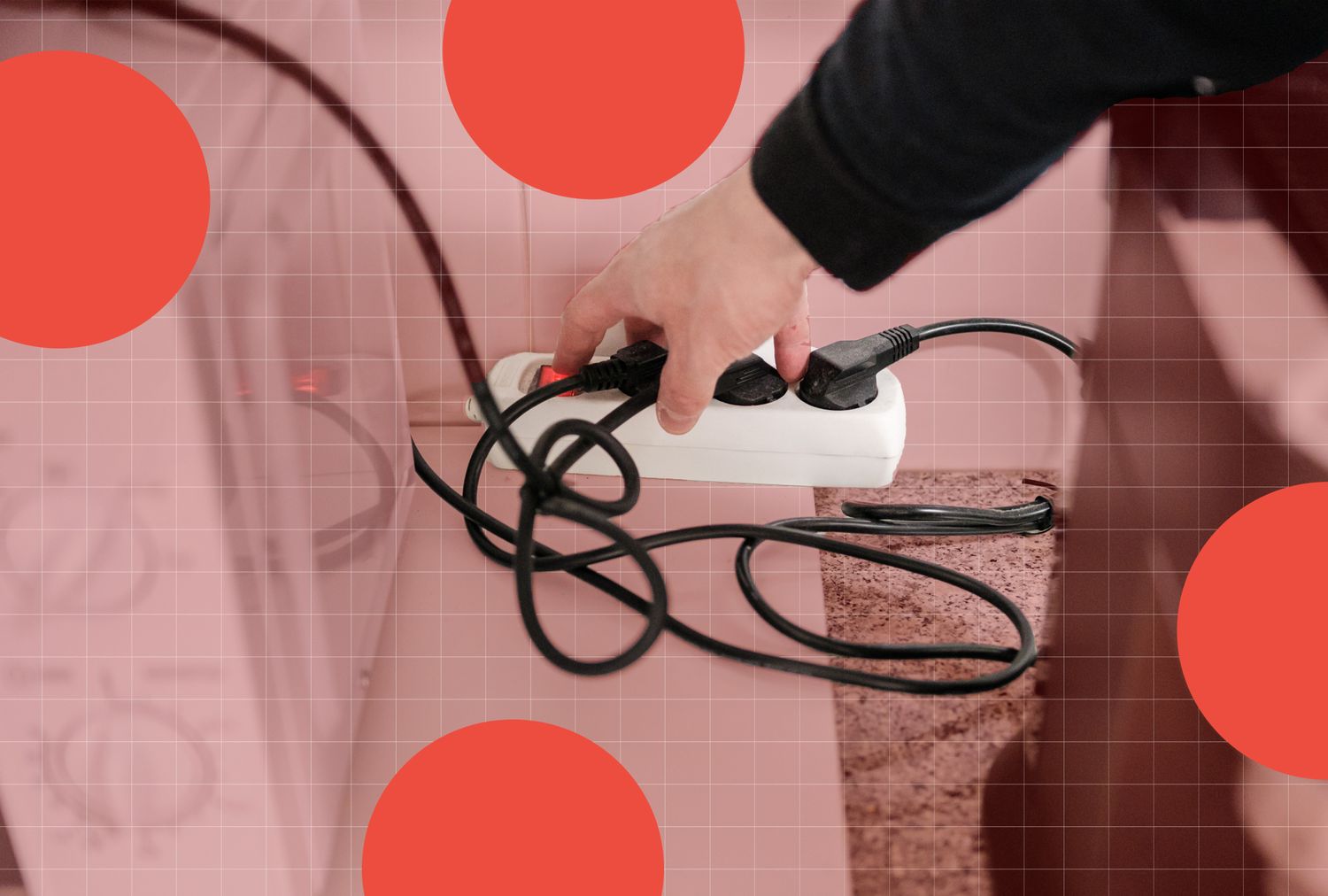
- Power strips are meant to power low-wattage devices, like phones and laptops.
- Kitchen appliances that draw a lot of power should never be plugged into a power strip.
- To keep your home safe, always plug large appliances into wall plugs.
In a kitchen full of appliances and devices, reaching for a power strip can seem like an easy solution. But not all appliances are meant to be plugged into them. Power strips work well for low-wattage items like phones and laptops, but many kitchen staples have heavy power demands that power strips aren’t designed to handle.
“What happens when you connect these devices is that overheating occurs as a result of the huge wattage demand,” says electrician Angel Garcia. “In the worst-case scenarios, this can lead to house fires or electrical shocks as the wire insulation melts.”
We spoke to electricians and industry experts to explain when power strips should be avoided in the kitchen, including six common appliances you shouldn’t plug into them.
1. Refrigerators and Freezers
Refrigerators and freezers draw more power than a standard power strip can handle. They also cycle on and off throughout the day, causing fluctuating power demands that can spike suddenly. “A power strip cannot reliably support those load changes,” says electrician Ben Kolo.
Major appliances like refrigerators should always be plugged directly into a wall outlet. Plugging them into a power strip can cause overheating, power loss or even damage to the appliance. “Most power strips also don’t have specific safety features like surge protection in mind, which can damage the internal electrical components of your expensive refrigerators, microwaves and other devices,” says Garcia.
2. Microwaves
Microwaves draw a significant amount of electricity, and power strips aren’t designed to handle that surge of power, Kolo explains. “It can trip breakers and, in some cases, cause overheating.” Like other major appliances, microwaves should be plugged directly into a wall outlet.
3. Blenders
As a general rule, anything that generates heat or has a motor shouldn’t be plugged into a power strip, explains electrical industry expert Megan Doser. “A blender has a high-draw motor that pulls a big surge of electricity,” she explains. “It can reach up to 15 amps when it starts up and a power strip isn’t designed to handle that kind of spike.”
With that amount of power draw, the power strip may overheat or become overloaded, which can melt the plastic and damage the wiring inside. “That makes the outlet far more likely to spark next time you use it,” she says. Additionally, only one heat-producing appliance should be plugged into an outlet at any given time, as overloading an outlet with multiple high-wattage appliances can cause overheating, fires or tripped breakers.
4. Electric Kettles
Electric kettles draw a large amount of power at once, which can overwhelm a power strip. “Compared to smart speakers and chargers that draw very little steady power, kettles draw their full power instantly and continuously,” Doser explains. “That stresses the internal contacts, making a power strip heat up enough to fail.”
5. Coffee Makers
Most coffee makers require somewhere between 500 and 1,200 watts of power, Garcia explains. Since most power strips can handle up to 1,800 watts, you may think it’s safe to use one.
“But if you use the coffee maker along with other things that are attached to the power strip, then you’ll run into problems, as it’s easy to exceed it,” Garcia says. “If the coffee maker is the only thing plugged into the power strip, then you might be fine, but it’s still risky since most people might forget and end up connecting multiple devices.”
6. Air Fryers
For an appliance that seems pretty small, an air fryer can draw a surprisingly large amount of power. “If you have a pretty powerful device, it alone might exceed your power strip wattage capacity, since some air fryers can have wattage needs of up to 2,000 watts,” Garcia says.
Other Electrical Safety Tips
- Be Careful with Extension Cords. “Extension cords aren’t built to deal with devices that require high wattage, so in the same way that you shouldn’t plug in a fridge or microwave into a power strip, you should also avoid plugging them into an extension cord,” Garcia says.
- If a Cord Is Damaged, Replace It. This is something you don’t want to put off. “When a cord is damaged or frayed, the exposed wires can create an electrical shock or fire hazard,” Garcia says. “You can buy cords at most local hardware stores and you don’t need an electrician to replace them, so the fix is quite easy compared to the danger of not doing it.”
- Don’t Overload Your Power Outlets. “Running multiple high-wattage appliances on the same outlet or circuit can cause overheating and trip the breaker,” Kolo says.
- Consider the Location. Consider locations in your kitchen that may have a lot of condensation or water exposure. ”Those spots near the oven and kitchen cabinets where condensation can form as the oven cools off are not ideal for outlets,” Doser says. “Moisture can seep into outlets and the outlet can spark when you plug something in.”
Our Expert Take
In a busy kitchen, you may not give much thought to how you power your appliances, but you should. Overloading power strips with appliances like refrigerators, microwaves, coffee makers, blenders and air fryers can lead to fires, short circuits and damage to your appliances.
“Power strips should never be used for high-wattage appliances or anything electrical that draws a lot of power,” says Kolo. If you’re feeling unsure about what you can safely plug into a power strip, or simply don’t have enough power outlets in your kitchen, get in touch with an electrician for help.
