

Key Takeaways
- Procedural memory helps you remember how to do things like riding a bike or tying your shoes.
- These memories form early in life and become automatic without needing to think about them.
- Procedural memory involves the cerebellum and becomes stronger the more you use it.
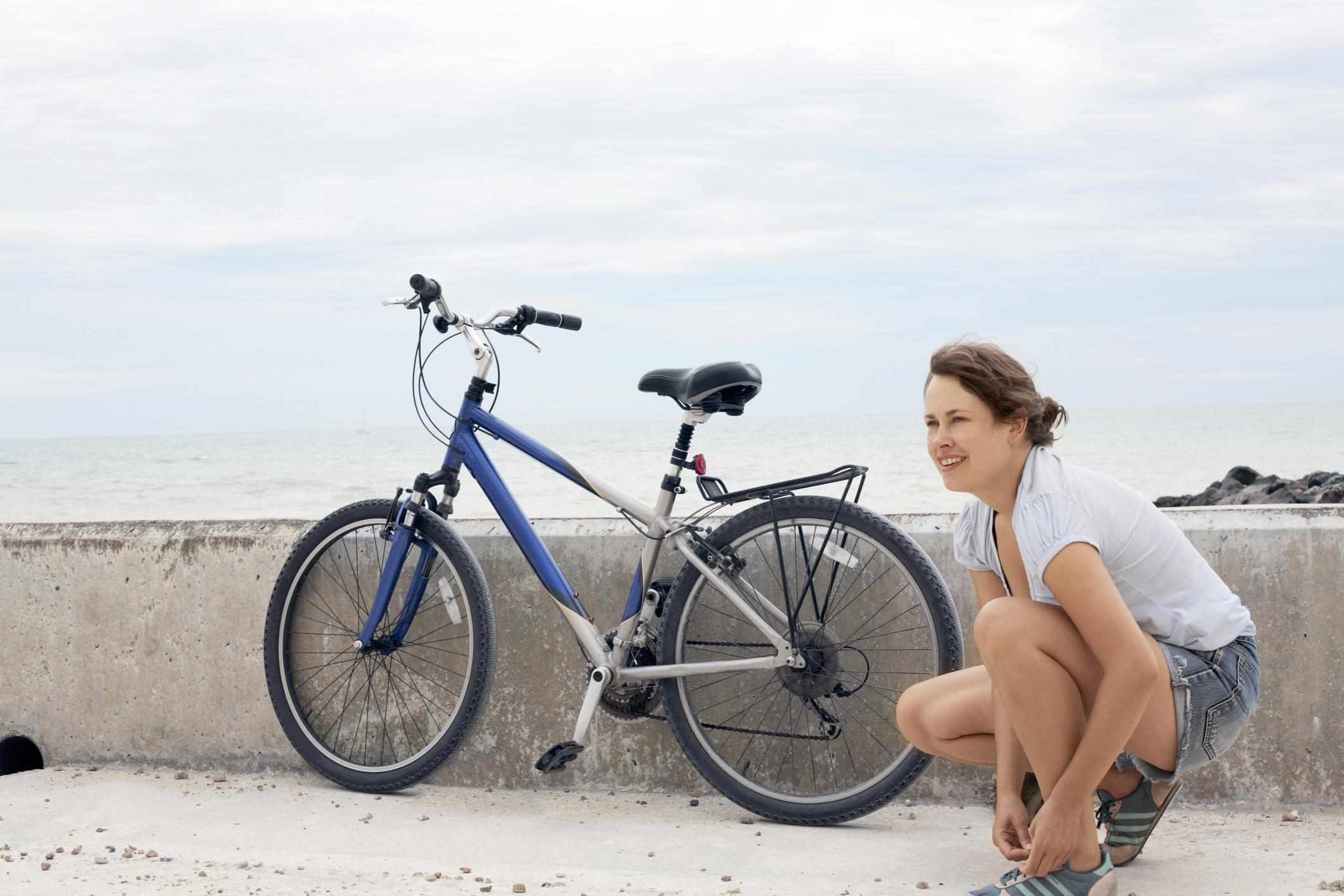
Procedural memory, also called implicit memory, is a type of long-term memory involved in the performance of different actions and skills. Essentially, it is the memory of how to do certain things. Riding a bike, tying your shoes, and cooking an omelet without a recipe are all examples of procedural memories.
How Procedural Memory Works
Procedural memories start to form very early in life as you begin to learn how to walk, talk, eat, and play. These memories become so ingrained that they are almost automatic. You do not need to consciously think about how to perform these motor skills; you simply do them without much, if any, thought.
While it is easy to demonstrate these actions, explaining how and where you learned them can be much more difficult. In many cases, you learn these skills during early childhood. Learning how to walk is one great example.
Once this action is learned, you do not need to consciously remind yourself of how the process works. Your procedural memory takes over and allows you to perform the skill without thinking about it. For activities like learning how to drive or ride a bike, you simply practice them so often that they become ingrained.
Procedural Memory Examples
You use procedural memory for a variety of actions. Examples of things you might do that involve procedural memory include:
- Writing with a pen
- Typing on a keyboard
- Playing basketball
- Playing piano
- Swimming
- Preparing simple meals
How Procedural Memories Are Formed
Procedural memories form when connections are made between synapses, the gaps at the end of a neuron that allow signals to pass. The more frequently an action is performed, the more often signals are sent through those same synapses. Over time, these synaptic routes become stronger and the actions themselves become unconscious and automatic.
A number of brain structures are involved in the formation and maintenance of procedural memories. The cerebellum, for example, is associated with coordinating movements and fine motor skills required for many activities such as drawing, painting, playing a musical instrument, writing, and sculpting. The limbic system, another area of the brain, also coordinates many processes involved in memory and learning.
Disorders That May Affect Procedural Memory
Certain brain-based disorders or conditions may impact procedural memory, potentially leading to deficits. Parkinson’s disease is one. People who’ve had a stroke may also notice procedural memory issues. However, some research indicates that procedural memory can be improved for stroke patients.
Not every brain-based condition appears to affect procedural memory. For instance, a 2021 review found that, while some studies have connected Alzheimer’s disease with procedural memory issues, the overall research suggests that this type of memory may actually remain intact when Alzheimer’s dementia exists.
A 2019 study involving 36 people with a moderate-to-severe traumatic brain injury (TBI) also found that there wasn’t much difference in their procedural memory when compared to people without a TBI.
It may even be possible for mental health disorders to impact procedural memory. For example, one study found that people with major depressive disorder may experience procedural memory impairments, potentially due to slow sleep spindle activity.
Procedural Memory vs. Declarative Memory
Procedural memory is just one memory type. Another type of long-term memory is declarative memory.
Declarative Memory
Declarative memories are things that you intentionally remember and that require conscious effort to recall. Also known as explicit memory, this type of memory involves things such as remembering information for a test, remembering that you have an upcoming dentist appointment, and knowing your home address.
Procedural Memory
Procedural memory is considered a type of implicit memory. Implicit memories are those that form without effort. When the lyrics to a popular song get stuck in your head, that’s an example of implicit memory at work. You haven’t expended any effort to learn the lyrics and melody of the song. Simply hearing it in the background as you go about your day leads to the formation of implicit memory.
A procedural memory or implicit memory is often difficult to explain. If someone asked you how you drive a car or ride a bike, for example, you might struggle to put it into words. If they asked you how to drive to your house, however, you would probably be able to articulate the route fairly easily.
Remembering the physical process of how to do something like drive a car is a procedural memory (implicit memory) while remembering the route you have to take to get somewhere is a declarative memory (explicit memory).
How to Improve Procedural Memory
If you’re interested in improving your procedural memory, these strategies can help:
- Get adequate sleep: Research indicates that sleep has positive effects on procedural memory in healthy individuals. So, developing sleep-promoting habits and behaviors may help improve this type of memory.
- Practice sequential actions: Practicing actions that follow the same steps each time can also help you improve procedural memory. An example would be repeatedly playing the same song on a musical instrument.
- Work on your motor skills: Strong motor skills appear to have a protective effect against age-related procedural memory decline. To take advantage of this effect, regularly perform actions that require muscle coordination, such as throwing a ball or buttoning a button.
Verywell Mind uses only high-quality sources, including peer-reviewed studies, to support the facts within our articles. Read our editorial process to learn more about how we fact-check and keep our content accurate, reliable, and trustworthy.
-
Lum JA, Conti-Ramsden G, Page D, Ullman MT. Working, declarative and procedural memory in specific language impairment. Cortex. 2012;48(9):1138–1154. doi:10.1016/j.cortex.2011.06.001
-
Matthews BR. Memory dysfunction. Continuum (Minneap Minn). 2015;21(3):613-626. doi:10.1212/01.CON.0000466656.59413.29
-
Pavol M, Bassile C, Lehman J, et al. Modified approach to stroke rehabilitation (MAStR): feasability study of a method to apply procedural memory concepts to transfer training. Topics Stroke Rehab. 2018;25(5):351-358. doi:10.1080/10749357.2018.1458462
-
De Wit L, Marsiske M, O’Shea D, et al. Procedural learning in individuals with amnestic mild cognitive impairment and Alzheimer’s Dementia: A systematic review and meta-analysis. Neuropsychol Rev. 2021;31:103-114. doi:10.1007/s11065-020-09449-1
-
Rigon A, Klooster N, Crooks S, Duff M. Procedural memory following moderate-severe traumatic brain injury: Group performance and individual differences on the rotary pursuit task. Front Hum Neurosci. 2019;13:251. doi:10.3389/fnhum.2019.00251
-
Nishida M, Nakashima Y, Nishikawa T. Slow sleep spindle and procedural memory consolidation in patients with major depressive disorder. Nat Sci Sleep. 2016;8:63-72. doi:10.2147/NSS.S100337
-
Hine K, Tsushima Y. Not explicit but implicit memory is influenced by individual perception style. PLoS One. 2018;13(1):e0191654. doi:10.1371/journal.pone.0191654
-
Simor P, Zavecz Z. Horvath K, et al. Deconstructing procedural memory: Different learning trajectories and consolidation of sequence and statistical learning. Front Psychol. 2019;9:2708. doi:10.3389/fpsyg.2018.02708
-
Muller N, Genzel L, Konrad B, et al. Motor skills enhance procedural memory formation and protect against age-related decline. PLoS One. 2016;11(6):e0157770. doi:10.1371/journal.pone.0157770
Thanks for your feedback!
What is your feedback?
Helpful
Report an Error
Other
