

Key Takeaways
- Relapse is a normal part of the recovery process from addiction.
- Understanding the stages of relapse can help in preventing it from happening again.
- Relapses can be caused by internal factors like mental health issues.
A relapse is the worsening of a medical condition that had previously improved. When it comes to addiction, it refers to a person engaging in addictive behavior after a period of abstinence.
The American Society of Addiction Medicine (ASAM) defines relapse as the recurrence of behavioral or other substantive indicators of active disease after a period of remission.
During a relapse, a person returns to using a substance. A single use might cause a person to feel unmotivated, guilty, or ashamed of their actions. It can also result in intense cravings that then lead to further use. After a relapse, getting back on track as soon as possible is important.
Examples of Relapses
For example, for someone who had completely stopped drinking for a period of time, say six months, with the goal of total abstinence, it would be problematic if they had even one drink. If they had just one drink, they might be considered as having a “slip” but not a complete relapse.
For people trying to control their behavior rather than trying to quit entirely, a relapse happens when the individual has gained control over the behavior for a period of time but is re-experiencing a period of uncontrolled behavior.
For example, someone who had developed enough discipline to drink on occasion according to social norms could slip into a session of binge drinking. For a shopaholic trying to follow a budget, a relapse could be going on a full shopping spree.
Relapses can also occur in physical and mental health conditions. In a health condition, they involve the return of disease symptoms. In mental health, they involve the return of symptoms after a period of recovery.
How Common Are Relapses?
Relapse is a hallmark of addiction. It is common, even expected that people who are attempting to overcome addiction will go through one or even several relapses before successfully quitting. The American Addiction Centers report that 40% to 60% of people will relapse.
Relapse is even considered a stage in the stages-of-change model, which predicts that people will cycle through a process of:
- Initially avoiding change
- Then considering quitting
- Followed by taking active steps to quit
- Quitting for a period of time
- Maintenance of sobriety
- At some point, possibly relapsing
Sometimes, people will cycle through these stages several times before quitting for good.
Is Relapse a Sign of Failure?
Even though relapse is a well-recognized aspect of recovery from an addiction, many people attempting to quit an addiction will feel they have failed if they relapse. They might abandon their efforts, feeling that quitting is too difficult. Even some treatment programs take a hard line on participants who relapse.
Accepting that relapse is a normal part of the process of recovery is a more helpful way of looking at relapse. It can be seen as a sign that something in their treatment plan needs to be modified to maintain sobriety.
Individuals and treatment programs that take this view are more successful, and in the long run, those who accept and work to try again after a relapse are more likely to overcome their addiction eventually.
The Stages of Relapse
To understand how to prevent relapse, it is essential to first understand the relapse process itself. Relapse isn’t a sudden event; it occurs over a period of time that can range from weeks to even months.
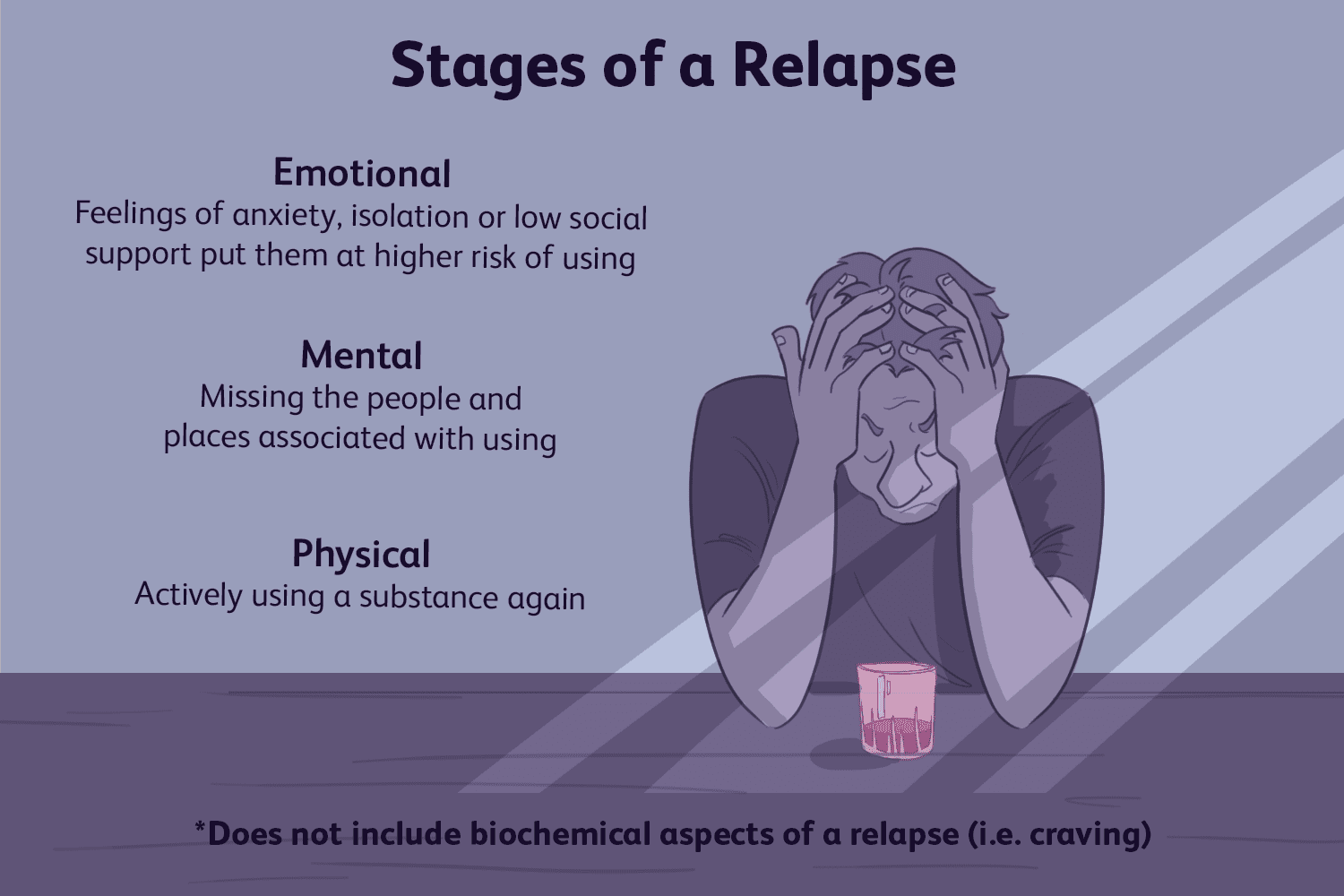
The stages of relapse include:
- Emotional relapse: During this stage, people are not thinking about using a substance, but their behaviors and emotions might be placing them at a higher risk of future use. For example, they might be experiencing isolation, anxiety, poor self-care, and low social support.
- Mental relapse: During this stage, people are thinking about using the substance and perhaps even missing the people and places they associated with their substance use.
- Physical relapse: As the name suggests, this stage involves actually using the substance once again.
Causes of Relapse
Relapses can have a range of causes that can be triggered by internal and external factors. Some common causes:
- Mental health issues: Having a co-occurring mental health condition can increase the risk of relapse. People may turn to substances or behaviors to cope with the symptoms of their condition.
- Chronic health issues: Medical conditions can also lead to relapse, particularly if a person is using substances to alleviate pain or cope with stress related to their condition.
- Cravings: While cravings tend to lessen with time, they can be strong and difficult to resist, particularly at times when a person is more susceptible to giving in to temptation.
- Situational factors: Certain situations, places, or people can cause relapse. Spending time in places where a person used to use a substance or being around people still engaging in the behavior can contribute to a relapse.
Relapse Risk Factors
Risk factors that can increase the likelihood of relapse include:
- Untreated mental health conditions
- Being around people who are using substances
- Poor coping skills
- Lack of motivation
- Isolation
- Poor social support
- Lack of self-efficacy
- Low mood
- Glamorizing the past that involved substance use
- Exposure to triggering situations
- Sleep problems
- Skipping meetings
- Lack of professional treatment and recovery programs
Relapse Treatments
This is not to say that a relapse should not be taken seriously. Good treatment programs plan ahead for this possibility by including relapse prevention in the process.
Relapse prevention therapy (RPT) was developed over 40 years ago by G. Alan Marlatt, PhD, and Judith Gordon, PhD. This approach helps people in recovery anticipate the factors that might cause them to engage in their addictive behavior again—and to plan ahead for these situations.
There are three primary areas of focus in RPT:
- Behavioral techniques/lifestyle changes: to help people establish habits that enhance recovery and prevent relapse, including regular sleep, exercise, and relaxation strategies.
- Coping skills training: to help people cope with cravings and urges as well as potential high-risk situations and emotions.
- Cognitive therapy interventions: to help people reframe how they think about relapse so they can view it as an opportunity to learn rather than a deep personal flaw.
Coping With a Relapse
If you or someone you know experiences a relapse, there are things that you can do to cope and get help.
- Get medical attention: Because people lose their tolerance for a substance, they are at a greater risk of experiencing an overdose if they relapse and try to pick up where they left off. If they are experiencing signs of overdose, call 911 to immediately take them to an emergency room.
- Provide support: Social support from friends and loved ones is critical. This can include family members or friends, but it can also include the individual’s primary care provider, their mutual support groups, or their treatment program.
- Be patient: It often takes several attempts before successfully quitting a behavior or substance. Relapses are common, and the best thing you can do is help the individual stay safe, get back on track, and encourage them to stick with it over the long term.
It is important to remain focused on recovery immediately after a relapse. Thinking through what led to the relapse is an important step in preventing it from happening again. For example, were there any triggers, either positive or negative, that happened just before the relapse?
Sometimes, stressful events can trigger a relapse, particularly if the addictive substance or behavior is used to cope with stress. But happy events can also trigger a relapse, especially if others celebrate with alcohol.
It is important to put this in perspective. People can move on from the relapse with a stronger commitment to preventing future relapses by avoiding or managing triggers before they occur.
How to Prevent Relapse
Relapse prevention is important in recovering from a substance, alcohol, or behavioral addiction. While each person’s recovery plan will differ based on their needs, some strategies that can help reduce your risk for relapse include:
Identify and Avoid Triggers
Work on learning to recognize the variables contributing to relapses. This can include moods, attitudes, situations, behaviors, and environmental changes that tend to precede a relapse.
Get Treatment and Support
Participating in a recovery program and building a support network is essential to preventing relapse. In addition to seeking professional treatment, you might consider joining a 12-step program or other mutual support groups.
Getting appropriate treatment for co-occurring mental health and medical conditions can also help reduce your risk of relapse.
Care for Yourself
Caring for your mental and physical health is critical for effective relapse prevention. Work on adopting a healthy lifestyle that includes regular exercise, a balanced diet, and plenty of sleep.
Manage Stress Levels
It is also important to find ways to deal with stress that don’t involve relying on alcohol, substances, or harmful behaviors. Stress relievers that might help you manage acute and long-term stress include deep breathing, meditation, and mindfulness practices.
Recap
In addition to getting professional treatment, avoiding your triggers, finding social support, caring for yourself, and managing stress can help prevent future relapse.
Final Thoughts
Remember, if you are trying to quit, you should plan for and try to avoid relapse. But if you do relapse, you should give yourself grace, accept that it is a normal part of quitting, and resolve to learn from the experience. One goal of treatment is to help people learn to recognize the signs of relapse during the early stages in order to quickly course-correct and get support before the full physical relapse to increase the chances of a successful recovery.
Verywell Mind uses only high-quality sources, including peer-reviewed studies, to support the facts within our articles. Read our editorial process to learn more about how we fact-check and keep our content accurate, reliable, and trustworthy.
-
American Society of Addiction Medicine. Public policy statement on relapse in healthcare and other licensed professionals. 2011.
-
Parks GA, Marlatt GA. Chapter 6: Relapse prevention therapy. In: Heather N, Stockwell T, eds. The Essential Handbook of Treatment and Prevention of Alcohol Problems. J. Wiley; 2004.
-
AmericanAddictionCenters. Alcohol relapse and recovery statistics.
-
Hendershot CS, Witkiewitz K, George WH, Marlatt GA. Relapse prevention for addictive behaviors. Subst Abuse Treat Prev Policy. 2011;6(1):17. doi:10.1186/1747-597X-6-17
-
U.S. Department of Veterans Affairs. Reducing relapse risk.
-
Melemis SM. Relapse prevention and the five rules of recovery. Yale J Biol Med. 2015;88(3):325-332.
Thanks for your feedback!
What is your feedback?
Helpful
Report an Error
Other
