

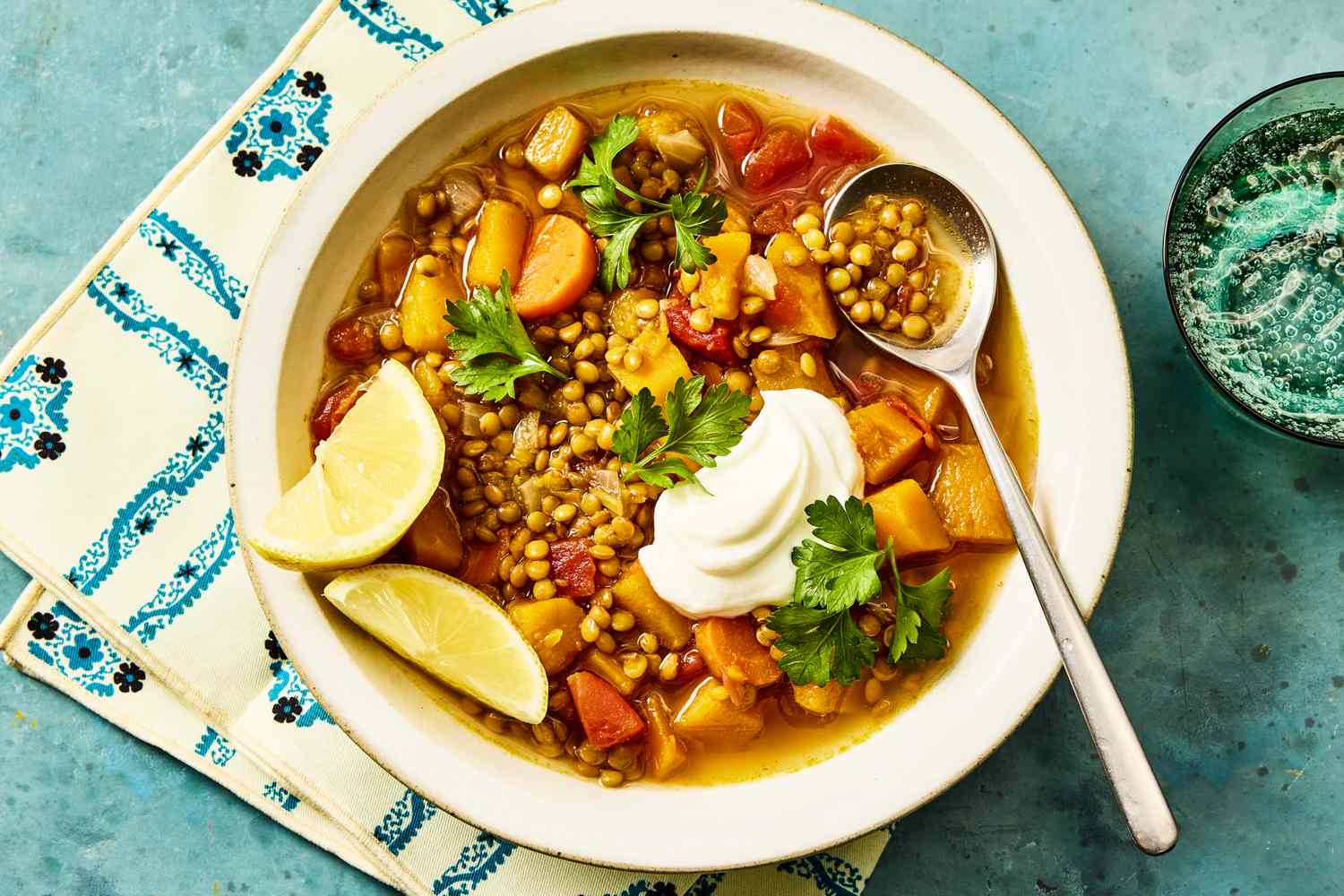
- It’s a hearty, flavorful soup that’s perfect for winter meal-prepping.
- This veggie-packed soup provides antioxidants and fiber for good health.
- Use only green lentils for this recipe, as the red ones will turn to mush.
Our High-Protein Butternut Squash & Lentil Soup is a vegetarian soup that is downright delicious. Packed with antioxidant-rich veggies, butternut squash, onions, carrots and garlic, this soup is an inflammation-fighting masterpiece. The lentils add fiber and plant-based protein for a complete meal in one bowl. The warm spice blend deepens the flavor and pairs well with the natural sweetness of the veggies, the tomatoes bring acidity and the Greek-style yogurt adds a refreshing creaminess. Top it off with brightness from fresh lemon and parsley. Keep reading for our expert tips on which lentils work best, changing the texture and more.
Tips from the EatingWell Test Kitchen
These are the key tips we learned while developing and testing this recipe in our Test Kitchen to make sure it works, tastes great and is good for you too!
- Consider using precut butternut squash to save on preparation time.
- Make sure to use only green lentils for this recipe, as they hold their shape better and give the soup a desirable texture.
- If you prefer a creamy soup, blend half of the soup with an immersion blender and then stir it back into the soup.
- If you enjoy some heat, feel free to add a bit of harissa or hot sauce to the finished soup.
Nutrition Notes
- Butternut squash and carrots bring fiber to this dish, and both are packed with beta-carotene, which is converted to vitamin A in the body, supporting immune and reproductive health.
- Lentils are packed with protein and fiber, two nutrients that are helpful for weight management. They also contain potassium and magnesium for heart health, and iron for fighting fatigue.
- Onions may not be given the nutrition love they deserve, but they are packed with antioxidants that may help in cancer prevention. They are also considered a prebiotic food, which helps to feed good bacteria in the gut, allowing them to flourish and keep your microbiome healthy.
