

Key Takeaways
- People blame their own actions on outside factors, but others’ actions on internal ones.
- We tend to use this bias more when negative things happen.
- The bias can lead to misunderstandings and make it hard to take responsibility.
What Is Actor-Observer Bias?
The actor-observer bias is a term in social psychology that refers to a tendency to attribute one’s own actions to external causes while attributing other people’s behaviors to internal causes. It is a type of attributional bias that plays a role in how we perceive and interact with other people. Essentially, we tend to make different attributions depending upon whether we are the actor or the observer in a situation.
The concept of actor-observer asymmetry was first introduced in 1971 by social psychologists Jones and Nisbett.
According to the actor-observer bias, people explain their own behavior with situational causes and other people’s behavior with internal causes.
The actor-observer bias tends to be more pronounced in situations where the outcomes are negative. In a situation where we experience something negative, we will often blame the situation or circumstances rather than ourselves. When something negative happens to another person, we may more often blame the individual for their personal choices, behaviors, and actions.
For example, when a doctor tells someone that their cholesterol levels are elevated, the patient might blame factors that are outside of their control, such as genetic or environmental influences. But what about when someone else finds out their cholesterol levels are too high? In such situations, people attribute it to things such as poor diet and lack of exercise.
Signs of the Actor-Observer Bias
There are a few different signs that the actor-observe bias might be influencing interpretations of an event. Some indicators include:
- Blaming other people for causing events without acknowledging the role you played
- Being biased by blaming strangers for what happens to them but attributing outcomes to situational forces when it comes to friends and family members
- Focusing only on the negative aspects of a situation and ignoring the positives
- Ignoring internal causes that contribute to the outcome of the things that happen to you
- Not paying attention to situational factors when assessing other people’s behavior
- Placing too much blame on outside forces when things don’t turn out the way you want them to
In other words, when it’s happening to you, it’s outside of your control, but when it’s happening to someone else, it’s all their fault. As biases go, this one feels pretty self-serving.
Researchers have found that people tend to experience this bias less frequently with people they know well, such as close friends and family members. Why? Since they have more information about the needs, motivations, and thoughts of those individuals, people are more likely to account for the external forces that impact behavior.
Why the Actor-Observer Bias Happens
When we are the actor or participant in a given situation, we have a more difficult time seeing our situation objectively. However, when we are the observers, we can view the situation from a more distant perspective.
For example, imagine that your class is getting ready to take a big test. You fail to observe your study behaviors (or lack thereof) leading up to the exam but focus on situational variables that affected your performance on the test. The room was hot and stuffy, your pencil kept breaking, and the student next to you kept making distracting noises throughout the test.
When you get your results back and realize you did poorly, you blame those external distractions for your poor performance instead of acknowledging your poor study habits before the test.
One of your friends also did poorly, but you immediately consider how he often skips class, rarely reads his textbook, and never takes notes. Now that you are the observer, the attributions you shift to focus on internal characteristics instead of the same situational variables that you feel contributed to your substandard test score.
Recap
Looking at situations from an insider or outsider perspective causes people to see situations differently. People are more likely to consider situational forces when attributing their actions. Yet they focus on internal characteristics or personality traits when explaining other people’s behaviors.
Impact of the Actor-Observer Bias
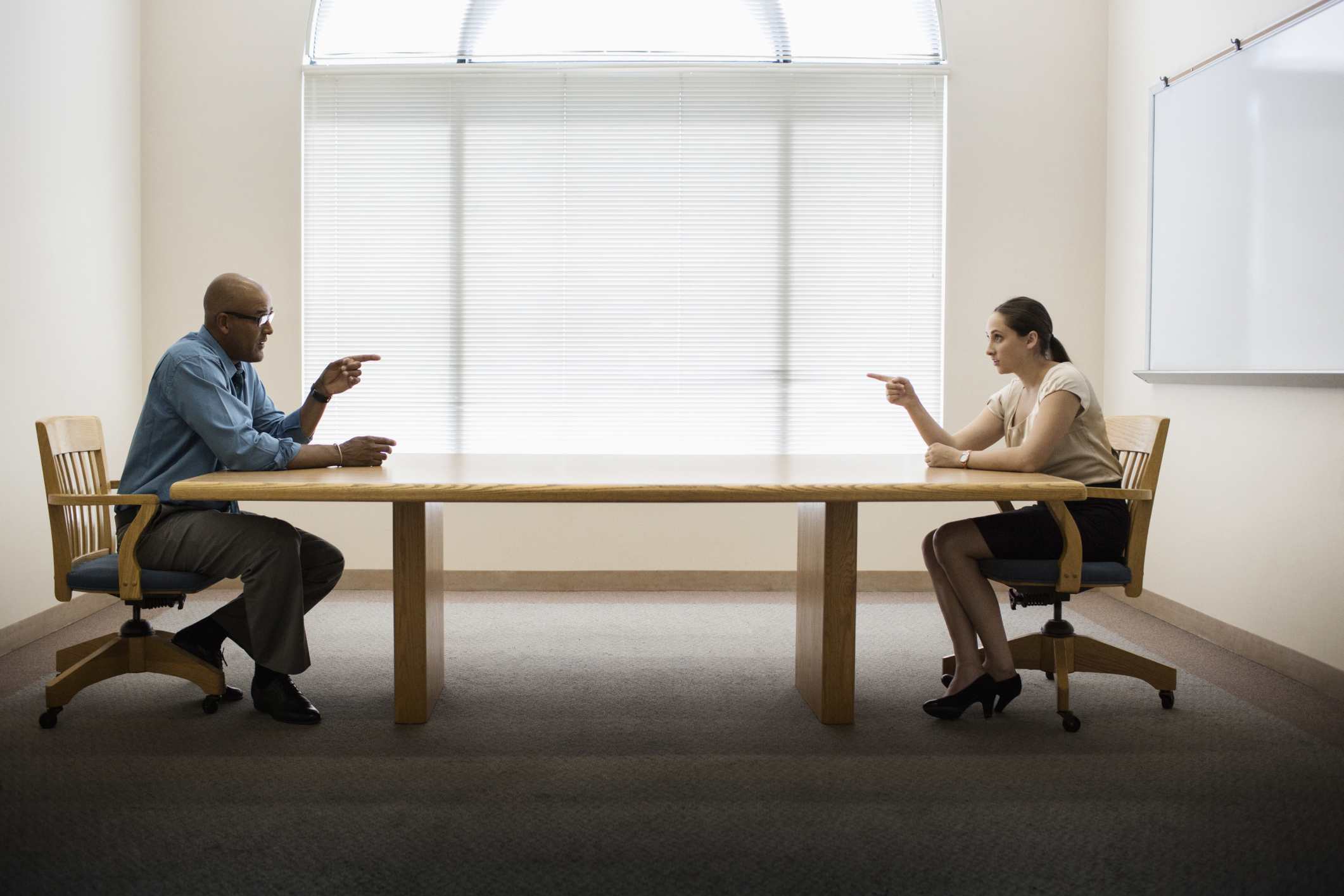
The actor-observer bias can be problematic and often leads to misunderstandings and arguments. During an argument, you might blame another person for an event without considering other factors that also played a part.
The actor-observer bias also leads us to avoid taking responsibility for our actions. Instead of acknowledging our role, we may place the blame elsewhere. This can create conflict in interpersonal relationships.
The actor-observer bias also makes it more difficult for people to recognize the importance of changing their behavior to prevent similar problems in the future.
How to Avoid the Actor-Observer Bias
Completely eliminating the actor-observer bias isn’t possible, but there are steps that you can take to help minimize its influence. Strategies that can be helpful include:
Don’t Blame the Victim
The actor-observer bias contributes to the tendency to blame victims for their misfortune. Instead of considering other causes, we often immediately rush to judgment, suggesting the victim’s actions caused the situation.
When you find yourself doing this, take a step back and remind yourself that you might not be seeing the whole picture. Instead, try to be empathetic and consider other forces that might have shaped the events.
Focus on Solving the Problem
While your first instinct might be to figure out what caused a situation, directing your energy toward finding a solution may help take the focus off of assigning blame. It can also give you a clearer picture of all of the factors that played a role, which can ultimately help you make more accurate judgments.
Practice Gratitude
Instead of blaming other causes when something terrible happens, spend some moments focusing on feeling gratitude. While you might have experienced a setback, maintaining a more optimistic and grateful attitude can benefit your well-being. It may also help you consider some of the other factors that played a part in causing the situation, whether those were internal or external.
Recap
The actor-observer bias is a natural occurrence, but there are steps you can take to minimize its impact. Being aware of this tendency is an important first step. Avoiding blame, focusing on problem solving, and practicing gratitude can be helpful for dealing with this bias.
Frequently Asked Questions
-
What’s the difference between actor-observer bias and self-serving bias?
The self-serving bias refers to a tendency to claim personal credit for positive events in order to protect self-esteem. In this case, it focuses only on the “actor” in a situation and is motivated by a need to improve and defend self-image. The actor-observer bias, on the other hand, focuses on the actions of the person engaging in a behavior as well as those observing it.
-
What things can cause a person to be biased?
Many attributional and cognitive biases occur as a result of how the mind works and its limitations. Because the brain is only capable of handling so much information, people rely on mental shortcuts to help speed up decision-making. While helpful at times, these shortcuts often lead to errors, misjudgments, and biased thinking.
Verywell Mind uses only high-quality sources, including peer-reviewed studies, to support the facts within our articles. Read our editorial process to learn more about how we fact-check and keep our content accurate, reliable, and trustworthy.
-
Jones E, Nisbett R. The Actor and the Observer: Divergent Perceptions of the Causes of Behavior.
-
Bordens KS, Horowitz IA. Social Psychology. Academic Media Solutions; 2002.
-
Linker M. Intellectual Empathy: Critical Thinking for Social Justice.
-
Baumeister, R. F., & Bushman, B. Social Psychology and Human Nature, Comprehensive Edition. Belmont, CA: Wadsworth; 2014.
Thanks for your feedback!
What is your feedback?
Helpful
Report an Error
Other
