

Key Takeaways
- Vulnerability helps build stronger and more authentic relationships by allowing partners to be open and honest with each other.
- Fear of judgment or rejection can make it hard to be vulnerable, but it’s important to share feelings to be truly understood.
- If you do not show vulnerability, your partner might not know what you need or want from them.
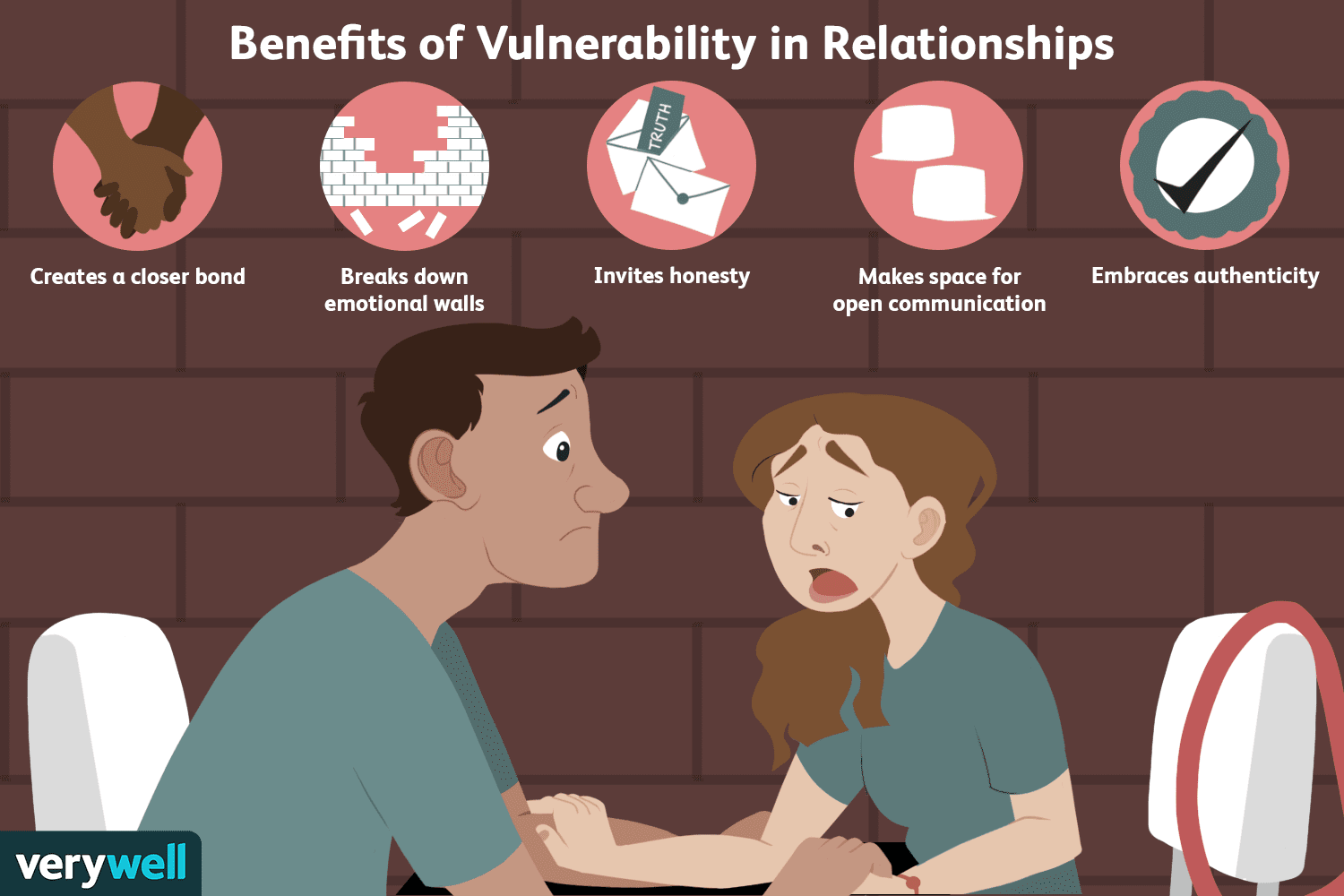
No matter what type of relationship we’re talking about—be it friendship, familial, or romantic—vulnerability is key to fostering a closer, deeper, and more authentic bond with another person. It keeps us honest with each other and ourselves, breaks down walls, eliminates the potential for miscommunication and misunderstandings, and allows us to be wholly ourselves.
In a world that seems to prize independence and self-reliance, vulnerability often seems like a risk. But when it comes to our most important relationships, being able to open up and share the innermost aspects of ourselves is crucial for building intimate, trusting, supportive connections.
Below, learn why vulnerability helps foster healthy, authentic relationships, how you can learn to be more vulnerable, and what you risk when you don’t open up with the people closest to you.
What Is Vulnerability In Relationships?
What exactly is vulnerability? It’s one of those words that seems to be everywhere, yet the meaning is sometimes unclear. It’s not about revealing too much too soon or sharing all your biggest dramas with unsuspecting people (aka trauma dumping). Instead, it’s your willingness to be open and honest, even if there is a potential for rejection or even hurt.
“Vulnerability is when a person willingly takes the risk to reveal their emotions and weaknesses,” says Shari Foos, a marriage and family therapist and founder of The Narrative Method. “This emotional openness is essential in all healthy relationships, as it paves the way for deeper understanding and evokes the empathy necessary for healthy long-term relationships.”
She adds that, with open communication, others can better relate to you and imagine the nuance of your feelings.
Why Vulnerability in Relationships Is Important
Self-disclosure, the process of sharing things about your life and your thoughts, is a key part of building a relationship. Such disclosure often starts small and then builds, often leading to more vulnerable disclosures as you become closer.
It’s completely natural to want to guard yourself and your emotions. In fact, holding thoughts and feelings to your chest and away from others is a form of protection, sometimes making it hard to be vulnerable in a relationship.
However, being too closed off to others—especially in romantic relationships or very close friendships—can backfire. The bond itself is less satisfying, and your relationship may be even more susceptible to breaking.
Shari Foos, MFT
If you don’t allow yourself to be vulnerable, your partner can’t be expected to understand what you need and want from them.
— Shari Foos, MFT
She adds, “They will undoubtedly respond in unsatisfactory ways. And then, because you don’t feel supported, you can resent them and blame them rather than owning your feelings. And then, before you begin to be vulnerable, you’ve got a knot to unwind.”
All relationships are prone to fissures; think of vulnerability as the mortar that helps fill in the cracks.
4 Ways to Foster More Vulnerability in Relationships
Like many things in life, being vulnerable doesn’t always come naturally. In fact, it can be really difficult to express ourselves honestly with someone else out of fear of rejection or judgment.
“We are our own worst critics, and the fear that our partner might agree with the worst things we think about ourselves is terrifying,” says Foos. “So, we defend ourselves by hiding that fear. The irony is that the only way to be seen and heard is to take the risk and have a positive outcome.”
In some cases, it’s challenging to open up because we aren’t wholly vulnerable even with ourselves; tapping into our inner core often means having to deal with uncomfortable or confusing emotions. If you struggle to open up or want to find new ways to be open and emotionally vulnerable in relationships, consider taking the steps listed below.
Discuss Vulnerability Itself
“Dive right in by sharing how you feel about discussing your vulnerability,” advises Foos. “Let your partner know how you felt being vulnerable in the past. Did it help you connect deeply, or did you end up getting hurt?”
Simply having a better understanding of why you might struggle with vulnerability can help you connect with your partner on the matter. It’s also a good first step to embracing vulnerability in relationships versus avoiding it.
Name a Fear
“Any topic that evokes difficult emotions for you is one that you should find a way to work through,” advises Foos. “Sometimes, just naming a fear aloud makes it seem smaller and relieves some of its sting.”
Research has shown that naming your emotions, a strategy known as affect labeling, can help make them seem less intense.
We all have fears. Whether it’s related to sexuality, money, or family challenges, Foos says you can benefit from talking about your feelings with someone who will listen closely without judgment.
Discuss a Recent Experience
One way to open up the channels of communication and vulnerability is to discuss the things that are happening in your life. Maybe you had a run-in with a stranger that left you confused, or maybe you’re dealing with something new at work. Simply start with the facts, then share how this experience impacted you. The experience doesn’t have to be negative. Maybe it’s something that left you beaming!
Share a Goal
Is there a short or long-term goal you’re aiming for? Sharing what that goal is and why it’s important to you is an easy way to connect with another person. Even better, you’ll surely gain a cheerleader who’s excited to watch (and maybe even help) you succeed.
When Privacy May Be Better Than Vulnerability in Relationships
While vulnerability in relationships is crucial, there’s certainly a balance to strike between being vulnerable and keeping some details to ourselves.
Shari Foos, MFT
One of the best new habits you can create is the habit of considering the impact of sensitive information before sharing it with others.
— Shari Foos, MFT
“For example, confiding your dislike of someone’s character or behavior to a close friend—even when you trust your feelings will be held confidentially—can leave you feeling guilty and regretful,” says Foos.
Other “off-limit” topics might include sexual history (especially if this might lead to potential jealousy or pain with a romantic partner), certain financial or health details, fears or thoughts that you haven’t fully worked through on your own that might negatively impact your relationship, and grudges you haven’t been able to let go of yet.
In such cases, it’s best to think twice before sharing. Or, consider sharing these concerns with a mental health professional who can help you find effective ways to cope.
