

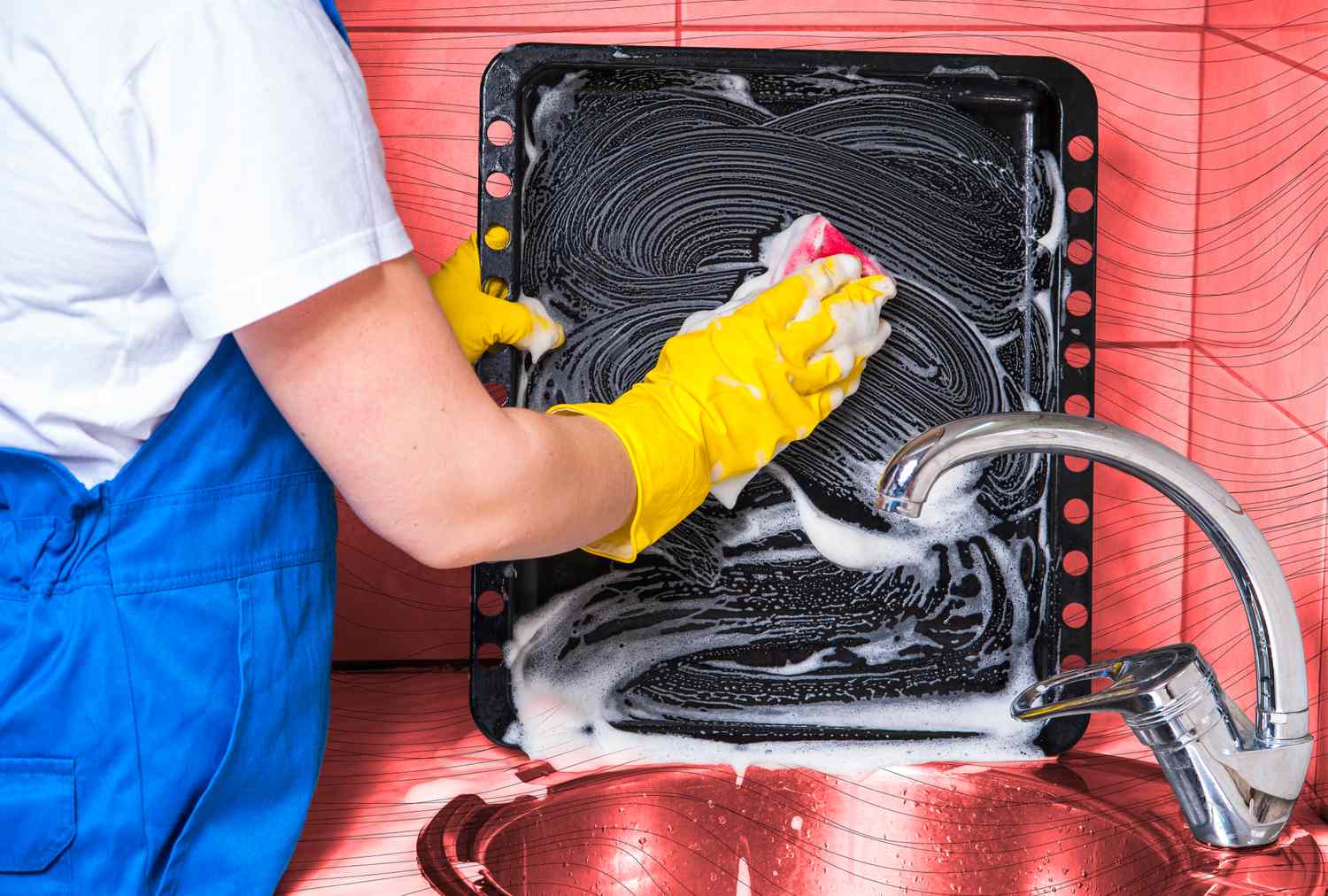
- With proper care, metal sheet pans can last for years without warping or staining.
- Avoid the dishwasher and wash with mild soap and a nonabrasive sponge.
- Use nonmetal utensils, line pans with parchment or silicone mats and let them cool fully.
A rimmed metal sheet pan is a kitchen staple, ideal for everything from roasting veggies to baking cookies. With proper care, it can last for years—but common mistakes can lead to warping, discoloration and surface damage.
Here’s what experts say are the most common sheet-pan errors—and how to keep yours in great shape.
1. Putting Them in the Dishwasher
“Dishwasher use is tough on pans of all varieties,” says Jennifer Dalquist, executive vice president of marketing at Nordic Ware. “For nonstick pans, it breaks down the nonstick properties more rapidly. For uncoated pans, it can discolor them.” Instead, Dalquist recommends washing sheet pans by hand. If your pan has lots of baked-on residue, give it a brief soak in warm, soapy water before you scrub.
2. Washing Them Improperly
Hand-washing will help your sheet pans last longer, but it’s important to clean them properly. “To extend the life of your pans, wash them with mild soap and a nonabrasive sponge,” says recipe developer and Chopped champion Lisa Keys. “Washing the pan with abrasive pads just leads to scratching and etching of the pan.” Also allow pans to air dry completely, or dry them thoroughly with a clean dish towel before storing.
Dalquist notes that if you’re looking to avoid or minimize discoloration on your sheet pans, it’s best to clean them thoroughly, as those stains will become harder to remove with each use. “For staining or baked-on residue, we like to recommend a combination of baking soda and vinegar or lemon juice to brighten pans up,” she says.
3. Scratching Them with Metal
Steel wool and other abrasive scrubbers aren’t the only metal to keep away from your sheet pans. When turning, stirring or scooping up food, avoid scraping the pans with metal spatulas or other metal utensils to protect the surface. “Avoid cutting directly in a pan with any type of metal utensil, as it will generally scratch most pans,” Dalquist cautions. Instead, utensils made with materials like wood, plastic and silicone are better to use.
4. Rinsing Hot Sheet Pans
You’ve pulled your sheet pan out of the oven, portioned out the food and immediately run it under water to get a head start on cleanup. While it seems harmless, rinsing a hot pan can damage it over time if you don’t let the heat dissipate first.
“Let your pan cool before rinsing it,” says Jason Heiselman, a chef and director of culinary at Hungryroot. “Sudden temperature changes cause metal to warp.”
Warping occurs when sheet pans are exposed to sudden and extreme changes in temperature. Pans will often snap back into shape afterward, but repeated extreme temperature changes could cause them to warp permanently. To reduce the risk, Keys recommends avoiding recipes that require oven temperatures above 450°F.
5. Baking on Bare Sheet Pans
There’s nothing wrong with baking directly on a bare sheet pan—many recipes roast perfectly on a well-used pan with a baked-on patina—that darkened layer that builds up over years of cooking. “Treat sheet pans as workhorses, not presentation pieces,” says Heiselman. “Some discoloration is normal and often a sign of a well-seasoned, well-used pan that performs better over time.”
But if you’re hoping to keep a new pan looking clean and make cleanup easier, both Keys and Heiselman recommend using a protective layer of parchment paper or a silicone baking mat. This also shields the pan from scratches caused by metal utensils.
Keep in mind that adding a barrier can sometimes affect the cooking or baking process, so follow recipes carefully for any specific instructions.
Our Expert Take
Common mistakes like using metal utensils, improper washing or exposing sheet pans to extreme temperature changes can damage coatings and lead to warping over time. While there’s nothing wrong with roasting directly on a sheet pan, it can create a baked-on patina that some people prefer to avoid. Lining pans with parchment paper or foil can make cleanup easier, and washing with mild soap and nonabrasive scrubbers, avoiding the dishwasher, and cleaning residue promptly can help your pans last longer and stay looking like new.
