

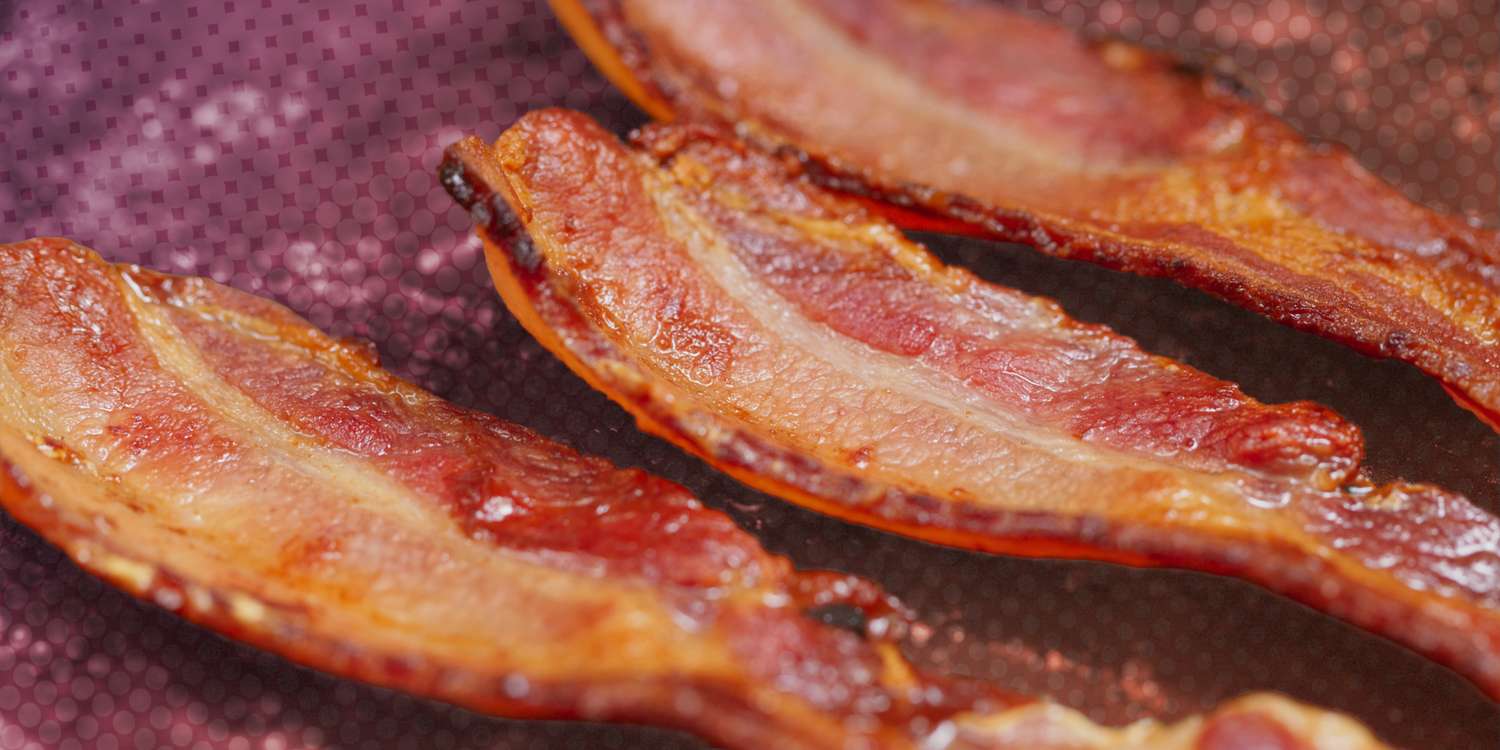
Bacon seems like it should be the simplest thing on the breakfast table, but it rarely turns out that way. Pan-frying leaves my counters (and usually my hands) speckled with oil splatters, while the bacon itself ends up curled, half-burnt, half-undercooked, and all-in-all, a disappointment—enough to make me reach for breakfast sausage instead.
But luckily, my mom has completely cracked the code on perfect bacon. And I do mean perfect. No chewy ends, no gristly bits—just beautiful, evenly crisp strips with pockets of rendered fat that shatter at first bite, then melt into pure savory richness. It’s the kind of bacon that makes people perk up at the breakfast table—yet somehow, it’s the easiest part of the entire menu.
So if you’re not a bacon fan yet, I promise: This method will make you a believer.
The Secret to My Mom’s Perfect Bacon
First things first: Swear off the frying pan. This method doesn’t require flipping, babysitting, or any hands-on attention. It’s as close to set-it-and-forget-it as bacon will ever get, all thanks to the oven.
Photographer: Kelsey Hansen / Food Styling: Holly Dreesman / Prop Styling: Addelyn Evans
Start With the Right Bacon
Before anything goes into the oven, you need the right cut. Thick-cut bacon (applewood smoked-preferred) is essential. The thickness gives the fat time to slowly render without the meat scorching, which is how you get bacon that’s crisp but never dry.
Prep the Pan
Next comes the setup. Place a cooling rack on top of a sheet pan. Then, line the sheet pan with aluminum foil or parchment for easier cleanup. Crumble another sheet into ridges to create a makeshift rack. Those ridges lift the bacon just enough so it doesn’t sit and simmer in its own fat, which is the fastest way to get soggy strips.
The Cold-Oven Trick
Now for the key step: Put the bacon into a cold oven. Starting cold allows the bacon to warm up gently with the oven, which means the fat renders slowly and evenly instead of shocking the meat with immediate high heat.
Once the pan is in, set the oven to 350 degrees F (175 degrees C).
Finish With High Heat
After about 30 minutes, increase the oven to 425 degrees F (220 degrees C) and check the bacon every five minutes until it looks as brown as you like it. When it’s ready, remove the pan and immediately transfer the strips to a paper towel-lined plate. Blotting the excess grease keeps the bacon crisp instead of letting it soak that fat back up as it cools.
Store the Bacon Grease
Don’t toss the liquid gold that’s left in the pan. While it’s still warm, pour it into a jar to save for later use with eggs, roasted vegetables, or cornbread. It keeps well in the fridge and adds savory flavor to just about anything.
Serve or Save
After a few minutes of cooling, the bacon is perfectly crisp and ready to eat. Bonus: It even keeps its texture in the fridge, which means you can absolutely make a big batch for the week. It’s perfect for BLTs, salads, breakfast sandwiches, or crumbling over soup. And if it ever softens, 10 to 20 seconds in the microwave will bring it right back to life.
So, skip the chaos, but not the bacon. With these simple steps, bacon becomes the easiest part of breakfast—and honestly, probably the tastiest too.
