

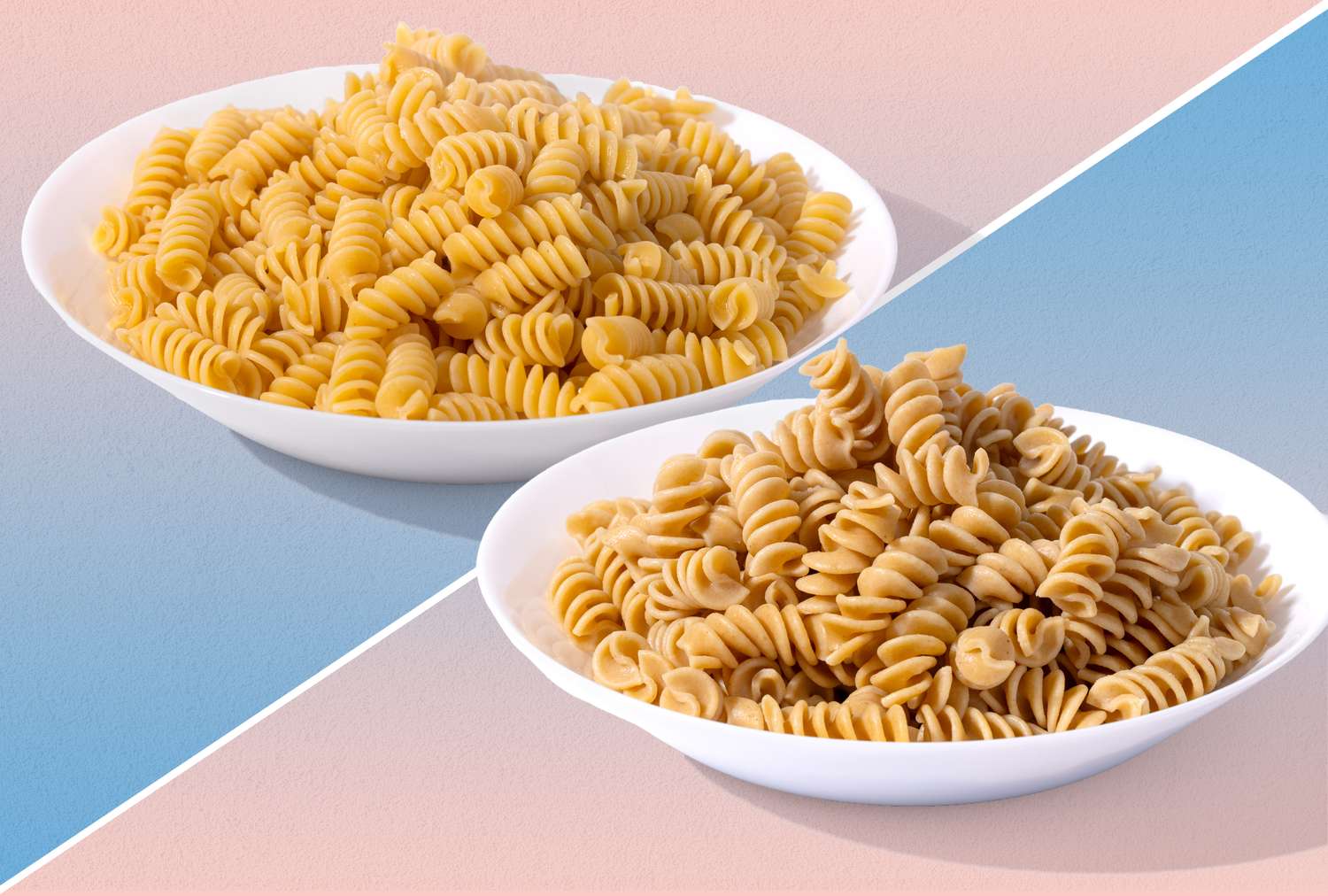
- Protein pasta has more protein, which may help build muscle and keep you full longer.
- Whole-wheat pasta has more fiber and nutrients that support gut health and heart health.
- Neither is best for everyone—the healthier choice depends on your goals, budget and taste.
If you’ve ever stood in the pasta aisle wondering whether the protein-packed option is actually better for you—or if it’s just clever marketing—you’re not alone. With shelves now lined with chickpea, lentil and other high-protein pastas alongside classic whole-wheat varieties, there’s no shortage of choices. And while taste is still a priority, you may be wondering which aligns best with your health goals. We’ll uncover which pasta offers more benefits for muscle building, weight management, blood sugar control or simply eating a little healthier without giving up a comforting staple.
Nutrition Content
Protein Pasta Nutrition
Here is the nutrition information for one serving of Banza chickpea protein pasta, based on values provided by the USDA (per 1 cup, cooked):
- Calories: 190
- Carbohydrates: 32g
- Dietary Fiber: 7g
- Total Sugar: 5g
- Protein: 14g
- Total Fat: 3.5g
- Saturated Fat: 0g
- Cholesterol: 0mg
- Sodium: 60mg
Whole-Wheat Pasta Nutrition
Here is the nutrition information for one serving of Barilla whole-wheat pasta, based on values provided by the USDA (per 1 cup, cooked):
- Calories: 180
- Carbohydrates: 39g
- Dietary Fiber: 6g
- Total Sugar: 2g
- Protein: 8g
- Total Fat: 1.5g
- Saturated Fat: 0g
- Cholesterol: 0mg
- Sodium: 0mg
Protein Pasta Benefits
May Help You Meet Your Protein Needs
Protein pasta is a simple way to help meet your daily protein needs without giving up foods you enjoy. Made from high-protein, plant-based ingredients like lentils, chickpeas or peas, protein pasta typically provides more protein per serving than refined and whole-wheat pasta. “This can help support muscle maintenance, increase satiety and keep meals more balanced—especially for those focused on weight management or with active lifestyles,” says Karolin Saweres, M.S., RDN.
If you have higher protein needs—whether you’re an athlete or working on building muscle—Kelly Slovin-Holtz, M.S., RD, recommends pairing protein pasta with meat or another plant-based protein to further boost your intake. Because it offers both carbohydrates and protein, this type of pasta can help fuel physical activity while also supporting muscle growth and recovery.
Might Keep You Full for Longer
Adding more protein to your meals can also increase satiety, as it takes longer to digest than carbohydrates, so you may feel full for a longer period of time. “Meals containing adequate protein are associated with increased satiety and reduced hunger compared to meals low in protein, which may help with appetite regulation between meals,” says Sam Siegel, M.P.H., RDN..
Patricia Kolesa, M.S., RDN, also notes that “feeling full and satisfied for longer can promote portion control and minimize overeating.” So if your goal is weight loss, choosing a protein pasta may be a better option than whole-wheat or refined pasta, as its higher protein content may help you reduce overall calorie intake.
Can Be Naturally Gluten-Free
Many chickpea-based protein pastas are naturally gluten-free, making them a safe and nutritious choice for those who avoid gluten but still want to enjoy a balanced pasta dish. “Chickpea- or legume-based protein pastas are often the healthier—and necessary—option for individuals with celiac disease or gluten intolerance,” says Saweres. That said, ingredients can vary from brand to brand, so make sure you’re checking the label and ingredients list.
Whole-Wheat Pasta Benefits
Might Help You Increase Your Fiber Intake
Studies show that 90% of Americans fall short on meeting the recommended daily intake of dietary fiber, a vital nutrient for overall health and digestion. Fiber is beneficial for many reasons but, most notably, it is essential for gut health and bowel movement regularity. It’s also cardioprotective, can reduce cholesterol levels and supports stable blood sugar. “One benefit of choosing whole-wheat pasta is that it offers more fiber than refined pasta. This can support gut health, reduce constipation and help prevent blood sugar spikes. Foods containing fiber are also linked to reduced cardiovascular and metabolic risk,” says Crystal Orozco, RD.
Similar to protein, fiber also promotes satiety and can support weight-management goals. “Because whole wheat is a less-refined grain, the pasta takes longer to break down and digest, keeping you full longer,” notes Kendra Haire, RDN.
Might Be Lower-Cost
Whole-wheat pasta is often more affordable, widely available and closer in taste and texture to refined pasta than a protein pasta. Siegel notes, “This makes it an easy swap that doesn’t feel restrictive for many people. And as an added bonus, whole-wheat pasta is often only a few grams lower in protein than protein pasta.”
Offers Additional Vitamins and Minerals
Compared to refined pasta, whole-wheat pasta retains more vitamins and minerals, such as magnesium, zinc, iron, antioxidants and B vitamins. “Magnesium and thiamine (B1) are especially important, as they play a key role in carbohydrate metabolism. This means they are essential for converting the starch in pasta into usable energy,” says Valeria Coffaro, M.S., RDN, CDN, LDL.
Kolesa notes, “Whole-wheat pasta is a good source of iron. Iron aids in transporting oxygen throughout the body, which may help reduce fatigue and weakness for those who are iron-deficient.” Opting for whole-wheat pasta has additional nutrient advantages, making it a more nutrient-dense choice than its refined counterpart.
Which Is Healthier?
Neither protein pasta nor whole-wheat pasta is necessarily healthier than the other. The best choice for you depends on your nutrition needs, goals, taste preferences, cultural eating patterns, access and affordability. Both options can fit into a balanced eating pattern and can serve different purposes. To make your meal more nourishing, pair pasta with vegetables, lean proteins and healthy fats. “Ultimately, the healthiest pasta is the one that fits into your balanced meal plan and supports your personal nutrition goals and preferences, making it easier to eat well consistently,” notes Amy Brownstein, M.S., RDN.
“Protein pasta may be a better choice for those trying to increase their protein intake, like athletes, older adults or those eating plant-based. Whole-wheat pastas may be a better option for those who are at risk for heart conditions like high cholesterol or those who are experiencing constipation,” says Orozco.
Our Expert Take
Protein pasta and whole-wheat pasta each offer unique benefits; however, one is not necessarily healthier than the other. While protein pasta may better support muscle building, satiety and gluten-free diets, whole-wheat pasta can be a more accessible way to increase fiber intake and address certain micronutrient gaps. The healthier choice simply depends on your individual nutrition goals, health needs and lifestyle.
