

Key Takeaways
- Having a list of words to describe your feelings can help you express emotions more clearly in relationships.
- Practicing talking about your emotions regularly can make it easier to share your feelings over time.
Knowing how to express yourself in relationships is an important skill. It allows you to share information about yourself, raise important issues, and help the other person understand you better. Doing it well (and knowing what to say) can foster greater intimacy and connection with your partner.
Why Expressing Emotions Can Be Hard in Relationships
Emotions can be both powerful, complicated, confusing, and even messy. Sometimes, they’re just not easy to express. Everyone has moments when they just can’t find the right word to describe what they’re feeling or trying to say.
- You might be angry and start sputtering.
- You might fear that you’ll be judged or rejected.
- You might fear showing vulnerability.
Or maybe you feel so overwhelmed that you are entirely speechless. The words are there—you just *can’t* find them when you’re overcome with strong emotions.
It happens to the best of us, but it can become a serious detriment in marriages and relationships where communicating your feelings is critical. That’s why spending a little time thinking about some of the different ways you might describe your feelings can be helpful.
It’s important, too. Research has found that emotional expression can help relationships in various ways. It promotes better stress coping and improves partner responsiveness, which can ultimately have a positive effect on your relationship.
Key Strategies for Expressing Your Feelings
- Explain that you have something to say and make time to have a conversation.
- Show empathy for what your partner is feeling.
- Use “I” statements to help explain your subjective experience of what happened.
- Don’t make general statements about your partner’s behavior (i.e., “You always do that!”). Refer to specific actions.
- If you want your partner to do something differently, be clear about what you’re asking.
Finding the Words to Express Your Feelings
A big part of this conversation starts with knowing what you want to say. Not that you’re going to consult a list in the heat of the moment, but having a list of words related to feelings can be helpful to return to occasionally or if you’re trying to write your thoughts down.
When You’re Feeling Amorous
Let’s talk about sex (which isn’t always easy). When you are feeling interested in sex or intimacy, it can be helpful to have some words for feelings that will help your partner get the message.
For example, if your partner is immersed in a television show or book, you might not be sure how to express your interest and initiate intimacy while they are otherwise occupied.
When you’re looking for a word to tell your spouse that you’d like to head into the bedroom, to the sofa, or even to the hammock, you might say that you’re feeling:
- Aroused
- Frisky
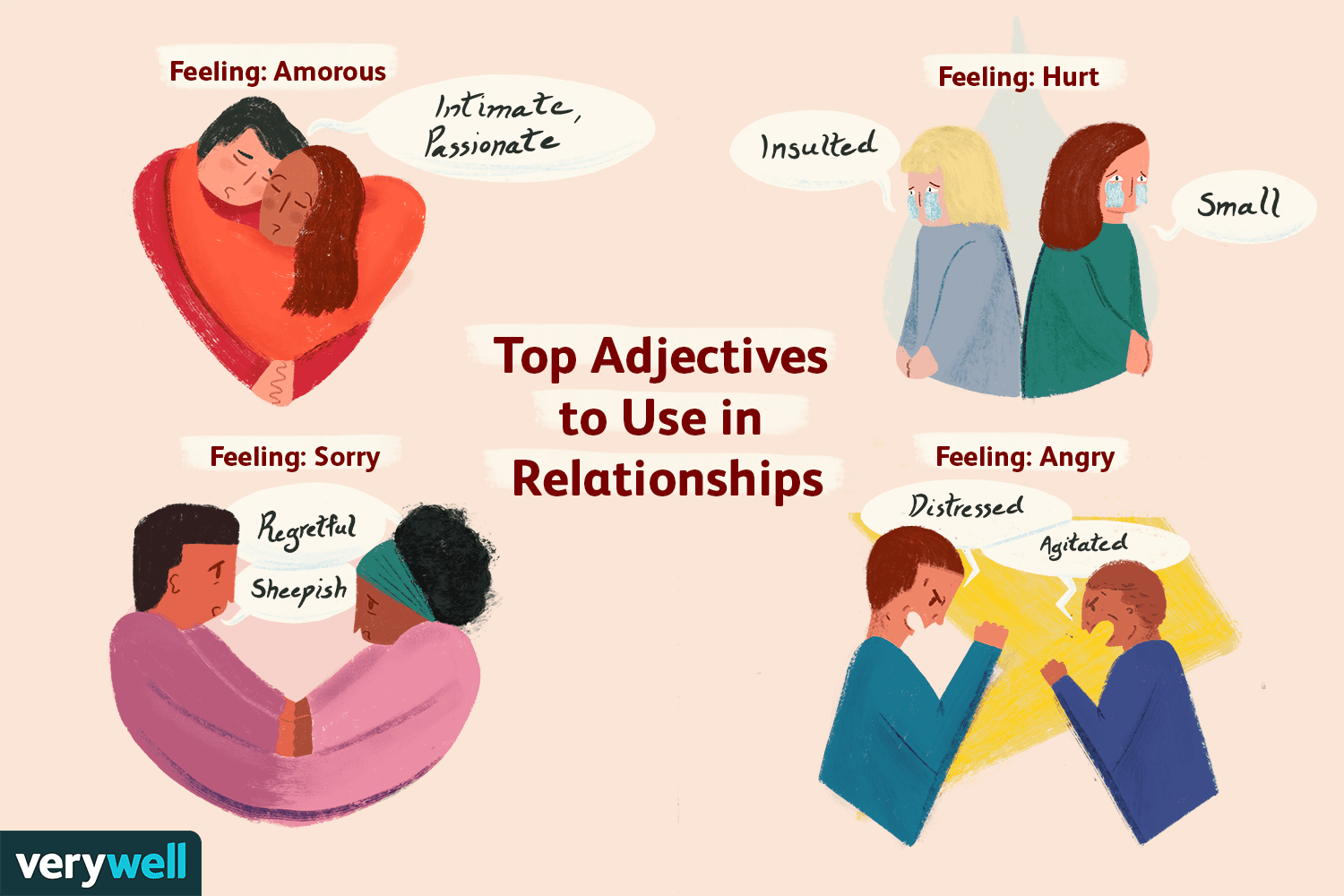
- Intimate
- Passionate
- Playful
- Romantic
- Seductive
- Sexy
- Stimulated
When You’re Feeling Angry
When you are upset about something, whether it’s something your partner has done or feelings directed toward someone else, it can be difficult to get your point across in the heat of the moment. In such situations, being direct can often be the most effective.
For example, you might simply say, “I am really upset about this!”
The term “anger” covers a wide scale. You might be:
- Aggravated or agitated
- Bothered
- Distressed or disturbed
- Exasperated
- Irritated or irked
- Offended
- Peeved
- Provoked
- Vexed
Then again, something significant or serious may have happened, so you feel enraged, furious, incensed, infuriated, or outraged.
When you are angry, it is also important to distinguish between being angry in response to something your partner has said or done and being angry about something else and wanting sympathy and support.
Need a simple, powerful way to calm down fast? Research suggests that writing down the cause and thoughts about the thing that spurred your anger and then throwing it away can actually eliminate feelings of anger.
When You’re Feeling Confused
There are plenty of times you might feel confused about your relationship. Your partner might do something that you don’t know how to interpret or make a comment that isn’t clear.
Rather than allow this confusion to build or lead to erroneous conclusions, let your partner know that you aren’t sure what they mean and ask for clarification.
Did she just say what you think she said? Did she mean it the way it sounded? You’re probably:
- Baffled
- Bewildered
- Clueless
- Lost
- Mixed up
- Mystified
- Perplexed
- Puzzled
- Stumped
Consider saying, “I’m confused about what you are saying. Could you explain that a little more so I can understand?”
When Your Back Is to the Wall
Feeling as if you are being attacked during an argument can be particularly difficult to cope with. For example, if your partner suddenly accuses you of failing to do something around the house, you might be left feeling upset or overwhelmed.
When you’re accused of some wrongdoing, whether deservedly or not, you’ll probably feel:
In these moments, it may be helpful to acknowledge what they are feeling while also describing how you are feeling as well. For example, you might say, “I can see that you are upset but I’m feeling cornered right now.”
When You’re Scared
Whether you are scared of a specific situation or experiencing a more general worry, letting your partner know what you are feeling can be a way to get the support you need.
Like anger, fright is an emotion that ranges in intensity. You might feel mildly:
- Alarmed
- Anxious
- Apprehensive
- Concerned
- Edgy
- Nervous
Or maybe your spouse has just said, “Can you sit down? We need to talk.” This will most likely bring on a stronger, more visceral reaction, and you may feel frantic, paralyzed, petrified, or terrified.
Consider saying something like, “I’m really concerned about this” or “What’s this about? I’m feeling very terrified right now.”
When You’re Happy
Letting your partner know when you’re happy can also strengthen your relationship. Not only will they feel pleased with your happiness, but it can also be a way of providing feedback about something they have done to help cause your happiness.
When things are going well, and your spouse has just said or done something to light up your world, you might say you feel:
- Centered
- Content
- Ecstatic
- Enchanted
- Elated
Other emotions you might feel include excited, exhilarated, fantastic, fulfilled, joyful, jubilant, overjoyed, peaceful, pleased, splendid, or thrilled. If the two of you are recovering from a bad spell, you might feel encouraged or optimistic.
Consider saying something like, “I’m so excited that you made plans for us tonight!” or “I’m so pleased that you thought about me!”
When You’re Hurt
Hurt covers a spectrum of emotions, too. When your spouse says or does something to hurt you, your feelings can run the gamut from discontent to devastation.
Word to Express Hurt
You might feel abused, belittled, berated, betrayed, bitter, broken, cheated, condemned, deceived, degraded, humiliated, inadequate, inferior, insignificant, insulted, mistreated, persecuted, rejected, robbed, scorned, small, squashed, stifled, tormented, tortured, or wounded.
Consider saying something like, “When you said that, it made me feel very small,” or “I feel like my trust has been betrayed.”
When You’re Lonely
You can feel lonely in a roomful of people or when you’re sitting beside your spouse. It’s why you feel lonely in this situation and what happened to cause your feeling that matters.
Maybe you feel:
- Abandoned
- Adrift
- Alienated
- Alone
- Deserted
- Discarded
- Disconnected
- Empty
You might also feel excluded, forgotten, ignored, incomplete, isolated, invisible, left out, neglected, unneeded, useless, unaccepted, unappreciated, or worthless.
For example, you might say something like, “When you left me alone in the middle of that conversation, I felt deserted” or “When you don’t invite me to spend time with you and your friends, I feel left out.”
When You Feel Loved
There are times when you may also want to express how loved you feel by your partner. For example, if they do something thoughtful that shows how well they know you and how much they think of you, you may want to find words for what you are feeling.
Hopefully, your spouse makes you feel:
- Cherished
- Needed
- Pampered
- Spoiled
- Treasured
For example, you might say, “I felt so pampered when you took the kids for the afternoon so I could relax.”
This type of positive feedback can help strengthen and deepen the trust and intimacy of your relationship.
When You’re Overwhelmed
Feeling overwhelmed can be good or bad. On the bright side, something your partner has done may cause you to feel:
- Amazed
- Astonished
- Awestruck
- Dazed
- Delighted
In such cases, you might say, “I’m so amazed that you did that! I’m feeling so overwhelmed, but in a good way!”
On the other hand, you may feel:
- Ambushed
- Appalled
- Disbelieving
- Horrified
- Incredulous
- Overcome
- Shocked
- Stunned
In this case, you might say something more along the lines of, “I cannot believe you did that! I’m so horrified!”
When you’re overwhelmed not by something that has surprised you but by something that has been going on for a period of time, the weight of the problem might leave you feeling smothered or suffocated.
When You’re Feeling Resentful
A lot of things can lead to resentment, but the feeling usually rears its ugly head when you feel shortchanged in some respect. For example, you might feel like your partner isn’t doing their fair share of household work or is expecting you to take on responsibilities that are their own.
You might say that you feel:
- Controlled
- Judged
- Manipulated
- Owned
- Powerless
Or you might describe yourself as feeling repressed, trapped, used, victimized, violated, intimidated, or even exploited.
For example, you might say something like, “I feel like you are taking advantage of me right now and it’s making me resent doing these things.”
When You’re Sad
It can be hard to cope when your partner does something that leaves you feeling sad. They might forget an important event or say something hurtful.
Poetry and prose are replete with words to describe sadness. Depending on the degree of your sorrow and what has caused it, you might describe your feeling as:
- Crushed
- Defeated
- Demoralized
- Disappointed
- Gloomy
- Heartbroken
- Let down
Other words you might use to describe feelings of sadness include blue, bummed, dejected, destroyed, discontented, discouraged, disheartened, disillusioned, dismal, grieving, helpless, hopeless, or pessimistic.
For example, you might say, “I’m really disappointed that you forgot about my work event tonight” or “I’m feeling discouraged because it seems like you don’t care as much about this as I do.”
When You’re Sorry
Being able to express regret and apologize is important in any relationship. For example, if you’ve said things that have hurt your partner’s feelings, you may be feeling the need to say that you’re sorry.
We’ve all been there, opening our mouths or taking some action that we instantly regret. You probably feel:
- Apologetic
- Ashamed
- Guilty
- Regretful
- Sheepish
You may even feel all these things at once when you’ve hurt someone you love.
In this case, say something such as “I know you are upset and disappointed. I’m so sorry about what happened.”
When You’re Tired
We’re not talking about how you feel after a long workday, but rather about that feeling that comes over you when you’ve tried and tried to make things right but to no avail. For example, maybe you’ve been arguing about a problem but haven’t reached an acceptable compromise.
You might feel:
- Burned out
- Drained
- Exhausted
- Fatigued
- Lifeless
- Overloaded
- Stretched
- Weary
In this situation, you might say something like “I’m too exhausted to talk about this right now. Can we take a break and come back to it later?”
When You’re Feeling Understood
Emotional validation is an essential part of a good relationship. Not only is it important to feel that your partner understands you, but it’s also critical to give your partner the same acceptance.
It’s a great experience, feeling:
- Accepted
- Complete
- Listened to
- Recognized
For example, you might say something like “Thank you for accepting me for who I am” or “I so glad that you recognize what I’m feeling.”
When You’re Unsure
To some extent, these words can go hand in hand with confusion. Your spouse has said or done something that you’re trying to decipher and figure out. From there, you can decide how to respond.
“Unsure” words come more into play when you think you might understand where your spouse is coming from, and you’re pretty sure you’re not going to like it. You’re probably feeling:
- Cautious
- Guarded
- Leery
- Pensive
- Suspicious
- Torn
- Wary
Say something such as “I’m torn about this. Can you explain more to reassure me?”
Tips for Expressing Your Feelings in a Relationship
- Choose the right time: Having a conversation when a person isn’t able to focus on what you’re saying can lead to further conflict. Check first to see if it’s a good time to talk.
- Let them respond: It’s important for you to share what you’re feeling, but you want to make sure that you’re listening actively. Give them the space to reflect and respond to what you’ve shared.
- Take a break: If the conversation turns into an argument, consider stepping away and returning to the topic when you’re both in a calmer mood or in a more neutral setting.
- Manage emotions: Sharing your feelings in a relationship is important, but it can also bring up distressing emotions. Find ways to calm yourself during the conversation. Talk during a relaxing activity or in a calming setting to help keep your emotions in check.
