

Key Takeaways
- Microaggressions are subtle behaviors or comments that can hurt members of marginalized groups.
- Being aware of the impact of our words and actions can help reduce microaggressions.
- Microaggressions can negatively affect the mental health of people who experience them.
Have you ever felt like you were on the receiving end of a subtle form of prejudice or stereotyping? As though someone just said or did something that made you feel unwelcome or judged because of your ethnicity, gender, sexual orientation, or other characteristic related to a marginalized group? If so, you might have experienced what is called a microaggression.
What Are Microaggressions?
A microaggression is a subtle verbal or nonverbal behavior, committed consciously or not, that is directed at a member of a marginalized group, and has a harmful, derogatory effect.
Although subtle and potentially less harmful than outright prejudice or intolerance, microaggressions have an impact too; in fact, being exposed to chronic microaggressions over a period of time may be hurting your mental health.
For this reason, it’s important that we as a collective whole do not simply ignore their presence or pretend that something doesn’t make us feel uncomfortable. Instead, as a society, we need to acknowledge them and move forward with a unified strategy to reduce their impact. Below are some definitions of microaggressions as well as ideas on how to reduce them or minimize their impact.
History
The term microaggressions was first coined in the 1970s by Harvard Medical School psychologist Chester Pierce as a reaction to observing insults exchanged between White and Black students. Later in 2007, Columbia University psychologist Derald Sue further popularized and defined the term.
It’s important to note that those individuals who engage in microaggressions may or may not be doing it on purpose. Instead, these actions or comments may reflect the biases held by a particular group about other groups of people.
In this way, while they are still harmful, the intent of the microaggression is not to harm: in other words, people don’t necessarily know that their words and actions hurt.
This fact is important when we consider an antidote to the epidemic of microaggressions, because it suggests that if people were made aware of the impact of their words and actions, they might change what they do and what they say.
Of course, there are some people who are consciously aware of what they are doing, and perhaps are doing it with the intent to harm.
Types of Microaggressions
Derald Sue and colleagues went on to discuss different subtypes of microaggressions. The list of these different types appears below:
Micro Assaults
Micro assaults are the most overt type of microaggressions. Most often they are done intentionally and the person doing them knows that they are harmful and derogatory. An example would be using a slang term to refer to someone of a particular race, with the knowledge that this term has a derogatory meaning.
Micro Insults
Micro insults are more subtle than microaggressions. These are usually comments with an underlying meaning or a backhanded compliment. For example, a micro insult might involve saying that someone only got their job because of affirmative action.
Micro Invalidations
Micro invalidations involve telling a marginalized group that their experiences of prejudice don’t matter or that they are being over-reactive or too sensitive about the things that are being said. In other words, a micro invalidation might follow a micro assault or micro insult.
Environmental Microaggressions
Environmental microaggressions involve something in a person’s environment that sends a message of invalidation of a marginalized group. For example, a child who watches a television show and only sees actors of a different race might feel excluded or not represented because of media portrayal.
Beyond the different types of microaggressions, we can also consider the different types of groups that are affected in society.
Groups Affected by Microaggressions
What groups are affected by microaggressions? Any marginalized group has the potential to be the target of microaggressions. Historically, this has included ethnic minorities, women, people with disabilities, and LGBTQ, although any marginalized group has the potential to be affected including persons with mental illness.
Examples of Microaggressions
What are some examples of microaggressions? They are everyday situations that take on a derogatory tone due to the verbal or nonverbal actions of a person. Below are some specific examples of different kinds of microaggressions that you might have observed or experienced in everyday life:
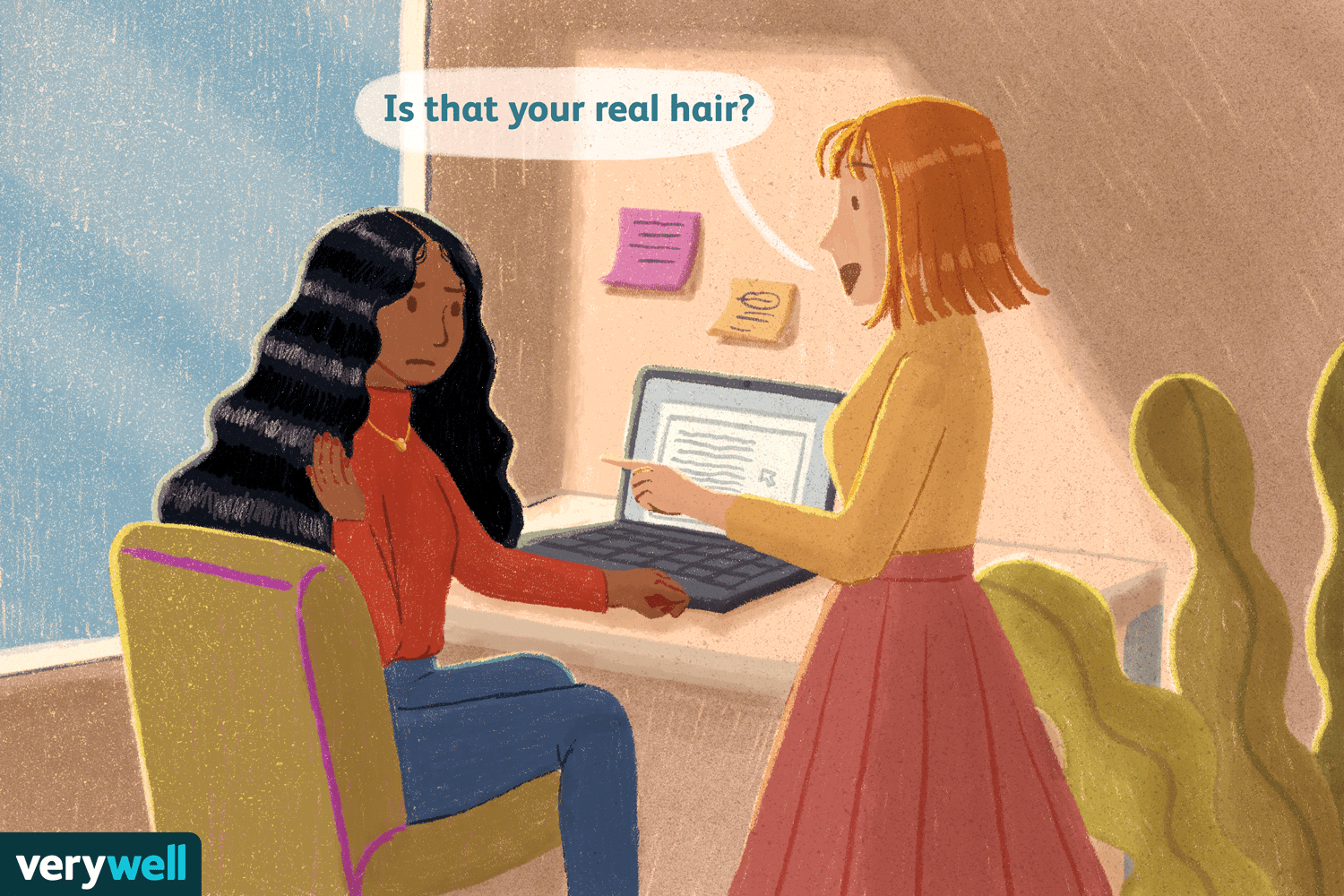
- A patient is waiting to see a medical professional in the hospital. A woman enters the room, and the patient assumes that she is a nurse instead of a doctor.
- A person meets someone who is a visible minority and asks where they are “really from.”
- A person is walking down the street and crosses to the other side of the road to avoid someone (out of fear) because of their outward appearance (i.e., a visible minority).
- A situation where someone tells a person who is LGBTQ that they don’t “seem gay” or some other similar phrase.
- A woman speaks up during a business meeting and afterward is told that she was being too assertive.
- A person who is a visible minority is told that they are very articulate.
- A person who is a visible minority (e.g., Asian) is told that they must be good in math because of their ethnicity.
- The pronouns used in a document or other communication exclude women or other groups of individuals (e.g., LGBTQ).
Effects of Microaggressions
What are the effects of microaggressions on the people who are targeted? While it might seem like these little slights and insults would not have a large effect, in fact, research has shown that the cumulative effect of microaggressions over time has a significant effect on the mental health of the targets.
In addition, it’s been shown that there is a correlation between the number of microaggressions and the level of mental health issues or depression experienced. Microaggressions have also been associated with other psychological impairments including low self worth and PTSD.
The primary way that targets experience stress and impacts on mental health is through frustration and not knowing how to respond.
What do you say if you’re not sure the person is aware of the impact of what they said? What if it is a family member or a person in authority? What if nobody else is speaking up and it seems like others will belittle your experience or say that you are overreacting?
All of these issues compound the microaggressions and create a haze of self-doubt that leads to lower mental health. In this way, it’s not just about your feelings being hurt. It’s about chronic stress that elicits anger and anxiety and has devastating long-term effects. It’s those little digs at you that you hear over and over again that can eventually erode your mental health.
Coping With Microaggressions
How do you cope if you are the target of microaggressions? If you’ve been the target of a micro insult or micro assault or any other type of microaggression, you might feel confused about how to respond.
Don’t worry, you are not alone. However, it is important to take some sort of action to protect your mental health. As already noted, feeling frustrated and unable to respond will lead to chronic stress and deplete your mental health.
It’s also important to bring microaggressions to light because otherwise, the transgressors may not know how they’ve made you feel. While it might feel natural to be annoyed or angry, the better approach would be to calmly state how the situation made you feel, so that the other person is aware.
While overt microaggressions might be difficult to deal with (e.g., the person intentionally tried to make you feel bad), the ones that are unintentional might be easier to remedy.
If someone isn’t aware of how their words or behavior are affecting you, calmly letting them know is the first step toward educating them on how their actions affect other people. This is how we see gradual change in the world.
Preventing Microaggressions
How do we prevent microaggressions as individuals, as a society, and as members of the global community? Aside from calmly stating how microaggressions hurt you as a target, there is also a need to talk about how to avoid engaging in microaggressions yourself.
The truth is that most of us want to believe that we are good people (and mostly we are), and so the concept that what we are saying or doing is offensive or doesn’t treat others fairly creates a threat to our sense of self.
In this way, the only way to stop microaggressions is for everyone to confront their own inherent biases. And to do this, you will need to expose yourself to a wider variety of situations and people and perhaps things that make you uncomfortable.
This means being open to becoming friends with people from different places and people who have ideas that are different from yours. No, you don’t need to change your morals and values, but you need to be open to learning about other people as individuals without immediately perceiving them as being part of a particular group (and having the biases that go along with that).
In addition, if someone speaks up and tells you that what you’ve said or done is hurtful to them, it’s important to listen. Above all else, think before you speak and consider how it will impact those around you.
Microaggressions cause others to feel dismissed, alienated, insulted, or invalidated. They make differences in power and privilege more apparent and perpetuate stereotypes and racism. For this reason, evaluate your own biases, watch what you say, and censor yourself when your words might be hurtful.
When determining whether or not to address microaggressions head on, professor of psychology Kevin Nadal created a list of five questions to consider in his book “Guide to Responding to Microaggressions.”
- If I respond, could my physical safety be in danger?
- If I respond, will the person become defensive and will this lead to an argument?
- If I respond, how will this affect my relationship with this person (e.g., co-worker, family member, etc.)
- If I don’t respond, will I regret not saying something?
- If I don’t respond, does that convey that I accept the behavior or statement?
Underlying Causes of Microaggressions
What are the underlying causes of microaggressions? There is no simple answer, as many of the types of prejudice in question are partially a result of centuries of systemic racism and stereotypes that persist to this day, even as we have moved toward a more equal society. Issues like the following can linger in our collective consciousness:
- Stereotypical depictions of minorities in popular literature, film, and television
- Whitewashing or glossing over certain parts of our history
- Being socialized by people of an older generation who may carry their views from a more intolerant time
- The ease of scapegoating others rather than facing our own issues
Overcoming Microaggressions
Some argue that the solution to this problem is not with increased political correctness, but rather getting at the root of the problem.
It may be best, for example, not to police language in a way that creates more barriers between people, because those who don’t understand their inherent biases aren’t likely to change their words or behaviors.
For that reason, and to avoid the targets of microaggressions from developing a sense of being a victim (and without power), a better solution might be to develop strategies to reduce prejudice and the larger underlying structural problems that lead to the types of biases that make microaggressions more common.
Clearly, this is a complicated undertaking, and one that has been ongoing for decades, with a lot more work to be done.
