

Key Takeaways
- Nervous habits are automatic actions we do when we feel nervous or upset.
- Blushing and squirming are our body’s way to release tension around someone we like.
- Introverts may show nervous habits in busy settings as a way to cope.
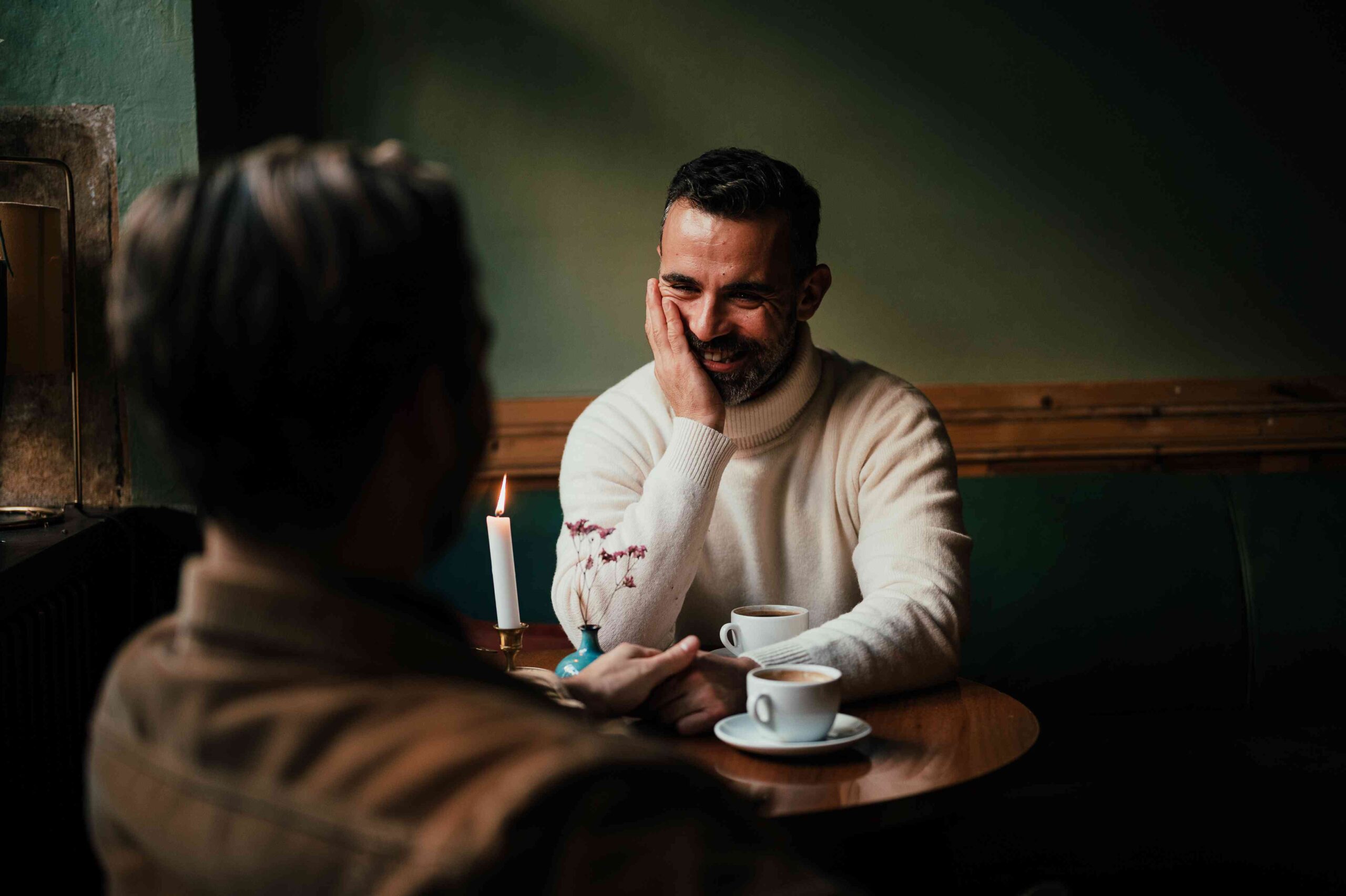
You’re waiting in line at a coffee shop when it’s finally your turn at the register. After placing your order, you and the barista exchange a few words. The two of you chat about your days, compare your favorite drinks, and bring up the weather. You feel yourself blushing, getting warm — they’re kind of cute! — and notice yourself looking down, giggling, and tapping your fingers on the table. Ugh, why am I like this?
At one point or another, we’ve all become inexplicably nervous around someone we find attractive. We can usually tune into our own body’s responses in certain situations, noticing how the other person makes us feel. However, times like these make us question why we must lose control of our bodies. Is it so hard to play it cool, calm, and collected?
Linda Whiteside, MA, LCPC, of NuView Treatment Center in Los Angeles, defines nervous habits as “automatic behaviors that people engage in when they’re nervous or upset.” Although these actions relieve stress, she says, “they frequently develop into reflexive reactions to discomfort.” That is, we can end up displaying these behaviors to self-soothe without even realizing it.
Thankfully, with the right amount of understanding, we can approach these situations with confidence. Let’s take a deeper look at why these feelings might manifest.
The Psychology of Anxiety in Romantic Interest
So, what leads to this profusely sweating, tongue-tied, can’t-sit-still version of ourselves when we’re around someone we like? It turns out we have a built-in mechanism for coping with the charged feelings that arise around a crush. Whiteside says, “Physical reactions such as blushing or squirming are the body’s way of releasing tension and adjusting to the emotional intensity.”
Anxiety and excitement play a major role in this process, and are essentially different sides of the same coin. Both of these are high-arousal emotions, and trigger the same physiological responses in our bodies.
Aaron Gilbert, LCSW, founder of Boston Evening Therapy Associates, says nervous habits themselves can lead to even more anxiety. “If we notice our nervous habits, we can start worrying about how we’re coming across to the person we’re attracted to,” he says. “We wonder if they notice what we’re doing, and can leave the interaction embarrassed and worried our nervous habits were off-putting.”
Common Signs Indicating Romantic Interest
Nervous habits can take many forms — and vary from person to person, or even based on the intensity of the feelings. Here are a few of the most common ones.
Physical Signs
- Fidgeting with objects or clothing
- Touching face or hair frequently
- Sweating or blushing
Behavioral Signs
Interpreting Nervous Habits Accurately
So, how can we get ourselves off the mental rollercoaster of determining whether we’re fidgeting because we like them… or because we’re just feeling anxious?
We can start by considering the context in which the behaviors occur, such as setting and personality. Certain environments may be more stimulating, which can trigger nervous habits in those who have trouble processing sensory input (for instance, people living with ADHD).
Dr. Dakiri Quimby, clinical assistant professor of Psychiatry & Behavioral Sciences at the University of Southern California, says personality traits—like introversion and extroversion—can also play a role. Introverts are also more susceptible to overwhelm in highly stimulating environments, which can make them more likely to display nervous habits as a coping mechanism.
Other mental health conditions may also contribute to nervous habits. Those living with generalized anxiety disorder can exhibit symptoms such as twitching, sweating, and restlessness. These are manifestations of the condition and may not necessarily indicate romantic interest.
Above all, be patient and observe how the other person acts over time. Situational factors, like stress levels and lack of sleep, can influence the behaviors we engage in, too. Becoming aware of patterns can help us determine whether it’s appropriate to make a move.
Gender and Cultural Differences in Nervous Habits
Our gender and cultural identities impact the way we were socialized, and may also clue us into our intentions and theirs. A 2015 research article in Emotion Review found that, in western cultures, women are socialized to be more emotionally expressive. Men are often taught to “bottle up” their feelings, which can make it difficult to gauge emotional states based on behaviors alone.
Cultural factors can also impact whether or not nervousness is expressed. According to a 2016 study in Emotion, cultural values and norms (i.e., individualism and collectivism) influence how emotions are conveyed, if at all. Researchers found that emotional calmness is valued in China, while emotional expressiveness is the norm in the U.S.
Moving Forward
Okay, so we’ve observed the behavior and taken time to consider context. How do we move forward?
It all starts with understanding where it’s coming from. “If you notice someone exhibiting nervous habits around you, the best first step is to empathize with them,” says Gilbert. “Chances are, you’ve felt that way around someone else, and you might even be feeling the same nervousness towards them.”
We can then work on building comfort in the situation. This will alleviate some of the tension and promote relaxation, so we can engage in a more authentic interaction. “One especially brave approach that I really love is admitting your own nervousness first,” says Gilbert. This might look like saying, “I’m feeling really nervous right now!” or, “I just noticed I’m twirling my hair. I always do that when I’m nervous!”
Conclusion
Nervous habits can be… well, nerve-wracking. But with a bit of time and mindful observation, we can speculate whether or not they’re coming from a place of romantic interest.
It’s important to be kind to ourselves and the others involved throughout this process. Nervous habits are part of the human condition, and we will all experience them at some point. By normalizing them and making the other person feel safe, we can open ourselves up to more meaningful connections.
Thanks for your feedback!
What is your feedback?
Helpful
Report an Error
Other
