

Key Takeaways
- Thalassophobia is a fear of deep bodies of water, like the ocean, and can cause intense anxiety and fear symptoms.
- Ocean fears can be due to genetic factors, past experiences, or upbringing.
- Symptoms include dizziness, rapid heart rate, and a feeling of needing to escape when near or thinking about deep water.
Thalassophobia is a specific phobia that involves a persistent, intense fear of deep bodies of water such as the ocean or a lake. It stems from the Greek word thalassa (“the sea”) and phobos (“fear”). Although not recognized as a distinct disorder by the “Diagnostic and Statistical Manual of Mental Disorders” (aka the DSM-5-TR), its symptoms meet the diagnostic criteria for specific phobias.
For some, the ocean represents a place of beauty and serenity. For people with ocean phobias, it’s a source of deep, primal fear. It’s more than just a dislike or sense of discomfort. This phobia involves intense anxiety symptoms that are triggered by the thought, image, or presence of an ocean’s vast, mysterious waters.
Ocean phobias may stem from a fear of what lurks below the water’s surface. They may also be connected to the overwhelming scale of the open water, a fear of being lost in a deep abyss, or just a powerful unease with the ocean’s dangers.
According to the National Institute of Mental Health (NIMH), phobias are one of the most common types of mental illness in the United States. And while specific phobias are quite prevalent, it is unknown how many people have thalassophobia.
Keep reading to learn more about how to spot the signs of ocean phobias, what causes this type of fear, and what you can do to cope if you have thalassophobia.
Thalassophobia vs. Aquaphobia
Thalassophobia differs from aquaphobia, the fear of water, in that it centers on bodies of water that seem vast, dark, deep, and dangerous. People are not afraid of the water so much as they are afraid of what lurks beneath its surface.
Click Play to Learn More About the Fear of the Ocean
Understanding Specific Phobias
Specific phobias tend to be one of five different types:
- Animal type
- Blood-injection type
- Natural-environment type
- Situational type
- Other
Thalassophobia is usually considered a natural-environment type of specific phobia. Natural environment fears, like ocean phobias, tend to be one of the more frequently experienced phobias.
What Causes Ocean Phobias?
The exact causes of ocean phobias (and other types of phobies) isn’t fully understood, but it is believed that a variety of factors play a role. Like other types of phobia, it is likely a combination of nature and nurture that contributes to thalassophobia.
Genetics
From a nature perspective, evolution and genetics may play a role. Our ancestors who were more cautious and fearful of deep bodies of water were probably more likely to survive and pass down these fearful genes to their offspring.
Past Experiences
This fear may also be partially learned due to experiences people may have had around water. Being frightened by something while swimming, for example, may also be a possible cause of this type of fear.
Upbringing
Observing other people, particularly parental figures and other influential adults, who also had a fear of deep water might also be a contributing factor.
There are also a number of risk factors that might increase the likelihood that a person will develop a specific phobia such as thalassophobia. Some of these include:
- Having a family member with thalassophobia or another type of specific phobia
- Personality factors, such as being more negative, sensitive, or anxious
- Traumatic personal experiences involving deep water, large bodies of water, or ocean travel
- Hearing stories from other people or through media sources focused on water accidents
Signs & Symptoms of Thalassophobia
Ocean phobias can trigger both physical and emotional symptoms of anxiety and fear.
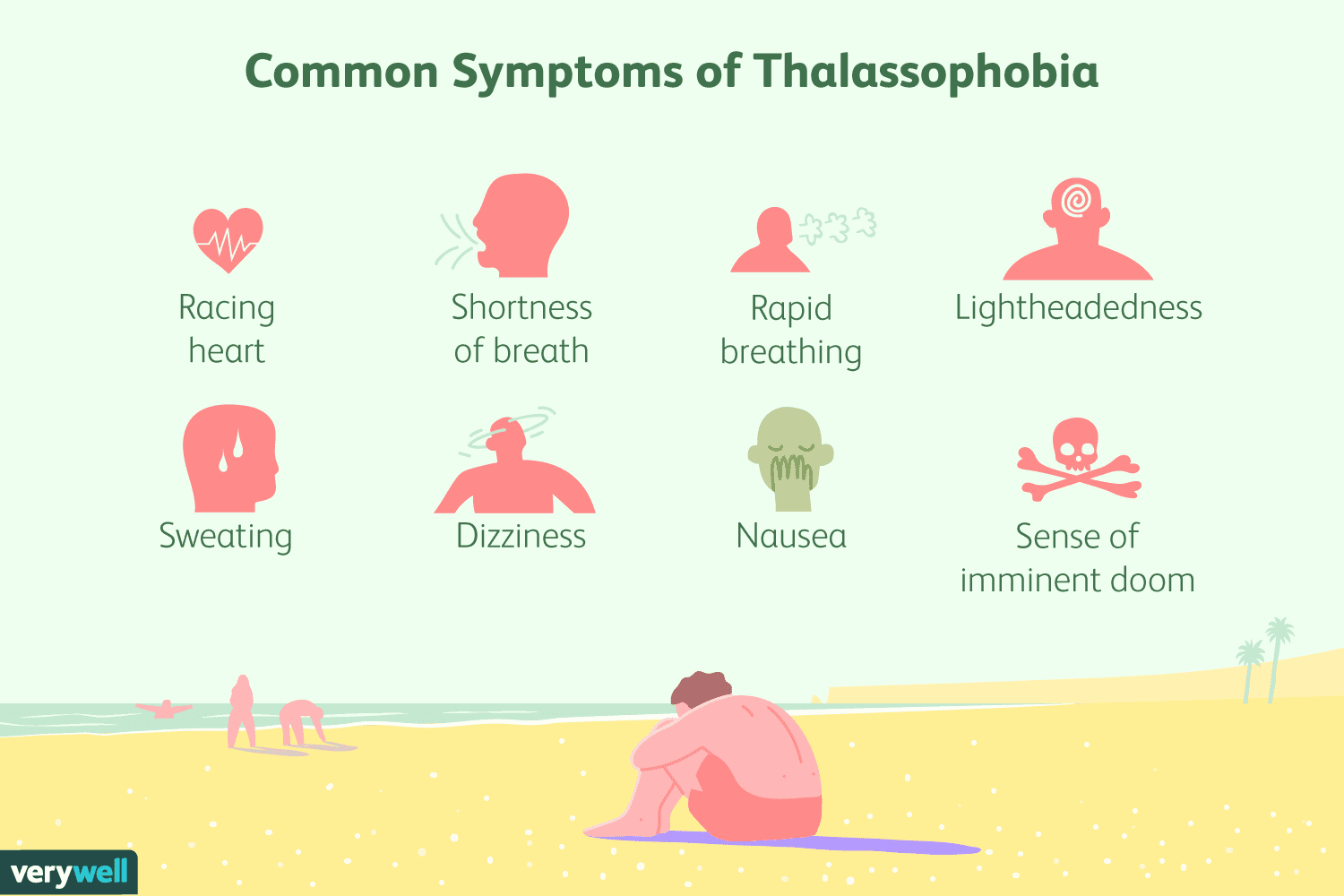
Some of the common physical symptoms of thalassophobia include:
- Dizziness
- Lightheadedness
- Nausea
- Racing heart
- Rapid breathing
- Shortness of breath
- Sweating
Emotional symptoms can include:
- Being overwhelmed
- Feelings of anxiety
- Feeling detached from the situation
- Having a sense of imminent doom
- Needing to escape
This fear response can happen if you come into direct contact with the ocean or other deep bodies of water, such as driving past the beach or flying over the ocean on a plane. But you don’t necessarily have to be near water to experience symptoms.
For some people, simply imaging deep water, looking at a photograph of the water, or even the sight of words like “ocean” or “lake” is enough to trigger the response.
A phobic response is more than just feeling nervous or anxious. Imagine how you felt the last time you were faced with something dangerous. You probably experienced an immediate and intense onset of the fight-or-flight response, a series of reactions that prepare your body to either stay and deal with the threat or run away from the danger.
A person with thalassophobia will experience that same reaction even if the response is out of proportion to the actual danger.
People with this condition don’t just experience physical and emotional symptoms when they encounter fear triggers; they will also go to great lengths to avoid being near or having to even look at large bodies of water. They may experience anticipatory anxiety when they know that they will be encountering the object of their fear, such as feeling extremely nervous before boarding a ferry boat, and forms of water travel.
Verywell / JR Bee
How Are Ocean Phobias Diagnosed?
If you suspect you might have thalassophobia, there are a few things that you can do. An informal online test might give you an indication that you have this type of specific phobia. Such internet-based, at-home tests might involve looking at potentially triggering images or taking a quiz to determine the extent and severity of your symptoms.
For a more formal diagnosis, you will need to consult a health professional such as a doctor, psychiatrist, or psychologist.
While there is no formal test or assessment to diagnose this phobia, your doctor will likely assess your symptoms and investigate any possible underlying medical factors. Once your doctor understands your medical and symptom history, you may then be formally diagnosed with a specific phobia.
To be diagnosed with a specific phobia according to the criteria described in the DSM-5-TR:
- Your fear of deep water is persistent, excessive, and unreasonable
- You feel this fear every time you are exposed to deep or open water
- You realize that your fear is out of proportion to the actual dangers
- You either avoid the ocean or other waters or endure them with intense fear
- Your fear of large bodies of water interferes with your normal functioning
- Your fear has been present for six months or longer
- Your fear is not better explained by another disorder such as generalized anxiety disorder or post-traumatic stress disorder
Treatments for Ocean Phobias
While there is no research available on the treatment of thalassophobia specifically, people with ocean phobias would likely benefit from the same types of treatments that are used to address other types of specific phobias.
Research suggests that behavior therapy treatments, particularly exposure-based treatments, tend to be quite effective at reducing symptoms of specific phobias. Other forms of behavioral therapy found effective for phobias include:
Research suggests that in vivo (aka real-life) exposure tends to be more effective than imagined exposure, but a study published in Frontiers in Psychology found that virtual exposure appeared as effective as real-world exposure.
Of course, exposure to a fear object in real-life is not always possible, particularly if it involves something dangerous or impossible. In the case of thalassophobia, live exposure to open water may be the most effective, but imagined exposure may provide some benefits if this is not possible.
Treatment may sometimes encompass a number of different strategies including gradual exposure, systematic desensitization, cognitive restructuring, and relaxation techniques.
Complications of Thalassophobia
Although thalassophobia may simply sound like a quirky fear to some, it can make life difficult for those who have struggle with it. These complications can ultimately end up impacting many different areas of a person’s life.
- Panic attacks: A panic attack is characterized by sudden and intense feelings of fear, accompanied by physical symptoms that can include chest pain, feelings of choking, numbness, feelings of unreality, and a fear of dying.
- Loneliness and social isolation: Anxiety symptoms and fear of experiencing a panic attack can sometimes lead people to avoid situations where they might come into contact with their fear object. This can lead to increased loneliness and social isolation.
- Depression: Research has shown that people with specific phobias also sometimes experience mood changes or symptoms of depression.
- Substance misuse: People may sometimes self-treat symptoms of anxiety with alcohol and other substances.
Can You Prevent Ocean Phobias?
While genetic and evolutionary factors may play a role in the onset of specific phobias such as thalassophobia, there are steps people may take to help prevent such fears from developing.
Because thalassophobia is often provoked by a specific stressful or traumatic experience, how such experiences are dealt with can play a major role in whether a phobia eventually takes hold.
Some steps you can take to minimize the risk of developing thalassophobia include:
Get Help Early
If you suspect you might be developing a severe fear of deep or open water, look for ways to deal with your anxiety as soon as possible. This might involve talking to a mental health professional about what you can do to ease your fears.
Model Desired Behaviors
Children may learn phobic responses from parents, so if you have a fear of deep, dark water, your child may pick up on your anxiety as well. Seeing you respond fearfully to certain things and situations may result in your child developing the same fear response.
You can help prevent this by confronting your own fears in a positive way and modeling non-anxious behaviors around your children.
Tips for Coping With Thalassophobia
Dealing with thalassophobia can be challenging, but there are things that you can do to cope and ease your fears.
Relaxation Strategies
When you find yourself experiencing fear-related symptoms in response to water or even the thought of water, try a relaxation technique to calm your mind and body, including:
The more you practice these techniques, the better able you will be able to control your symptoms in the face of your fears.
Self-Exposure
While treatment under the care of a therapist is often best, you can also take a self-help approach to confront your fears. Start by simply visualizing yourself near a deep body of water, then use the relaxation techniques you have been practicing to calm yourself.
Over time, gradually expose yourself to the source of your fear, starting with images, then smaller bodies of water, and eventually the ocean, sea, or large lake. Each time, use your relaxation methods to ease your fear response.
Over time, your fears should begin to ease and you should find it much easier to reach a calm state of mind.
Note: Always use caution and never place yourself in a potentially unsafe situation. The key is to only confront your fear in a well-controlled environment.
