

I’m a self-proclaimed wellness warrior. Honestly, there isn’t much I haven’t tried, or would at least be open to testing. Supplements? I’ve got dozens of them. Red light therapy masks? I alternate between two. Name a post-workout recovery tool, and I can almost guarantee I own it, or have used it at least once. So when vibration plates started popping up on my Instagram feed, my curiosity immediately perked up.
For weeks I watched social media clips of people standing on these futuristic-looking platforms while claiming better circulation, faster recovery, toned legs, and even fat loss. I was intrigued, but also kept a healthy amount of skepticism. How could a shaking piece of technology really provide that many benefits? Well, in classic wellness warrior fashion, I was willing to try it, and would hopefully find out.
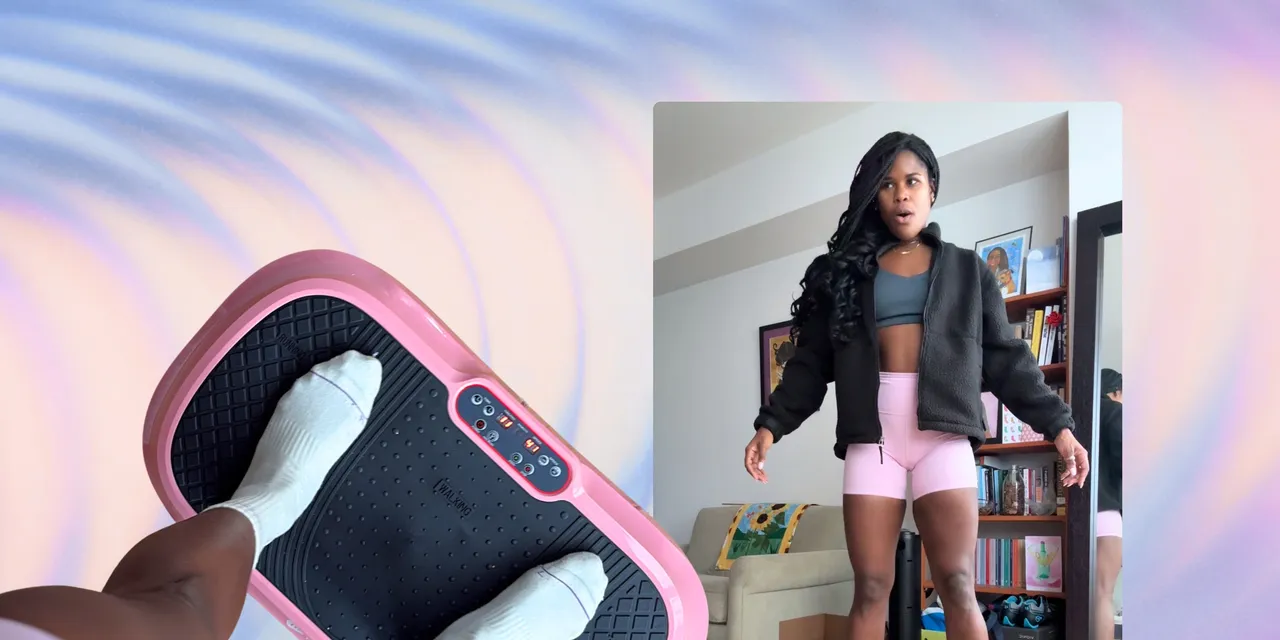
I ordered a vibration plate (I even found a pink one—my favorite color), slid it into the corner of my apartment, and committed to using it for 10 minutes, three to five times a week, for a full month.
My goal wasn’t to replace my workouts. I already run 20 to 30 miles a week, strength-train twice a week, and cross-train with indoor cycling. I wanted to know if a vibration plate can meaningfully support how I feel, move, and recover. Or is it just another buzzy gadget destined to collect dust? My 30-day experiment gave me the answers, and I tapped some experts to explain the science behind them.
What a vibration plate actually does
Vibration plates deliver high-frequency, low-intensity vibrations through the body. The consistent vibrating triggers rapid, involuntary muscle contractions as you try to stay stable on it, Jessica Leung, DPT, a Boston-based physical therapist tells SELF. So you can expect increased muscle engagement and blood flow while your body works to maintain balance.
Not every vibration plate is the same. Some shake in different patterns—side to side, front to back, or up and down. I bought the Lifepro Waver, a bestseller on Amazon and a popular option according to social media. It vibrates in a side-to-side motion, meant to mimic walking or jogging by shifting your weight from one leg to the other.
It’s important to note that these machines are not for everyone. If you have spinal issues, advanced osteoporosis, or certain joint conditions, a vibration plate may be inappropriate, Leung warns. When in doubt, talk to a doctor first.
