

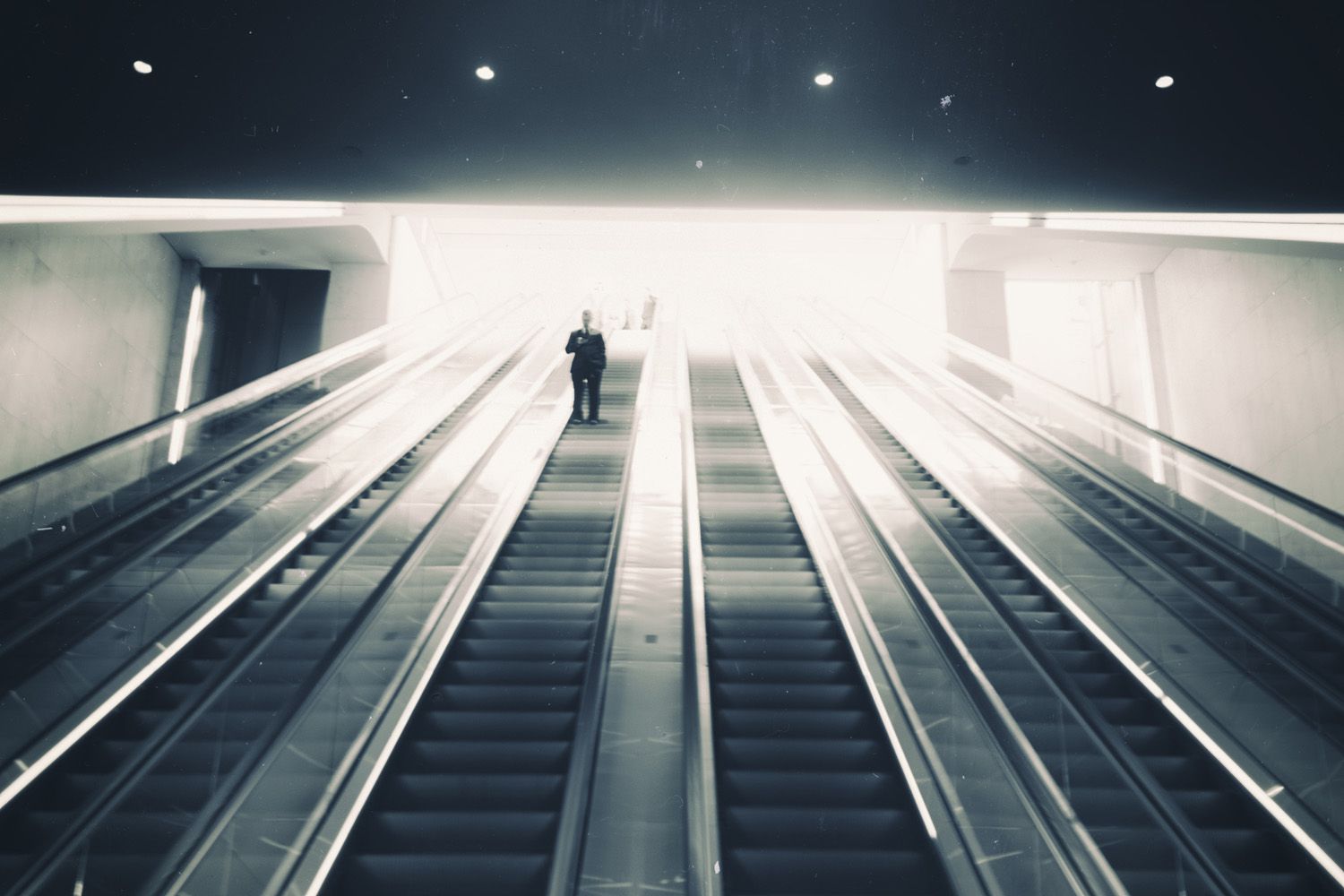
The fear of escalators is a type of specific phobia known as escalaphobia. People with this fear don’t just dislike or feel uncomfortable around elevators; they experience symptoms of intense fear and distress that can make it difficult to function.
Estimates suggest around 10,000 escalator-related injuries resulting in emergency room treatment occur each year. Escalators can be dangerous, particularly when used improperly, so it perhaps is not surprising that some people may develop this type of phobia.
At a Glance
People who have a fear of elevators often avoid situations where they might encounter the source of their fear. This fear often stems from negative experiences, but genetics, other anxiety disorders, and physical or visual conditions may also play a part. While this condition can be distressing, there are effective treatments that can help.
What Is Escalaphobia?
Escalaphobia is the fear of escalators, and it’s more common than you might think. According to the Elevator Escalator Safety Foundation (EESF), over 35,000 escalators in the U.S. and Canada transport around 245 million people daily.
Despite their frequent usage, escalators are scary for some people. The fear of escalators may be mild or severe, and the reasons behind the fear range from misunderstandings about their construction to the perception of moving too quickly.
What Causes a Fear of Escalators
Several factors can contribute to the development of escalaphobia:
Physical Conditions
Any fear based on a real medical concern or immediate threat isn’t considered a phobia. Many cases of escalaphobia can fall into this category. Conditions that might make someone hesitant to use an escalator include:
- Medical vertigo
- Balance difficulties
- A lack of depth perception
- Vision troubles
- Sensory issues
For this reason, it is always important to see a doctor to rule out any physical causes of a possible escalator phobia.
Phobias Related to Escalaphobia
The fear of escalators is often, though not always, related to another phobia. Some related phobias can include:
- Bathmophobia, or the fear of stairs and slopes, often encompasses escalators as well. People with this phobia are afraid of simply being in the presence of a slope or a set of stairs, even if they are not expected to climb or descend. The constantly moving metal steps of an escalator could be even more terrifying.
- Climacophobia, or the fear of climbing, may also be to blame. Those with climacophobia are perfectly comfortable being around stairs and slopes but become fearful when expected to actually use them.
- Acrophobia, the fear of heights, is another potential related cause.
- Illyngophobia, the fear of vertigo, is another possible culprit.
Having a family history of anxiety or other phobias may increase your risk of developing a specific phobia, such as escalaphobia.
Negative Experiences with Escalators
Previous negative experiences with the feared object or situation trigger many phobias. If you ever caught a shoelace in an escalator, slipped while getting on or off, or lost your balance when the steps and the handrails were mistimed, you might be at increased risk for developing an escalator phobia.
Witnessing a Negative Experience
The negative experience need not have happened to you. If you witnessed a fall in person or even on TV, or if a parent or close relative had the same fear, you might also be more likely to develop escalaphobia.
Escalator Myths Can Contribute to Fears
Escalators, like other large machines, can seem mysterious. Escalators are generally located right out in the open, where it seems that all the moving parts are visible. Yet the escalator’s movement does not seem to make sense at first glance.
Numerous myths have developed over more than a century of use, many of which make escalators seem more dangerous than they are.
According to the EESF, some people believe that escalators move too fast (they only move at two times the normal walking speed), can reach out and grab people, or even that the steps could somehow flatten out and cause the riders to slide down. The Foundation assures readers that none of these myths are true, yet for many, the legends persist.
Adding to the confusion is the fact that it is entirely possible to be injured on an escalator. The fact-checking website Snopes has verified dozens of incidents in which children’s shoes got stuck in moving parts of an escalator, leading to serious injuries.
Treatment for Escalaphobia
If your escalator phobia is severe, consider seeking professional assistance. Although elevators and stairs are reasonable alternatives, there is no guarantee that these items will be available everywhere you go. Rather than limiting your movements, consider beating the fear altogether.
Like most phobias, escalaphobia generally responds well to a variety of brief therapy treatments. Some of these include:
- Cognitive behavioral therapy (CBT): One of the most popular is cognitive-behavioral therapy, in which you will learn to replace your fearful thoughts about escalators with healthier messages.
- Exposure therapy: This involves being exposed to the source of your fear until feelings of fear and anxiety begin to subside. Exposure is often combined with relaxation techniques to help people better manage feelings of anxiety.
- Virtual exposure therapy: Real-life exposure can be helpful, but evidence also suggest that virtual or imaged exposure can also be effective.
How to Cope With a Fear of Escalators
Like any machine, it is possible for an escalator to malfunction. No activity, including riding an escalator, is entirely risk-free. However, the EESF maintains a list of safety rules that, when properly followed, minimize the potential risks. The rules include:
- Always facing forward and using the handrail
- Not touching the sides below the handrail
- Supervising small children
- Wearing securely attached footwear
- Not transporting rolling carts or strollers on escalators
For many people, simply familiarizing themselves with escalator safety procedures is enough to combat the fear. Learn how escalators work, how best to prevent accidents, and what to do should an emergency occur. Be sure to teach your children how to safely use escalators as well.
Other self-help strategies can help you manage your fears. Relaxation techniques like deep breathing can help you feel less anxious when encountering fear-provoking situations. Cognitive reframing—which involves challenging negative, fearful thoughts with more positive, realistic ones—can also be helpful.
Takeaway
If you have a fear of elevators, it is important to know that treatments are available that can help. Talk to your doctor or therapist to determine which one might be right for you.
Tackling your fear takes some time and effort, but it can also lead to great rewards. Being able to live your life free of excessive fear and distress can improve your well-being tremendously.
Verywell Mind uses only high-quality sources, including peer-reviewed studies, to support the facts within our articles. Read our editorial process to learn more about how we fact-check and keep our content accurate, reliable, and trustworthy.
-
Schminke LH, Jeger V, Evangelopoulos DS, Zimmerman H, Exadaktylos AK. Riding the escalator: How dangerous is it really? West J Emerg Med. 2013;14(2):141-145. doi:10.5811/westjem.2012.12.13346
-
Elevator Escalator Safety Foundation. Safety for older adults.
-
American Psychiatric Association (APA). Diagnostic and Statistical Manual of Mental Disorders. 5th ed, text revision. Washington, D.C.; 2022.
-
National Institute on Deafness and Other Communication Disorders. Balance disorders.
-
BBC News. Donald Trump is ‘scared of stairs’ – but what is bathmophobia?
-
Anxiety UK. Heightened anxiety: How to overcome a fear of high places.
-
Garcia R. Neurobiology of fear and specific phobias. Learn Memory. 2017;24(9):462-471. doi:10.1101/lm.044115.116
-
McCann M, Zaleski N. Centers for Disease Control and Prevention – The National Institute for Occupational Safety and Health. Deaths and injuries involving elevators or escalators (revised). Reviewed January 3, 2020.
-
Elevator Escalator Safety Foundation. Escalator Myths and Truths.
-
Mikkelson D. Snopes. Escalator Footwear Injuries. January 20, 2016.
-
Carpenter JK, Andrews LA, Witcraft SM, Powers MB, Smits JAJ, Hofmann SG. Cognitive behavioral therapy for anxiety and related disorders: A meta-analysis of randomized placebo-controlled trials. Depress Anxiety. 2018;35(6):502-514. doi:10.1002/da.22728
-
Elevator Escalator Safety Foundation. The Elevator Escalator Safety Foundation Fact Sheet.
Thanks for your feedback!
What is your feedback?
Helpful
Report an Error
Other
