

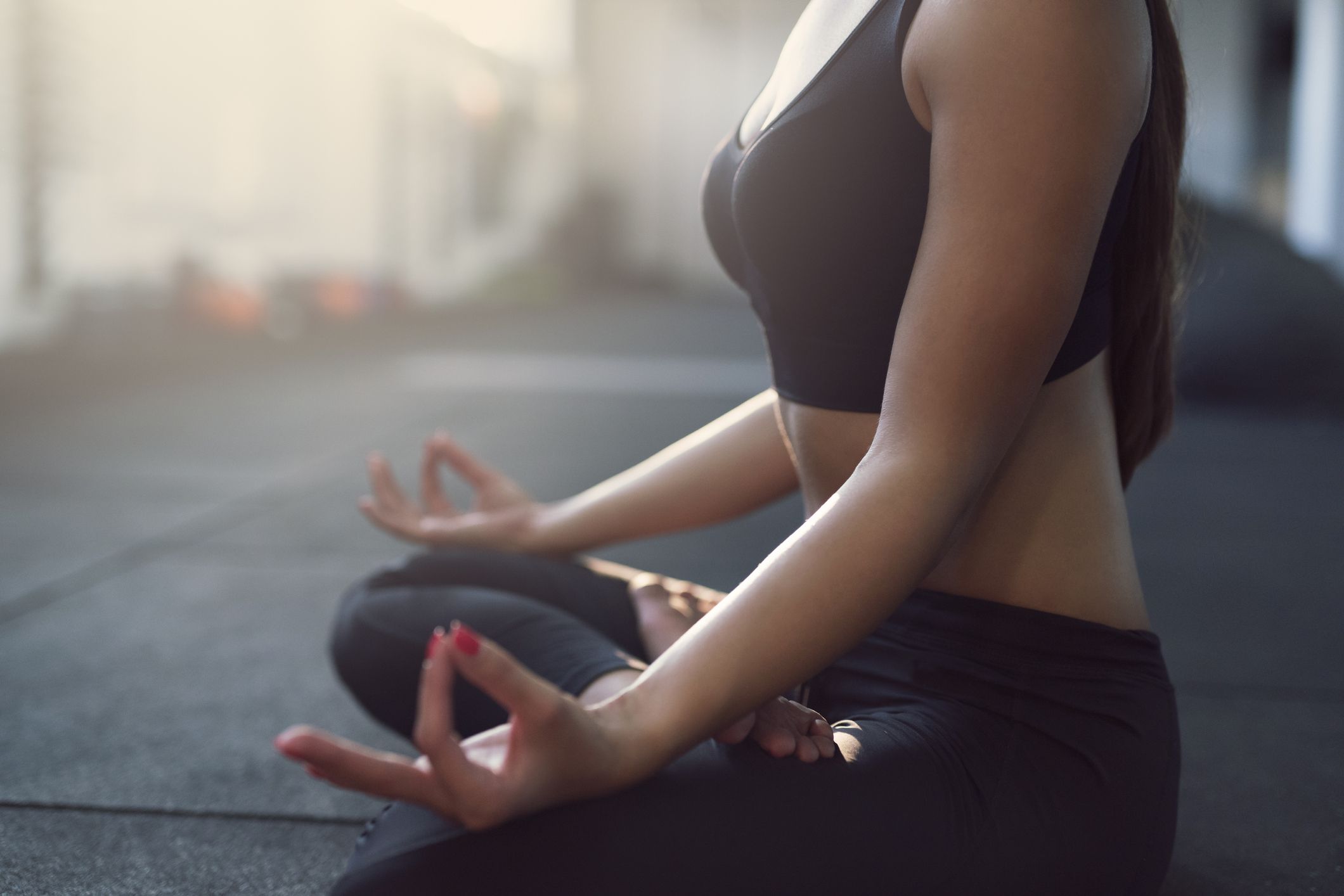
Coherent breathing is a form of breathing that involves taking long slow breaths at a rate of about five per minute. Coherent breathing, or deep breathing, helps to calm the body through its effect on the autonomic nervous system.
Whether it is practiced as part of yoga or meditation, or simply on its own as a relaxation strategy, coherent breathing is a simple and easy way to reduce stress and calm down when feeling anxious.
Coherent Breathing is a registered trademark of Coherence LLC. Note that this article describes a general technique and not the specific protocol or products developed by Coherence LLC.
At a Glance
Coherent breathing is a simple breathing technique that can significantly impact health and well-being. It involves taking deep, controlled breathes at a rate of six seconds per breath. Try this type of breathing if you are struggling with stress, anxiety, low mood, or other problems to see if it might help.
What Is Coherent Breathing?
You breathe in and out every day without much thought. While breathing is mostly automatic, it can also be controlled consciously. Coherent breathing uses this ability; by regulating our breath, we can positively influence our body.
What happens during a breath? There’s the inhale, when you draw air into your lungs, and the exhale, when you release the air. Coherent breathing involves extending the time spent on each inhale and exhale.
Our natural tendency is to breathe at a rate of two to three seconds per inhale and exhale. We naturally consume an amount of air that is proportional to the length of our breaths.
In coherent breathing, the goal is to extend the length of both the inhale and exhale to around six seconds (perhaps longer if you have a longer torso).
This type of controlled breathing is sometimes practiced as part of yoga (the term “pranayama” refers to breath control within yoga practice). It is also used within meditation. However, controlled breathing can be practiced on its own without any fancy tools, detailed instructions, or the need for a therapist. All you need to do is change the length of your breaths.
An altogether different type of breathwork is holotropic breathwork, which is usually performed in a group setting.
How Coherent Breathing Works
How does coherent breathing help slow your body down? Breathing is one part of the autonomic nervous system (ANS), which also includes your heart rate, digestion, and other functions.
The Role of the Vagus Nerve
Your vagus nerve runs from your brain through your diaphragm to your gut. Its role is to send signals that adjust the parasympathetic and sympathetic nervous systems, which are parts of the ANS. This affects your heart rate, digestion, and overall feelings of calmness.
The vagus nerve usually regulates your heart, helping to keep the rate steady between 70 and 100 beats per minute.
This is why the easiest way to activate your vagus nerve to put the neural brake on a racing heart is to slow down your breath. It’s almost like a hack for your nervous system—you can do something within your conscious control that has an effect on processes that you otherwise can’t directly control.
In effect, if you can get your breathing to leave a stressed state, the rest of the parts of your autonomic nervous system will follow suit, creating a chain reaction that can help to reduce stress, anxiety, and related problems.
Breathwork as Vagus Nerve Therapy
The vagus nerve is gaining attention on social media, which features videos on different vagal stimulation techniques. The idea is that by regularly stimulating your vagus nerve, it may become better at sending signals.
Coherent breathing can also affect the phrenic nerve, which improves blood circulation, and the amygdala, a part of the brain that regulates emotions, fear, and anxiety.
What Are the Effects of Coherent Breathing?
Research is still in its infancy regarding the effects of coherent breathing. However, there is lots of promising news suggesting that this type of breathing has a number of important mental and physical health benefits.
We know that this type of breathing may be helpful for insomnia, anxiety, depressive symptoms, stress, immune system response, alertness, concentration, vitality, post-traumatic stress disorder, and attention deficit disorder.
Research indicates that controlling your breathing can have a number of positive effects:
- One study showed that levels of gamma-aminobutyric acid (GABA) increased after a trial of controlled breathing; GABA is important because of its anti-anxiety effects.
- Another study showed that lower levels of cytokines were found after coherent breathing; these are linked to inflammation and stress.
- In general, breathwork—or the deliberate control of breath, is associated with lower stress and reduced anxiety.
How to Do Coherent Breathing
If you are interested in practicing coherent breathing, the following steps will show you how to get started:
- Focus on your natural breaths. Count the length of each inhale and exhale to obtain a baseline.
- Find a comfortable position to practice coherent breathing. Place one hand on your stomach.
- Breath in for four seconds and then out for four seconds. Do this for one minute.
- Repeat, but extend your inhales and exhales to five seconds.
- Repeat again, extending further to six seconds.
During this process, keep your hand on your stomach to ensure you are breathing deeply from your diaphragm and not shallowly from your chest.
You might feel as though you need to take a deep breath or that you can’t stop your thoughts from wandering. That’s okay! Just bring yourself back to focusing on your breathing and counting the length of your breaths in your head.
If you find that you feel comfortable taking even longer breaths, feel free. Breaths as long as 10 seconds may feel right for some people. It’s also okay to have a longer exhale than inhale.
Once you’re able to do this for five minutes, gradually work your way up to 20 minutes. You can practice anywhere! In bed at night, while waiting at the doctor’s office, or even when driving.
Don’t try to force the breath or try to take in more air. This will happen naturally as you lengthen your breaths and get used to how it feels.
How to Get Help With Coherent Breathing
You don’t have to try and practice coherent breathing all on your own without help. There are several options for you to try if you are having trouble.
Yoga
Join a yoga class. Most yoga classes will involve a breathwork component where you practice this type of breathing.
A good instructor will also check to make sure you are not holding your breathing, and are making the most of your breath practice. This sort of group setting could be just the thing to get you breathing in a way that helps to calm your body.
Breathing Workshops
Yes, there are workshops just for breathing! Attend a workshop where you will learn how to practice coherent breathing.
Most likely, you will practice with one or two other people and take turns making sure that each of you is doing it correctly. This can be an excellent way to get hands-on instruction and practice in this technique.
Technology
Technology can help you to practice coherent breathing. Download an app for your mobile phone that guides you through the proper lengths of inhaling and exhaling.
Smart watches may also have this technology, so check all your devices to see what options are available to you. Even the simplest app could make the difference in helping you breathe correctly for the right length of time.
Other Breathing Exercises
Interested in trying some other breathing exercises? Here are a couple of variations for you to try:
Belly Breathing
Sit on the floor or the edge of a chair. Place your hand on your stomach and as you inhale, lean forward. Then, as you exhale, curl forward to squeeze out your breath. Repeat this 15 to 20 times more.
Energizing breathing
Are you stuck at work and can’t get energized? Try energized breathing in a standing position. Bend your elbows and face your palms up.
As you inhale, draw your elbows back, palms continue to stay up. Then, as you exhale, thrust your palms forward and turn them downward, saying “HA.” Repeat 15 times.
When Coherent Breathing Isn’t Helping
If you’ve been practicing coherent breathing but still feel anxious and depressed, you may wonder what you’re doing wrong. Coherent breathing can be helpful, but that doesn’t mean it is an instant fix for serious mental health conditions.
Negative thoughts might make coherent breathing less effective. When you experience negative thinking, it makes it difficult or impossible for your body to stay in a relaxed state.
Other methods, such as cognitive-behavioral strategies, may be helpful for you to manage these types of thoughts and reduce their impact. A good app to try for this is Woebot, a chat app that includes a thought challenger for dealing with negative thoughts.
If after practicing coherent breathing you still find that your symptoms are severe, it might be helpful to make an appointment with a doctor or mental health professional to discuss your options.
Get Advice From The Verywell Mind Podcast
Hosted by therapist Amy Morin, LCSW, this episode of The Verywell Mind Podcast shares some techniques that can help you relax.
Follow Now: Apple Podcasts / Spotify / Google Podcasts
