

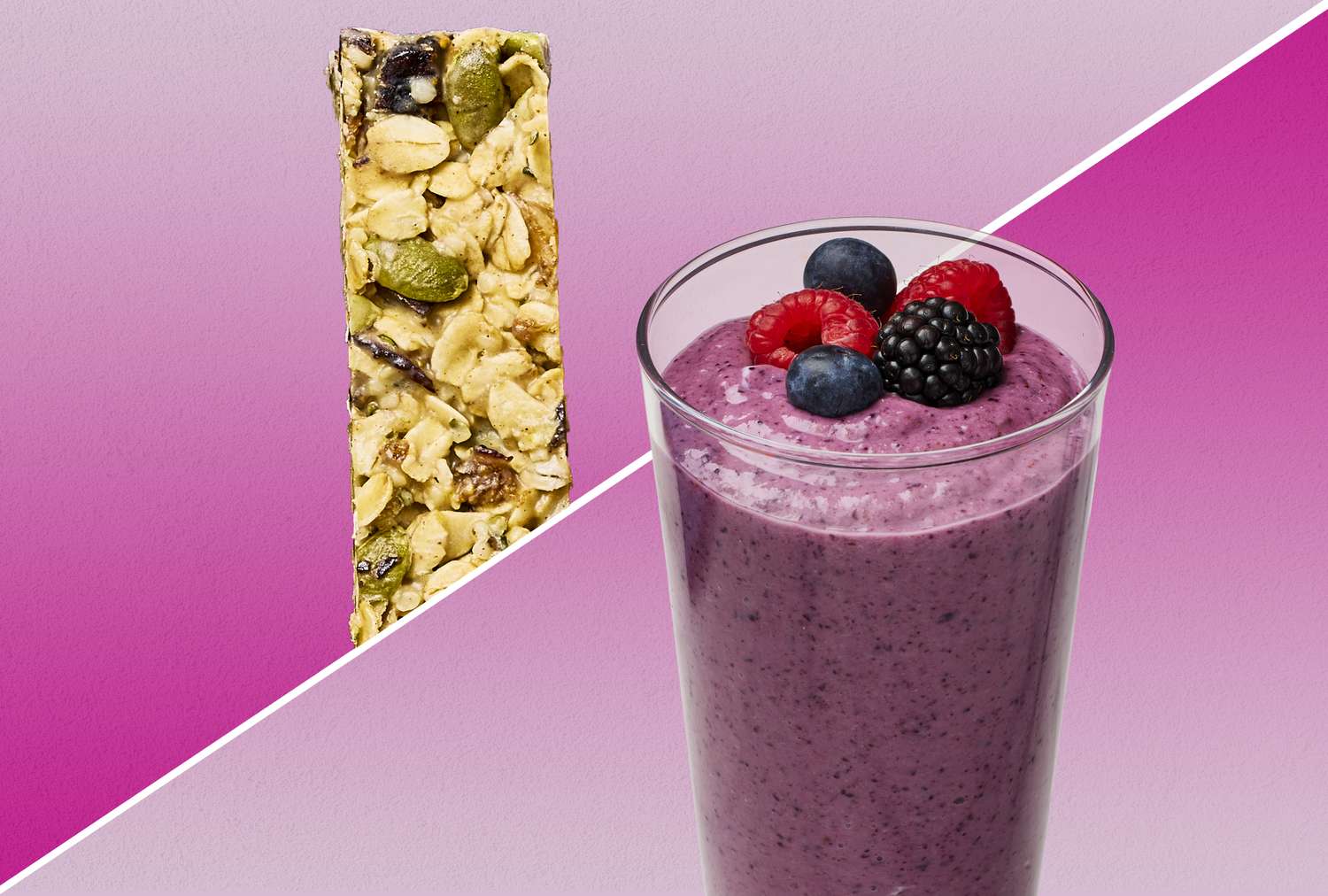
- Protein bars and shakes can both support protein needs depending on your goals.
- Bars are more portable and filling, while shakes are quick and easy to digest.
- The healthiest choice depends on your needs, preferences and lifestyle.
Protein is having its moment in the limelight. While getting protein from whole foods is ideal, it isn’t always possible—and that’s where protein shakes and bars can help.
With grocery store shelves stocked with endless options promising muscle recovery, weight loss and sustained energy, it’s easy to wonder which option is actually healthier. Although both protein bars and protein shakes can help meet your daily protein needs, they’re not nutritionally identical, and the better option may depend on your goals, appetite, preferences and lifestyle.
So, should you reach for a ready-to-drink shake or unwrap a protein bar? Dietitians share the benefits, drawbacks and key differences to help you decide.
Benefits of Protein Shakes
Their High Protein-to-Calorie Ratio
Protein shakes provide a quick, easy-to-digest source of high-quality protein. They often deliver a large amount of protein for relatively few calories, making it easier for people to hit their protein targets without overdoing it with calories, explains Avery Zenker, RD. This can be especially helpful for people trying to lose weight, as it helps them prioritize protein intake while sticking to a calorie deficit, explains Zenker.
They Help Replace Sugar-Sweetened Drinks
“Many protein shakes are sugar-free or low in sugar, and can be enjoyed in place of high-sugar drinks,” says Zenker. Swapping a soda, sweetened coffee drink or fruit punch for a protein shake can significantly reduce added sugar and overall calorie intake. For example, a 12-ounce can of cola contains nearly 37 grams of sugar and no protein, while most protein shakes are primarily protein with little to no sugar. Many protein shakes and powders are sweetened with natural or artificial sweeteners, which can help keep calories and total sugar lower.
That said, some premade protein shakes do contain added sugars, so it’s important to check the Nutrition Facts label before choosing one.
They’re a Great Option If Appetite Is Low
On days when you don’t feel very hungry, a protein shake can be a simple way to help meet your nutrition needs. “Protein shakes are great for people who don’t feel hungry during the day or who often forget to eat during the day, since they’re easy to sip on and fit into a busy schedule,” says Jane Leverich, M.S., RDN. For individuals taking a GLP-1 medication, a protein shake can also be a helpful option to support nutrition when appetite is reduced.
If you’re choosing a premade protein shake, some options may also contain vitamins, minerals and other nutrients, which can further support overall nutrition and convenience, adds Leverich.
Benefits of Protein Bars
They’re a Better Alternative to Other Snacks
Protein bars are a convenient, shelf-stable source of protein that often includes fiber and other nutrients. Their benefits can vary depending on the specific bar. For instance, some protein bars are made with whole-food ingredients, such as nuts, seeds, dried fruits and whole grains. This can make them a more nutritious alternative to other packaged snacks such as candy bars, pastries, granola bars or chips, explains Zenker.
Ashley Lombardi, M.S., RDN, also recommends protein bars as an option to replace some higher-sugar snacks. Some bars can help satisfy cravings for chocolate while offering a more balanced snack.
They’re Convenient
Protein bars are a convenient, on-the-go snack. “They’re easy to keep in your bag or car, so you are not without something to eat,” says Lombardi. Unlike some protein shakes, bars don’t require refrigeration, making them more practical on busy workdays or long travel days.
Many convenience stores and airports also stock protein bars, making them an easy option when you’re away from home.
They May Be More Nutritionally Balanced
Some protein bars offer more than just protein, and often are a good source of fiber, explains Meaghan Ormsby, M.S., RDN. Many bars also provide carbohydrates and fat, making them a more balanced option compared to many protein shakes, which are mostly just protein. The combination of carbohydrates, protein and fat helps to stabilize blood sugar and keeps you feeling fuller for longer.
Depending on the bar, some may also provide other nutrients like calcium or iron, making them more suitable as a balanced snack or small meal.
Do You Need to Choose?
No, you do not need to choose between a protein bar and a shake.
There’s no one-size-fits-all answer, and not all protein bars and shakes are created equal, says Zenker. Whether a protein shake or or a protein bar is the healthier option depends on the context, the specific product and an individual’s health needs and lifestyle, she adds. What counts as “healthy” can also vary depending on how you define it, as well as the ingredients and portion size.
“Protein bars can be more satisfying and portable for on-the-go snacks, while protein shakes are easy to sip quickly and digest, making them convenient after workouts or when you’re short on time,” says Leverich.
Another factor to consider is protein content. If you’re struggling to meet your protein needs through meals and snacks, a protein shake may be helpful since it typically contains more protein than a bar, adds Ormsby.
That said, both options have potential downsides. Ormsby notes that some people dislike the texture and flavor of protein bars. Cost can also be a drawback—particularly for protein bars—as some may cost more per gram of protein than other sources, says Zenker. In these cases, protein powder is often a more affordable option per serving.
Protein shakes may also be less satisfying than whole foods. Because drinking a shake bypasses the chewing process, you may feel hungry sooner compared to eating a solid protein source, Zenker explains.
All the dietitians we spoke with noted that sugar alcohols sometimes found in protein bars and shakes can cause gastrointestinal symptoms like bloating, diarrhea, gas and abdominal pain. These ingredients draw water into the gut, which can contribute to these effects. If this is a concern, watch out for ingredients ending in “-ol,” which typically indicate a sugar alcohol, or check the Nutrition Facts label.
At the end of the day, the best choice depends on your unique needs, preferences and budget.
Our Expert Take
Protein shakes and protein bars can both fit into a healthy eating pattern. “It’s about moderation, variety and balance in a healthy diet,” says Lombardi. Rather than labeling one as universally “healthier,” it’s more helpful to consider how each option fits into your overall routine and eating pattern.
“Ultimately, the best choice depends on digestion, appetite, lifestyle and medical considerations,” says Karolin Saweres, M.S., RDN, LD. If a protein shake helps you replace a sugar-sweetened beverage or recover after a workout, it can be a smart choice. If a protein bar keeps you from skipping meals or reaching for less-balanced snacks, that’s a win, too. “The goal is choosing the form of protein that you can consistently tolerate while staying nourished and satisfied.”
