

Key Takeaways
- Set clear boundaries and avoid enabling your loved one’s behavior to help them face the natural consequences of their actions.
- Remember that it is not your responsibility to “cure” your loved one’s alcohol use disorder; they need professional help to recover.
When you love someone with alcohol use disorder (AUD), it often feels like walking a tightrope. It can be difficult to know how to minimize conflict and stress, support your loved one, and tend to your own needs at the same time. You might feel helpless to change anything at all.
However, certain things you can do may help relieve the pressure and, in some cases, also help your loved one start their path to recovery.
Verywell / Laura Porter
A note about terminology: While “alcoholic” is a colloquial term, the National Institutes of Health (NIH) recommends saying “person with alcohol use disorder” for accuracy and to reduce stigma. Alcohol use disorder (AUD) describes a diagnosable medical condition that is classified as mild, moderate, or severe.
Do’s When Dealing With a Loved One With AUD
The truth is that there’s no quick fix for addiction. If you love someone with an alcohol use disorder, there will be good days, hard days, and ‘not sure I can keep dealing with this’ days. While love alone can’t fix the problem, there are things you can do to support your loved one while protecting your own well-being.
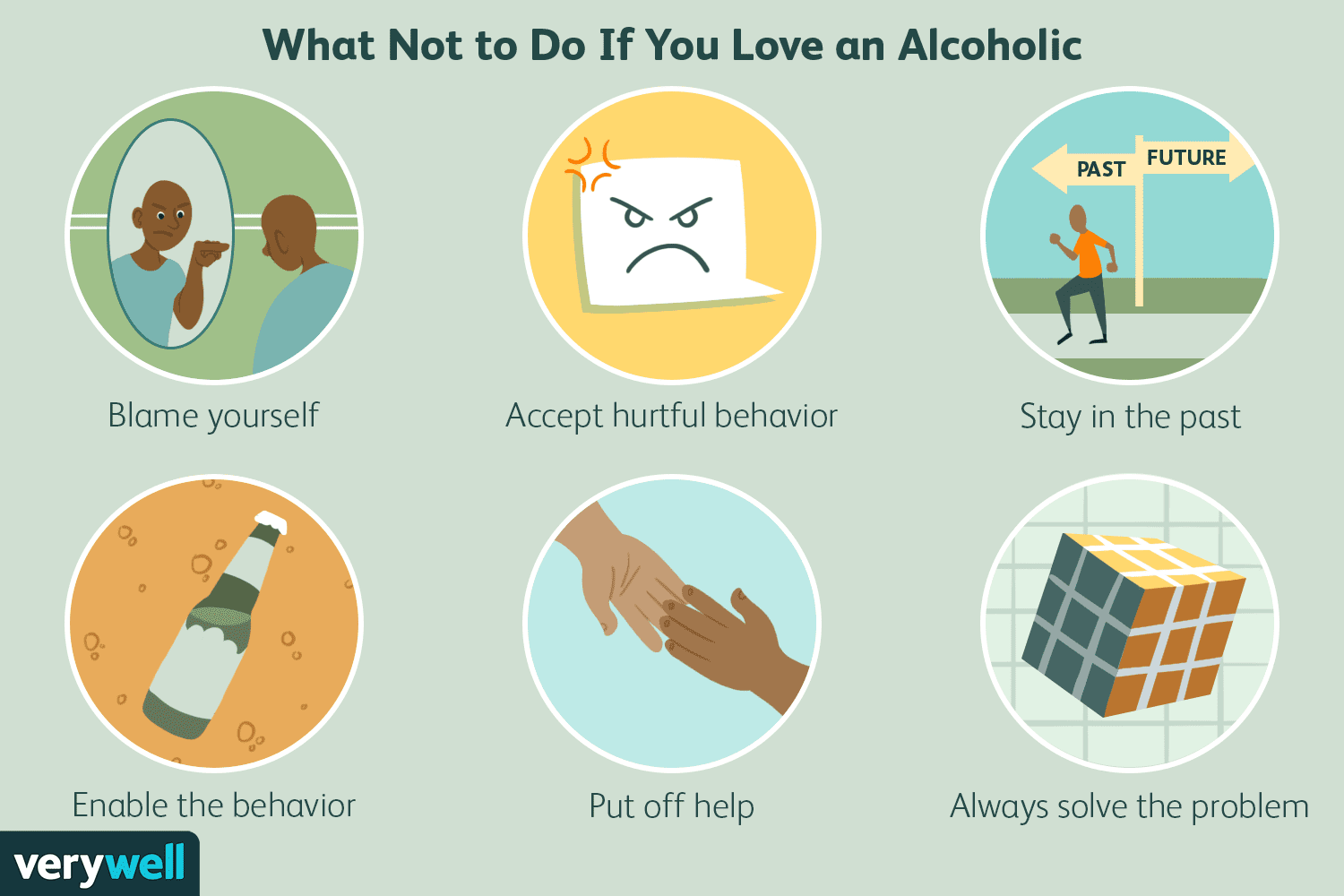
Do free yourself from blame, know when to step back, and understand that they need outside help. Don’t take things personally, accept the unacceptable, or enable their behavior. You can maintain your peace while supporting their recovery by setting clear boundaries and encouraging them to get treatment.
Free Yourself From Blame
It’s common for someone with AUD to try to blame their drinking on circumstances or others around them, including those who are closest to them. It’s common to hear them say, “The only reason I drink is because you…”
Don’t buy into it. If your loved one is truly dependent on alcohol, they are going to drink no matter what you do or say. It’s not your fault.
Know When to Take a Step Back
Many family members of someone struggling with alcohol dependency try everything they can think of to get their loved one to stop drinking. Unfortunately, this usually leaves those family members feeling lonely and frustrated.
You may tell yourself that surely there is something you can do. But the reality is that not even the person dependent on alcohol can control their drinking, try as they may.
Understand They’ll Need Outside Help
Substance use disorder is a primary, chronic, and progressive disease that sometimes can be fatal. No matter your background or expertise, your loved one will likely need outside help.
Keep in mind that someone with alcohol dependence usually goes through a few stages before they are ready to make a change. Research suggests that it often takes two to five attempts for a person to successfully quit.
Until they begin to contemplate quitting, any actions you take to “help” them quit will often be met with resistance.
Remember, it’s not your responsibility to “cure” their AUD. You just happen to love someone who is probably going to need professional treatment to get healthy again. That’s their responsibility, not yours.
Treatment for AUD can include counseling, support groups, and medication.
Have Reasonable Expectations
What might seem like a reasonable expectation in some circumstances might be totally unreasonable when it comes to someone with an addiction. When your loved one swears to you and to themselves that they will never touch another drop of alcohol, you might believe them.
However, for someone with an alcohol dependence, that expectation may turn out to be unreasonable. If the person is incapable of even being honest with themselves, it may not be reasonable to expect them to be honest with you.
Stay Focused on the Present
The key to dealing with alcohol dependency in the family is staying focused on the situation as it exists today. Alcoholism is a progressive disease. It doesn’t reach a certain level and remain there for very long; it continues to get worse until the person with an alcohol problem seeks help.
Don’t allow the disappointments and mistakes of the past affect your choices today—circumstances have probably changed.
Get Help For Yourself
If you’ve been covering up for your loved one and not talking about their addiction openly for a long time, it may seem daunting to reach out for help. However, it’s important to make sure you’re getting the support you need as well.
A support group such as Al-Anon Family Groups may also be a helpful source of support when you have someone in your life with a drinking problem. The group can give you a place to get social support and encouragement from others going through a similar situation.
Don’ts When Dealing With an Alcoholic Loved One
Don’t Take It Personally
When someone with alcohol dependency promises they will never drink again, but a short time later is back to drinking as much as always, it is easy to take the broken promises and lies personally. You may think, “If they really love me, they wouldn’t lie to me.”
If your loved one has become addicted to alcohol, however, their brain chemistry may have changed to the point that they are completely surprised by some of the choices they make.
Addiction is a chronic brain disease. While their behavior might feel hurtful and frustrating, it’s important to remember that they have a medical condition that needs treatment. Keeping that thought in mind can help you take their actions less personally.
Don’t Accept Unacceptable Behavior
Accepting unacceptable behavior usually begins with some small incident that you brush off with, “They just had too much to drink.” But the next time, the behavior may get a little worse and then even worse. You might slowly begin to accept more and more unacceptable behavior. Before you realize it, you can find yourself in a full-blown abusive relationship.
Abuse is never acceptable. You do not have to put up with unacceptable behavior in your life. You have choices.
If you have children, it’s important to protect them from unacceptable behavior as well. Do not tolerate hurtful or negative comments addressed towards them. These comments can result in lasting damage to a child’s psyche.
Protect your children, and don’t hesitate to keep them away from someone who drinks and does not respect your boundaries. Growing up in a home where alcohol use is common can leave lasting mental and emotional effects.
Don’t Enable Their Behavior
Someone with AUD typically doesn’t want anyone to know the level of their alcohol consumption because if someone found out the full extent of the problem, they might try to help.
If family members try to “help” by covering up for their drinking and making excuses for them, they are playing right into their loved one’s denial game. This is just enabling. Dealing with the problem openly and honestly is the best approach.
Enabling occurs when someone else covers up or makes excuses for the person who has a SUD. As a result, the person with a SUD doesn’t deal with the consequences of their actions.
Often, in trying to “help,” well-meaning loved ones will actually do something that enables someone dependent on alcohol to continue along their destructive paths. Make sure that you are not doing anything that bolsters their denial or prevents them from facing the natural consequences of their actions. Doing so helps them avoid the consequences of their actions and takes the focus off their behavior.
Examples of enabling someone with alcohol use disorder include:
- Paying their bills
- Keeping their alcohol use secret
- Not enforcing boundaries or consequences
- Avoiding talking about their drinking
- Covering for missed work
- Making excuses for their actions
How to Stop Enabling Without Guilt
Instead of covering up their actions or protecting them from the results, it’s important to let them experience the natural consequences of their behavior. It is only when they experience their own pain that they will feel a need to change.
Natural consequences may mean that you refuse to spend any time with the person dependent on alcohol. This decision is not being made out of meanness or unkindness. It is a protective act for yourself.
It is not your job to “cure” your loved one’s alcoholism, but allowing natural consequences to occur is one factor that can push a person from the pre-contemplative stage to the contemplative stage of overcoming addiction.
The contemplative stage ends with the decision to make a change, yet further steps such as preparation, action, and later maintenance and likely relapse are usually needed before the addiction is controlled.
When Stepping Back Is the Healthiest Choice
You may still want to help your loved one when they are in the middle of a crisis. However, a crisis is usually the time when you should do nothing. When someone reaches a crisis point, they sometimes finally admit they have a problem and begin to reach out for help.
If friends or family members rush in and “rescue” the person from the crisis situation, it can delay the decision to get help.
For those who love someone living with an addiction, it is very difficult to sit back and let the crisis play out to its fullest extent. When they reach the point in their substance use when they get a DUI, lose their job, or go to jail, for example, it can be difficult to accept that the best thing they can do in the situation is nothing.
You don’t have to create a crisis, but learning detachment will help you allow a crisis—one that may be the only way to create change—to happen.
There may be very little you can do to help someone with AUD until they are ready to get help, but you can stop letting someone’s drinking problem dominate your thoughts and your life. It’s OK to make choices that are good for your own physical and mental health.
