

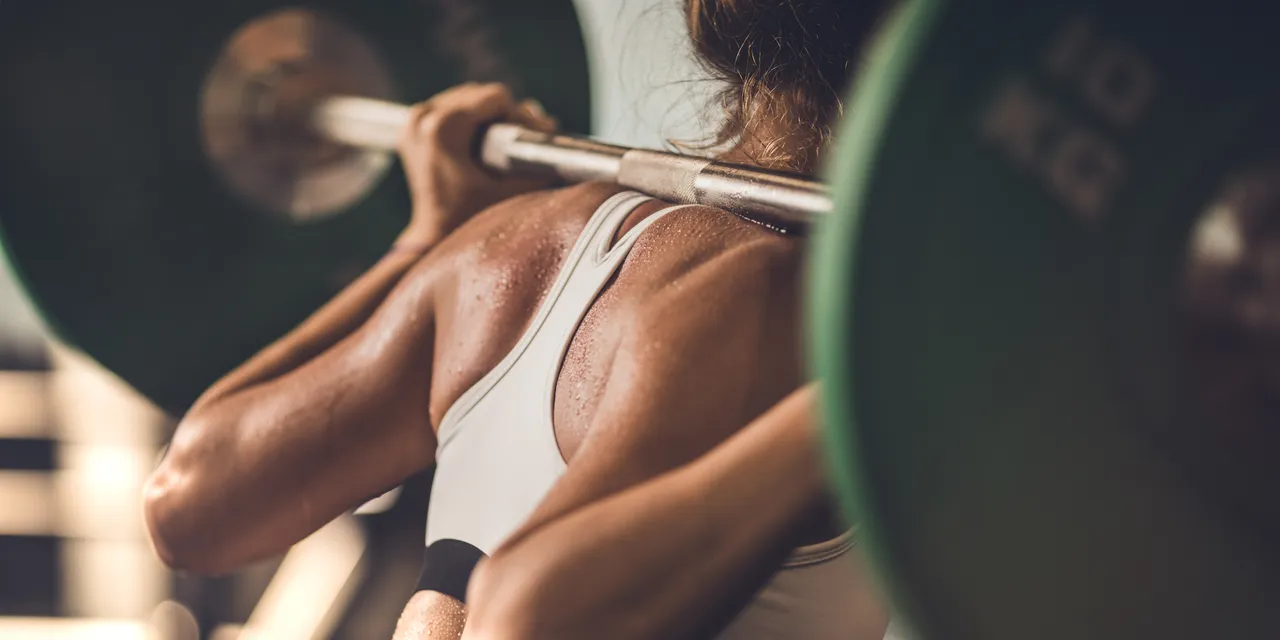
If you happen to sit next to Mima Mendoza on a train or stand behind her in a checkout line, you might get an earful about the benefits of lifting weights. “I’ve become like the person at the train station saying, ‘Have you heard the word of God recently?’ Except I’m like, ‘Have you thought of strength training recently?’” she tells SELF.
The 34-year-old from Severna Park, Maryland, got serious about lifting in 2024, around the time her doctor prescribed the GLP-1 medication Zepbound to support her weight-loss efforts. “I wanted to sustain this weight loss long term, and I wanted to manage metabolic illnesses like type 2 diabetes, high cholesterol, and high blood pressure that I was genetically predisposed to, and the answer to that was really building muscle,” she says.
Mendoza is one of many people to have taken to the weight room shortly after starting a GLP-1 medication. And this trend seems to be impacting gyms across the country. Between 2024 and 2025 use of free-weight equipment saw a marked increase in US gyms, with members 6.7% more likely to use dumbbells, 3.8% more likely to use barbells, and 3.6% more likely to use kettlebells, according to a forthcoming report from the Health & Fitness Association, a fitness-industry trade organization. Compared with 2021 (the year Wegovy got FDA approval) dumbbell use is up 28%.
“Available data suggest that the growing interest in strength training is part of a structural, long-term trend, which in part is accelerated by GLP-1s’ increasing popularity,” Anton Severin, vice president of research at the Health & Fitness Association, tells SELF.
It’s important to note that weight-loss medications are not the only thing at play here. Trends around longevity and functional strength were already pushing more people toward resistance training, Severin says, but GLP-1s added a clinical urgency because they’re associated with a loss of lean muscle mass that strength training can help mitigate.
Here’s a look at how these medications are impacting gym culture—plus some tips that can help you get started on (and stick with) a weight training routine.
Why strength training is nonnegotiable on a GLP-1
To get a little more specific, any form of weight loss—whether it’s via diet, surgery, or medication—will lead to some muscle loss, Jyotsna Ghosh, MD, an obesity medicine physician at Johns Hopkins Medicine, tells SELF. “The most protective things we can do to prevent a higher percentage of muscle-mass reduction are eating enough protein and resistance training consistently,” she says.
