

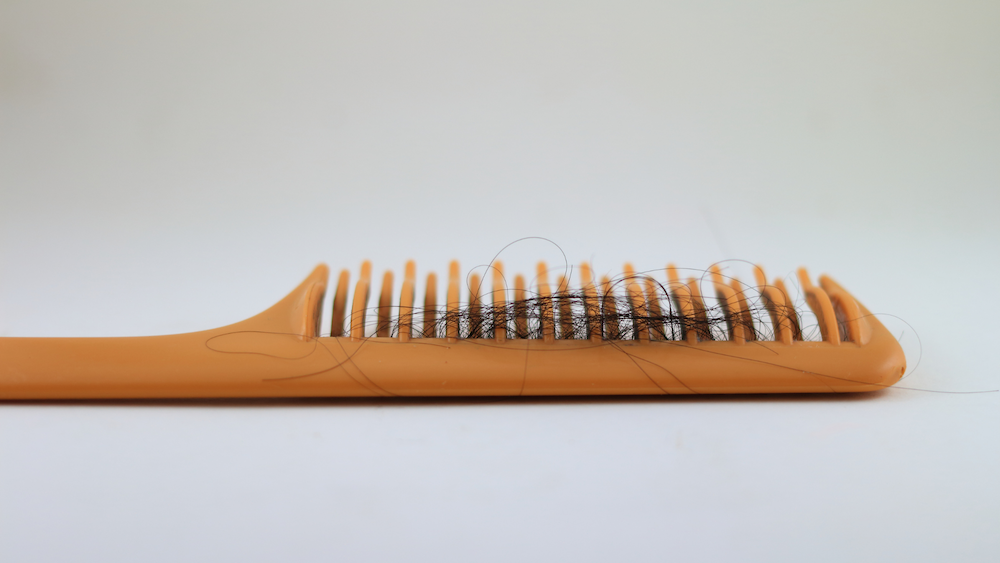
Have you ever had this happen?
You go through something hard. A bad illness. A stressful stretch. A big weight-loss push.
Then life calms down a little.
And that’s when your hair starts falling out.
Not during the stressful event. Not the next day. But months later.
It feels random.
But it’s actually a very common pattern called telogen effluvium. Mayo Clinic says significant stress can push a large number of hair follicles into a resting phase, and the hairs may fall out a few months later.
What is telogen effluvium?
Telogen effluvium is a type of temporary hair shedding that happens after a stressor or a major change in the body. Cleveland Clinic calls it one of the most common causes of rapid hair loss and says it usually improves on its own.
That word sounds intense, but the basic idea is simple:
Your hair cycle gets disrupted. More hairs than usual get pushed into the resting and shedding phase. Then those hairs come out later.
And that is why it can feel so confusing.
Why does the shedding start months later?
This is the part most people don’t know.
Hair does not usually fall out the moment your body gets stressed.
Instead, the stressor changes the hair cycle first.
Cleveland Clinic explains that the telogen phase is the resting phase, and it lasts about two to four months. At the end of that phase, the hair falls out. Acute telogen effluvium usually shows up two to three months after a stressor or major body change.
So if you got sick in January and your hair starts shedding in March, that can absolutely fit the pattern.
That delayed timeline is one of the biggest clues that telogen effluvium may be the reason.
What can trigger telogen effluvium?
A lot of different things can trigger it.
The American Academy of Dermatology says excessive shedding is common after stressors such as:
- losing 20 pounds or more
- giving birth
- going through a period of major stress
Cleveland Clinic also lists common triggers like illness, surgery, fever, emotional stress, hormonal changes, and other major shifts in the body.
So this is not just a “stress hair loss” thing.
It can happen after:
- emotional stress
- illness or infection
- surgery
- childbirth
- rapid weight loss
- sudden body changes
What does telogen effluvium usually look like?
Usually, it looks like a lot more shedding than normal.
You may notice more hair:
- in the shower
- on your pillow
- in your brush
- on your clothes
The AAD says normal shedding is about 50 to 100 hairs a day. When your body sheds significantly more than that every day, it is considered excessive shedding, and the medical term is telogen effluvium.
This type of shedding is usually more all-over thinning than a single bald spot. It tends to feel like your hair is suddenly less full, rather than like one isolated patch disappeared. Cleveland Clinic describes telogen effluvium as rapid shedding over a short period after a stressor, while AAD distinguishes this from pattern hair loss signs like a receding hairline or bald spot.
How long does telogen effluvium last?
This is the good news:
In most cases, it does not last forever.
Cleveland Clinic says telogen effluvium usually lasts about three to six months, and after that shedding period, people often begin noticing new growth. It also says the outlook is generally good and that the condition usually resolves.
So the usual pattern looks something like this:
- A stressor happens.
- The shedding starts 2 to 3 months later.
- The shedding period lasts around 3 to 6 months.
- Then the hair cycle begins to normalize again.
That does not mean it feels easy.
But it does mean it is usually temporary, not permanent. Cleveland Clinic says hair will usually grow back after telogen effluvium.
Is telogen effluvium the same as pattern baldness?
No.
That is an important distinction.
Cleveland Clinic says telogen effluvium involves rapid shedding over a short period, usually after physical or emotional stress. By contrast, pattern hair loss is usually more gradual.
So if your hair suddenly started coming out by the handful a few months after a hard event, that leans more toward telogen effluvium than classic pattern thinning.
What should you do if you think you have it?
First, don’t panic.
Seeing lots of hair come out is upsetting. But this pattern is common, and it often improves once your body recovers. Cleveland Clinic says acute telogen effluvium resolves in most cases.
Second, think back 2 to 3 months.
Ask yourself:
- Was I very stressed?
- Was I sick?
- Did I lose a lot of weight?
- Did I go through a major body change?
That timing matters a lot with telogen effluvium.
Third, get checked if the shedding seems extreme, lasts too long, or you cannot figure out the trigger. Cleveland Clinic notes that healthcare providers may look at recent stress, health history, and body changes when evaluating telogen effluvium.
When should you talk to a doctor?
It is smart to check in with a healthcare professional if:
- the shedding lasts longer than about 6 months
- the loss looks patchy instead of diffuse
- you also have scalp symptoms
- you are unsure what triggered it
- it does not seem to be improving over time
Cleveland Clinic says acute telogen effluvium lasts fewer than six months, while chronic telogen effluvium lasts longer. AAD also distinguishes excessive shedding from other patterns of hair loss, which can need different evaluation.
The bottom line
Telogen effluvium is one of the most common reasons hair starts falling out months after stress, illness, or weight loss.
That delay is not weird. It is actually one of the biggest signs of the condition.
The stressful event happens first. Then the hair cycle shifts. Then the shedding shows up later.
And while that can feel scary, telogen effluvium is usually temporary. In most cases, the hair grows back once the body gets back into balance.
A simple way to support your hair while your body recovers
Even though telogen effluvium often resolves on its own, that does not mean you have to do nothing while you wait.
If you want to support fuller, healthier-looking hair during that recovery window, Purality Health’s Hair Renewal is designed for that kind of inside-out support.
Hair Renewal features AnaGain™ Nu, a water-soluble extract from organic germinated pea seeds, with clinical results showing improved visual hair density and reduced hair loss.
