

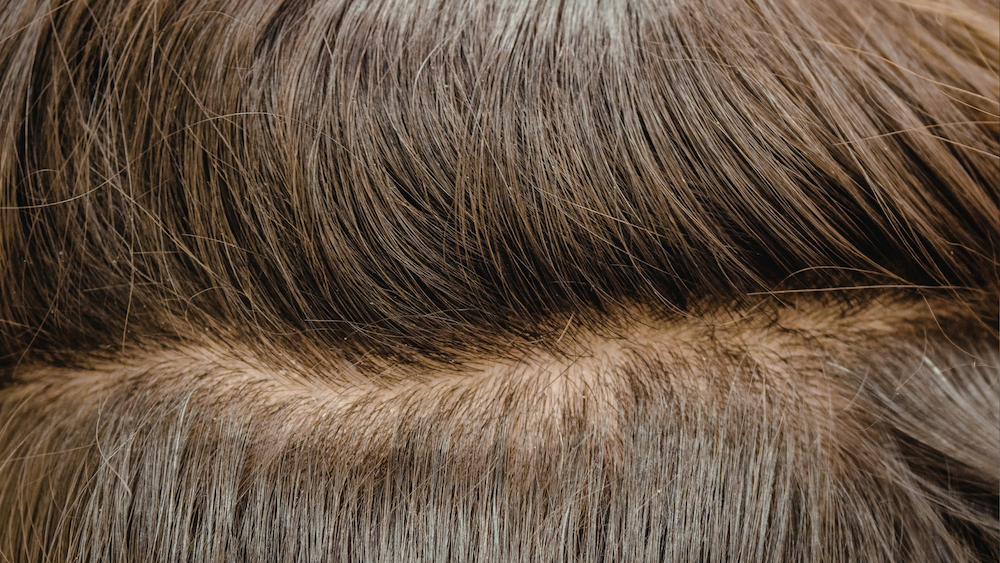
When people worry about hair loss, they usually focus on the hair itself.
They think about thinning. Shedding. Breakage. A widening part. A weaker ponytail.
But many people forget to look at the scalp.
And that matters more than you may think.
Because if your scalp is itchy, inflamed, flaky, greasy, or coated with buildup, your hair may not look or behave its best. The American Academy of Dermatology says scalp care matters, and Mayo Clinic notes that common scalp conditions like seborrheic dermatitis can cause inflamed skin, scales, and stubborn dandruff.
What do we mean by scalp inflammation, dandruff, and buildup?
Let’s make this simple.
Scalp inflammation means your scalp is irritated. That can show up as redness, itching, tenderness, burning, flaking, or greasy-looking patches. Dermatitis is a skin condition that involves irritation and inflammation, and seborrheic dermatitis is one of the most common inflammatory scalp conditions.
Dandruff is the visible flaking many people notice on their scalp or shoulders. Mayo Clinic describes it as a common scalp condition that causes small flakes of skin, and Cleveland Clinic notes that seborrheic dermatitis is a major cause of dandruff.
Buildup is exactly what it sounds like. It can include excess oil, dead skin cells, microorganisms, styling residue, and dry shampoo that has been sitting on the scalp too long. The AAD says regular shampooing removes that buildup, and it specifically warns that dry shampoo left on the scalp or hair can lead to hair breakage and shedding.
So, can these scalp issues actually make hair loss worse?
Yes, they can.
But here is the important nuance:
Dandruff or scalp buildup does not usually cause permanent baldness on its own. Mayo Clinic says seborrheic dermatitis can be irritating, but it does not cause permanent hair loss.
That said, scalp problems can absolutely make your hair situation worse.
They can increase itching. They can trigger more scratching. They can contribute to breakage. They can make shedding look more dramatic. And they can create a scalp environment that is far from ideal when you are already dealing with thinning or fragile hair. The AAD and Mayo both point to itch, rash, flaking, and irritation as core features of scalp dandruff and seborrheic dermatitis.
So the real answer is this:
These issues may not be the root cause of every case of hair loss. But they can make an existing hair problem look worse, feel worse, and become harder to ignore.
How scalp inflammation can make thinning look worse
One of the biggest ways this happens is through itching and scratching.
When your scalp is inflamed, you are much more likely to rub it, pick at it, or scratch it without even thinking. That repeated friction is not great for either the scalp or the hair. The National Eczema Association notes that when hair loss happens with mild seborrheic dermatitis, it is often related to excessive scratching rather than the condition directly destroying the hair. Mayo Clinic also advises people not to scratch or pick affected areas because doing so can worsen irritation and raise the risk of problems.
Then there is breakage.
A lot of people say “my hair is falling out” when some of what they are actually seeing is fragile hair snapping off. When the scalp is irritated and the hair is coated in residue or handled roughly, breakage can go up. The AAD specifically says dry shampoo that stays on the hair or scalp can cause hair breakage and hair shedding.
Then there is the issue of visible flakes and scales.
Even if dandruff is not permanently damaging the follicle, a scalp covered in flakes, oil, and irritation is not exactly the picture of a healthy scalp. Mayo Clinic describes seborrheic dermatitis as causing scaly patches, inflamed skin, and stubborn dandruff, especially on the scalp.
In other words, if your scalp is constantly inflamed, your hair is dealing with more than just a cosmetic problem.
Buildup is not just annoying
A lot of people rely heavily on dry shampoo, styling products, oils, sprays, and “refreshing” products between washes.
And sometimes that is fine.
But if the scalp is never really getting cleaned, buildup starts to pile up.
According to the AAD, washing your hair and scalp with regular shampoo and water removes dead skin cells, oil, microorganisms, and dry shampoo that can accumulate and contribute to dandruff. That matters because many people think buildup is just a visual issue, when in reality it can make the scalp feel itchier, dirtier, and more irritated over time.
This does not mean you need to aggressively scrub your scalp every day.
It just means that scalp hygiene matters more than people think.
If your scalp is overloaded with residue, it can make healthy-looking hair a lot harder to maintain.
Signs your scalp may be part of the problem
Sometimes the scalp tells you pretty clearly that it is unhappy.
Common clues include: constant itching, white or yellow flakes, greasy or scaly patches, redness or irritation, burning or tenderness, or more shedding after scratching or washing.
These are all symptoms commonly associated with dandruff or seborrheic dermatitis of the scalp. Cleveland Clinic describes seborrheic dermatitis as causing itchy, scaly, greasy patches, while Mayo Clinic and the AAD describe dandruff and seborrheic dermatitis as involving flaking, scales, and irritation.
If that sounds familiar, the scalp may be playing a bigger role in your hair concerns than you realized.
What actually helps calm the scalp?
The first step is usually very unglamorous: clean the scalp consistently and appropriately.
For mild dandruff, Mayo Clinic says gentle, regular shampooing may help. If that is not enough, medicated dandruff shampoos can be useful. The AAD also says dandruff shampoos can treat mild to moderate seborrheic dermatitis on the scalp and that these shampoos are designed to address itch, flaking, scales, and irritation.
It also helps to shampoo according to your hair type and scalp needs. The AAD notes that people with fine or straight hair, or oilier scalps, may need to wash more often, while those with coarse, curly, or coily hair may need less frequent washing with more targeted use of dandruff shampoo on the scalp itself.
And if you are using medicated shampoo, use it the way it is meant to be used. Mayo Clinic notes that these shampoos often need to stay on the scalp for a few minutes before rinsing so they have time to work.
Just as important:
Try not to scratch. Try not to pick. Try not to treat dry shampoo like a replacement for real washing.
Those habits can keep the cycle going.
Sometimes it is more than “just dandruff”
This is an important point.
Not every flaky, itchy, irritated scalp is simple dandruff.
The AAD notes that some scalp conditions can look similar, and an accurate diagnosis matters. If your scalp is painful, very inflamed, crusting, oozing, or not improving with over-the-counter care, it may be time to get it checked. Mayo Clinic also recommends seeing a healthcare professional if self-care products do not help.
It is also smart to get help if the hair loss itself is patchy, sudden, severe, or clearly getting worse. The AAD notes that hair loss can have many causes, including inflammatory and damaging hair care issues, so it is worth identifying the real cause instead of guessing.
The bottom line
If your scalp is inflamed, flaky, itchy, or overloaded with buildup, your hair may not be getting the healthiest possible environment.
That does not mean dandruff automatically causes baldness.
But it does mean scalp issues can make thinning, breakage, and shedding worse by increasing irritation, scratching, and stress on the hair. Mayo Clinic is clear that seborrheic dermatitis does not cause permanent hair loss, while the AAD is clear that dandruff and scalp irritation deserve proper treatment.
So if your scalp has been acting up, do not brush it off as “just flakes.”
Because healthy hair starts with a healthier scalp.
A simple way to support your hair from within
Of course, supporting your scalp on the outside is only one piece of the puzzle.
If you also want to support fuller, healthier-looking hair from within, Purality Health’s Hair Renewal can be a smart addition to your routine.
Hair Renewal features AnaGain™ Nu, a water-soluble extract from organic germinated pea seeds, with clinical results showing improved visual hair density and reduced hair loss.
