

2026 Trends
Initiative Chair: Sandy Abrams, Founder, TheCEOm.com, United States
Initiative Vice-Chair: Peter M. Litchfield, PhD, President, Professional School of Behavioral Health Sciences, United States
Exploring the Future of Breath as Wellness
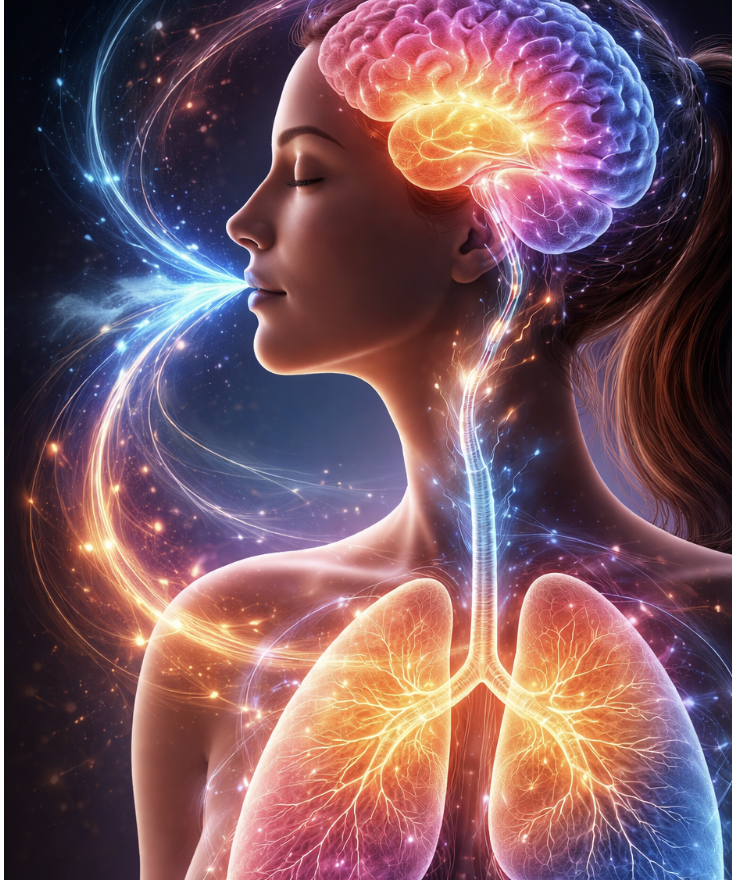
As scientific and behavioral research continues to deepen our understanding of respiration, breathing is emerging as far more than a passive biological function. Increasingly, it is being recognized as a dynamic behavior that directly influences the nervous system, brain function and overall health and wellbeing.
As the world searches for solutions to chronic stress, digital overload and declining attention, breathing practices are rapidly moving into the mainstream of modern wellness. Once associated primarily with yoga or meditation traditions, breath is now being explored through the lenses of science, psychology and physiology, revealing its powerful role in regulating the nervous system and influencing sleep, cognitive performance, emotional regulation, recovery and long-term health and longevity.
The 2026 micro trends identified by the Global Wellness Institute’s Breathe Initiative reflect this evolution. Together, these trends point to a fundamental shift in how breath is understood and applied.
TREND 1: Breathing Science, An Emerging New Field
When it comes to breathing practices, until recently pseudoscience has prevailed. This is, however, changing rapidly. Practitioners interested in introducing breathing interventions into their professional work are asking tough questions. Are these interventions based on real science? Breathing practitioners of myriad traditions are communicating, speaking out and sharing their perspectives, experience and knowledge with open minds and critical thinking skills. A new field, breathing science, is emerging.
TREND 2: The Personalization of Breathing
Integrating physiology with psychology
What is good or bad breathing? The answers to this question are diverse and have evolved significantly. What seemed so simple is not. What looks like good breathing may be bad respiration or what looks bad may not be. Breathing that makes one person feel better makes another person feel sick. Assumptions are being challenged. Definitions are being reconfigured. Improving health, enhancing performance and exploring consciousness are fundamental objectives, but achieving them is not a prescriptive enterprise, it is a personal exploration in the context of understanding individualized respiratory physiology.
TREND 3: Breath as Performance Infrastructure in the Workplace
Breath is moving beyond wellness and gaining attention as a practical performance skill in high-stakes business settings. Breathwork has long been used in elite sport and tactical training to help people stay calm and composed under pressure. Now, it is starting to show up in leadership development, team meetings, and decision-making environments. In today’s fast-paced business environment, cognitive load and uncertainty are rising. At the same time, more routine tasks are being automated. That makes uniquely human capacities like conflict navigation, regulation and sound judgment even more valuable. A growing body of evidence shows meaningful links between breathwork, nervous system regulation and executive function. Professionals are using breathwork to support focus, clear thinking and sustained performance under load. It is gaining traction because it is simple, trainable and easy to integrate into the flow of work.
TREND 4: NeuroWellness
Regulating the nervous system for a new era of human wellbeing
For most of human history, the nervous system evolved to respond to immediate physical threats. When danger appeared, the body activated its survival response—heart rate increased, breathing changed and attention sharpened to prepare for action. Once the threat passed, the body returned to a state of recovery. Modern life has disrupted this natural rhythm.
Instead of occasional threats followed by recovery, many people now experience continuous low-grade stress driven by digital notifications, information overload, work demands, disrupted sleep cycles and global uncertainty. These constant stimuli can keep the nervous system in a heightened state of activation for long periods of time. Over time, this chronic stress load can affect sleep quality, emotional regulation, cognitive performance, immune function, metabolic health and overall wellbeing. In response, a new category known as neurowellness is emerging.
Neurowellness focuses on helping individuals understand and regulate their nervous systems to function more effectively in daily life. Drawing from neuroscience, behavioral science, somatic practices and emerging neurotechnology, this field emphasizes practical tools that support stress regulation, emotional resilience, cognitive clarity and restorative sleep.
Breath practices are central to this movement because breathing provides a direct, accessible pathway for influencing autonomic nervous system activity. By learning how to intentionally shift breathing patterns, individuals can help move the body from states of chronic stress toward states of balance and recovery.
Resources:
- Moon, Heidi “The Rise of NeuroWellness” 2026 https://www.globalwellnesssummit.com/the-rise-of-neurowellness/
TREND 5: Micro-Dosing Breath
Small moments of interventions
One of the most practical emerging trends is the concept of micro-dosing breath—short, strategic breathing practices integrated throughout daily life. Rather than relying solely on longer meditation or breathwork sessions, people are increasingly using brief breathing resets that take 30 seconds to a few minutes. These micro-interventions can help regulate stress, restore focus and reset the nervous system in real time. As modern life becomes more fragmented and attention spans shorten, shorter breath practices are proving easier to adopt and sustain. Individuals can integrate them into transitions between meetings, before difficult conversations, during travel, before sleep or during moments of emotional overwhelm.
Technology is also accelerating this trend. Wearables, wellness apps and biofeedback devices can now prompt users to pause and breathe based on physiological signals such as heart rate variability or stress indicators. The growing popularity of micro-dosing breath reflects a broader shift in wellness behavior: people are seeking small, repeatable practices that fit into real life.
These short breathing rituals may appear simple, but their cumulative impact can be powerful. When practiced regularly, even brief moments of intentional breathing can reshape stress patterns, improve emotional regulation and help individuals maintain a more balanced nervous system throughout the day.
TREND 6: Breathing is Behavior
Moving beyond simple techniques
Breathing is behavior. It is not simply physiology to be conveniently manipulated at the right time and place. It is regulated psycho-physiologically every day, all day. We all learn breathing habits that have profound effects on health and performance. Until recently, we have overlooked this very important perspective that brings behavioral science to our understanding of breathing and its profound effects, good and bad. The amazing role of breathing in our lives has just only very recently begun to be appreciated.
TREND 7: Breathing and Longevity
Respiratory fitness VO2 Max as a biomarker of healthy aging
As longevity science evolves, researchers are increasingly looking beyond traditional health metrics to better understand what drives healthy aging. One area receiving growing attention is respiratory fitness—particularly measures such as VO₂ max, lung capacity and breathing efficiency. VO₂ max, which measures the body’s ability to use oxygen during exertion, is now widely considered one of the strongest predictors of long-term health and mortality risk. Higher VO₂ max levels are associated with better cardiovascular function, metabolic health, cognitive resilience and overall longevity. At the same time, declining lung capacity and inefficient breathing patterns have been linked to increased risk of chronic disease, reduced physical performance and accelerated aging. This growing body of research is shifting attention toward the role breathing plays not only in stress regulation, but also in long-term physiological resilience. Breath practices that improve respiratory efficiency, oxygen utilization and carbon dioxide tolerance are increasingly being explored as complementary tools within longevity and preventive health strategies. As the longevity movement expands, breath training may become an important bridge between lifestyle practices and measurable health outcomes. By strengthening respiratory capacity and improving oxygen dynamics in the body, breathwork offers a simple yet powerful way to support vitality across the lifespan.
