

Key Takeaways
- Carl Rogers developed client-centered therapy, where the therapist acts as a facilitator in sessions.
- Rogers believed in unconditional positive regard, meaning therapists accept clients without judgment.
- Carl Rogers thought self-concept starts in childhood and is influenced by parenting styles.
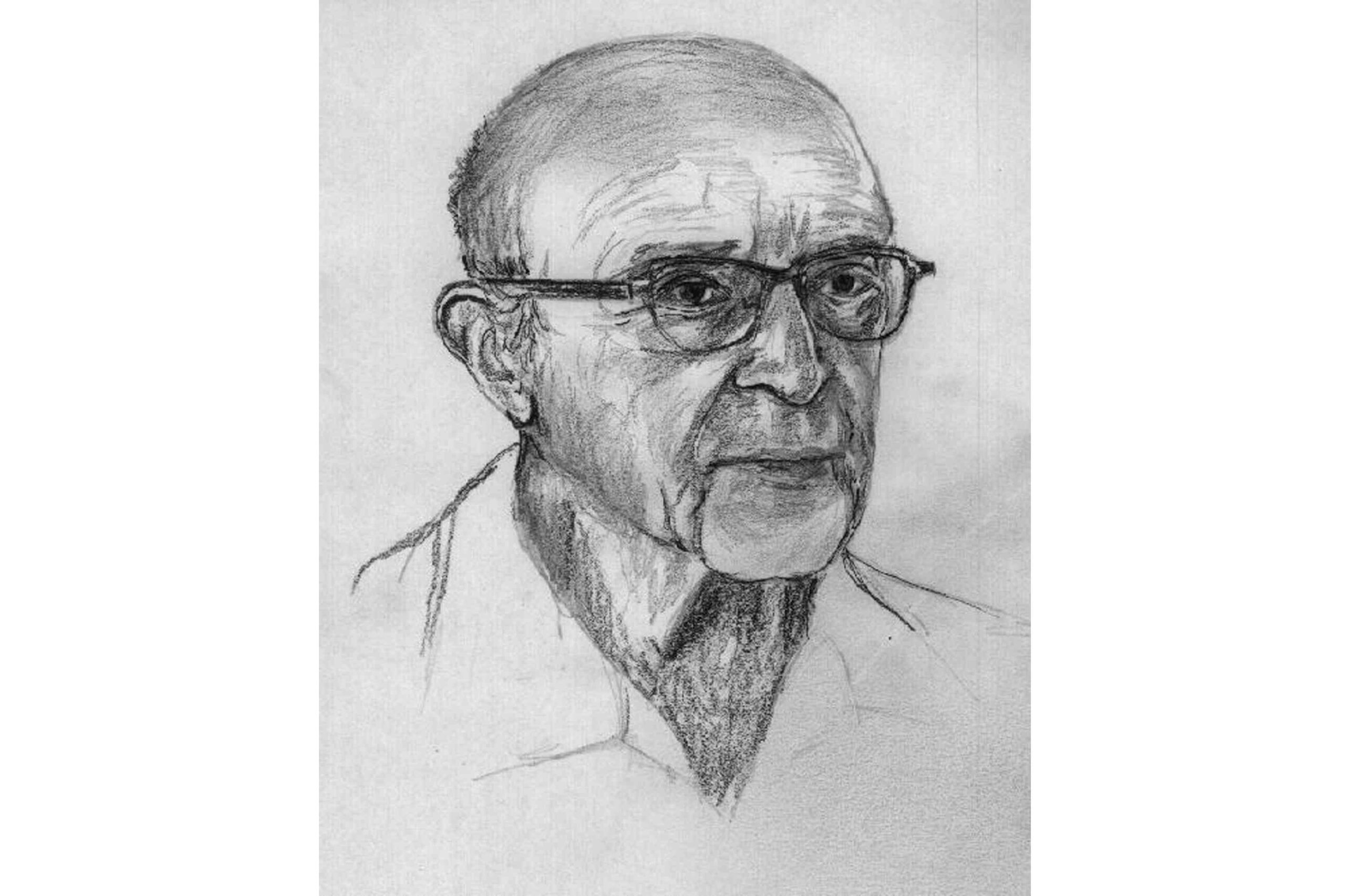
Carl R. Rogers is widely regarded as one of the most eminent thinkers in psychology. He is best known for developing the psychotherapy method called client-centered therapy and for being one of the founders of humanistic psychology.
Early Life
Fast Facts
- Born: January 8, 1902, in Oak Park, Illinois
- Died: February 4, 1987, in La Jolla, California
- Known for: Client-centered therapy, fully functioning person, self-actualization
Carl Ransom Rogers was born in 1902 in Oak Hill, Illinois. His father was a civil engineer, and his mother was a housewife; he was the fourth of six children. Rogers was a high achiever in school from an early age: He started reading before age five and skipped kindergarten and first grade.
When he was 12, his family moved from the suburbs to a rural farm area. He enrolled at the University of Wisconsin in 1919 as an agriculture major. However, after attending a 1922 Christian conference in China, Rogers began questioning his career choice. He later changed his major to History with plans to become a minister.
He graduated from the University of Wisconsin in 1924 with a bachelor’s degree in History. He enrolled at the Union Theological Seminary before transferring to Teachers College of Columbia University in 1926 to complete his master’s degree.
One reason he chose to abandon his pursuit of theology was a student-led seminar on religion, which caused him to question his faith. Another inspiration for his switch to the study of psychology was a course he took at Columbia University taught by psychologist Leta Stetter Hollingworth.
Rogers considered psychology to be a way to continue studying life’s many questions without having to subscribe to a specific doctrine. He decided to enroll in the clinical psychology program at Columbia and completed his doctorate in 1931.
Carl R. Rogers’ Career
After receiving his PhD, Rogers spent a number of years working in academia, holding positions at Ohio State University, the University of Chicago, and the University of Wisconsin.
It was during this time that Rogers developed his approach to therapy, which he initially termed “nondirective therapy.” This approach, which involves the therapist acting as a facilitator rather than a director of the therapy session, eventually came to be known as client-centered therapy.
In 1946, Rogers was elected President of the American Psychological Association. Rogers wrote 19 books and numerous articles outlining his humanistic theory.
Selected Publications
Among his best-known works are:
- “Client-Centered Therapy: Its Current Practice, Implications, and Theory” (1951)
- “On Becoming a Person: A Therapist’s View of Psychotherapy” (1961)
- “A Way of Being” (1980)
After some conflicts within the psychology department at the University of Wisconsin, Rogers accepted a position at the Western Behavioral Studies Institute (WBSI) in La Jolla, California. Eventually, he and several colleagues left WBSI to form the Center for Studies of the Person (CSP).
In 1987, Rogers was nominated for a Nobel Peace Prize. He continued his work with client-centered therapy until his death in 1987.
Important Theories
In addition to his client-centered therapy, Carl R. Rogers also introduced and influenced a number of other influential theories.
Self-Actualization
Rogers believed that all people possess an inherent need to grow and achieve their potential. This need to achieve self-actualization, he believed, was one of the primary motives driving behavior.
Unconditional Positive Regard
For psychotherapy to be successful, Rogers suggested, it was imperative for the therapist to provide unconditional positive regard to the client. This means that the therapist accepts the client as they are and allows them to express both positive and negative feelings without judgment or reproach.
Development of the Self
Rogers believed that the formation of a healthy self-concept was an ongoing process shaped by a person’s life experiences. People with a stable sense of self tend to have greater confidence and cope more effectively with life’s challenges.
Rogers suggested that self-concept begins to develop during childhood and is heavily influenced by parenting. Parents who offer their children unconditional love and regard are more likely to foster a healthy self-concept. Children who feel that they have to “earn” their parents’ love may end up with low self-esteem and feelings of unworthiness.
Congruence
Rogers also suggested that people tend to have a concept of their “ideal self.” The problem is that our image of who we think we should be does not always match up with our perceptions of who we are today. When our self-image does not line up with our ideal self, we are in a state of incongruence.
He believed that by receiving unconditional positive regard and pursuing self-actualization, however, people can come close to reaching a state of congruence.
The Fully-Functioning Person
Rogers suggested that people who continually strive to fulfill their actualizing tendency could become what he referred to as fully-functioning. A fully-functioning person is one who is completely congruent and living in the moment.
Like many other aspects of his theory, unconditional positive regard plays a critical role in the development of full functioning. Those who receive nonjudgmental support and love can develop the self-esteem and confidence to be the best person they can be and live up to their full potential.
According to Rogers, a fully functioning person has some of the following characteristics:
- A flexible self-concept
- Openness to experience
- The ability to live in harmony with others
- Unconditional regard for the self
Rogers’ Contributions to Psychology
With his emphasis on human potential, Carl Rogers had an enormous influence on both psychology and education. Beyond that, he is considered by many to be one of the most influential psychologists of the 20th century. More therapists cite Rogers as their primary influence than any other psychologist.
As described by his daughter Natalie Rogers, he was “a model for compassion and democratic ideals in his own life, and in his work as an educator, writer, and therapist.”
In His Own Words
“Experience is, for me, the highest authority. The touchstone of validity is my own experience. No other person’s ideas and none of my own ideas are as authoritative as my experience. It is to experience that I must return again and again, to discover a closer approximation to truth as it is in the process of becoming in me.” – Carl Rogers, On Becoming a Person, 1954
Verywell Mind uses only high-quality sources, including peer-reviewed studies, to support the facts within our articles. Read our editorial process to learn more about how we fact-check and keep our content accurate, reliable, and trustworthy.
-
Lawson R, Graham J, Baker K. A History of Psychology: Globalization, Ideas, and Applications. New York: Routledge; 2016.
-
Boeree CG. Carl Rogers, 1902-1987. Personality Theories.
-
American Psychological Association. Carl Rogers, PhD. 1947 APA President.
-
Takens RJ. Person-centered therapy(Client-centered). In: Zeigler-Hill V, Shackelford TK, eds. Encyclopedia of Personality and Individual Differences. Springer International Publishing; 2020:3878-3881. doi:10.1007/978-3-319-24612-3_1494
-
Demanchick SP, Hirschenbaum H. Rogers, Carl R. (1902-1987). Cautin RL, Lilienfeld SO, eds. The Encyclopedia of Clinical Psychology. 1st ed. Wiley; 2015. doi:10.1002/9781118625392.wbecp137
-
Ismail NAH, Tekke M. Rediscovering Roger’s self theory and personality. J Educ Health Community Psychol. 2015;4(3):28-36.
-
Pound, L. Influencing Early Childhood Education: Key Figures, Philosophies, and Ideas. Berkshire: McGraw-Hill; 2011.
Additional Reading
-
Online Archive of California. Guide to the Carl R. Rogers Collection, 1902-1990.
Thanks for your feedback!
What is your feedback?
Helpful
Report an Error
Other
