

Key Takeaways
- Amaxophobia is the intense fear of being in a vehicle as a passenger or driver.
- This fear can cause panic attacks and make it hard to work, socialize, or go to school.
- Therapy and medications can help people manage their fear and reduce symptoms.
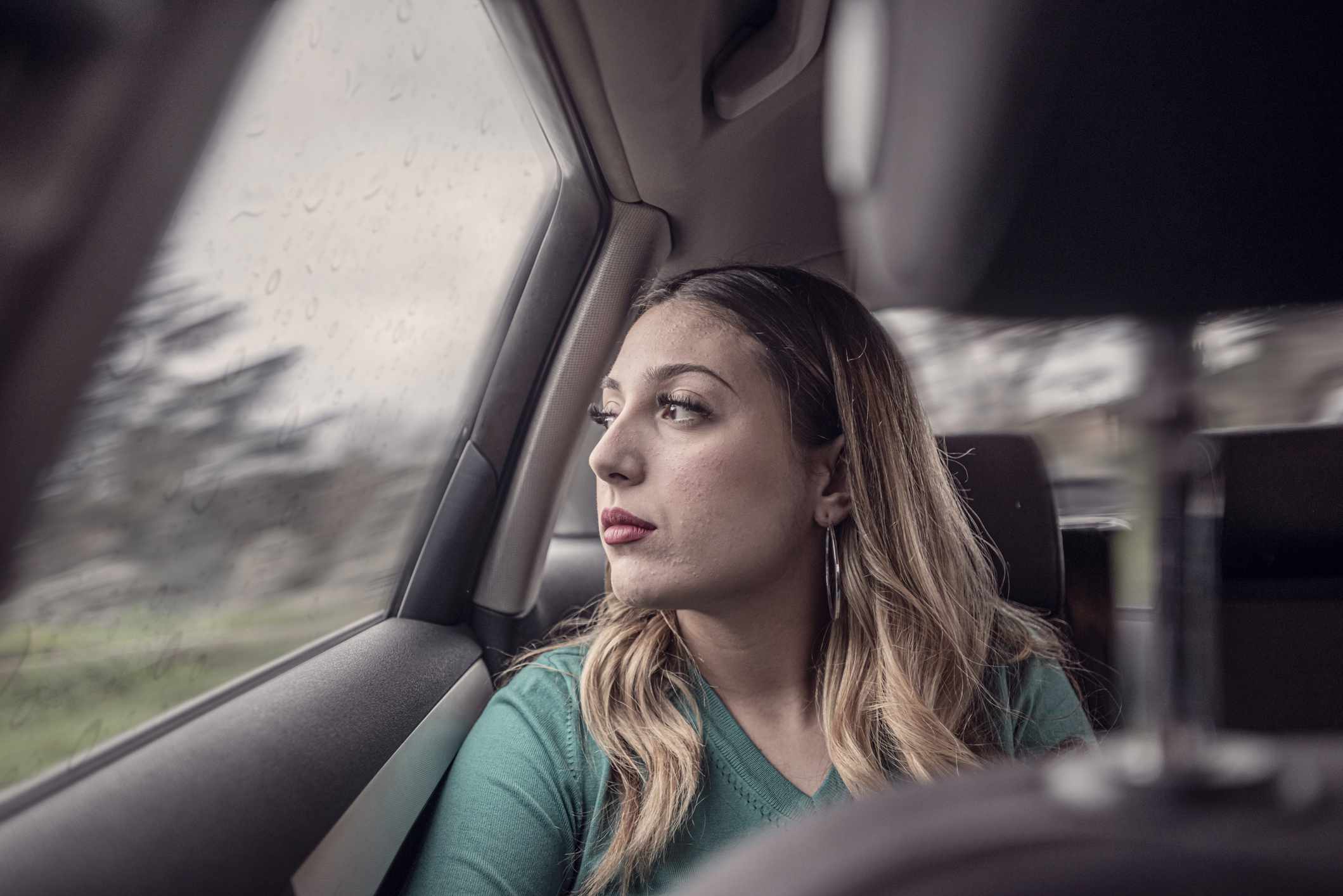
Amaxophobia is a fear of being in a vehicle, either as a passenger or a driver. This phobia can be serious and life-limiting, making it difficult or even impossible for people to be in a car, bus, train, or airplane. People who have this phobia may be unable to work, socialize, or go to school because they are so afraid of being inside of a car.
Amaxophobia is also sometimes known by other names, including ochophobia, motorphobia, or hamaxophobia.
Symptoms of Amaxophobia
Symptoms specific to amaxophobia include:
- An intense fear of getting into an accident
- Fear of potential injuries or fatalities from an accident
- Being afraid of being trapped in a vehicle
- Physical symptoms like sweating, trembling, a racing heart, and nausea
- Avoiding situations that involve being in a vehicle
- Experiencing panic attacks
Amaxophobia, like any phobia, runs the gamut from mild to severe. Some people can travel in a car with a driver they fully trust, such as a spouse or parent. Others can take a bus or taxi on a familiar route. In the most severe cases, people with this phobia are unable to travel at all, except on foot.
Identifying Amaxophobia
Amaxophobia isn’t recognized as a distinct condition in the “Diagnostic and Statistical Manual of Mental Disorders” (DSM-5-TR), which is the manual used by healthcare professionals to diagnose mental health conditions.
The DSM-5 identifies three types of phobia: specific phobia, social phobia, and agoraphobia.
Amaxophobia falls under specific phobias, as it involves fear of a particular situation or object.
A trained clinician can help determine which phobia or combination you might have. To diagnose a specific phobia, your symptoms should meet criteria from the American Psychiatric Association, including:
- Automatic and uncontrollable anxiety reactions, like trembling, shortness of breath, and digestive issues
- Taking extreme measures to avoid your trigger
- A reaction far out of proportion to the actual risk
- Fear, anxiety, or avoidance causing significant distress or impaired functioning
- Lasting six months or more
The condition shouldn’t be due to another mental health or medical issue, such as agoraphobia, panic disorder, or post-traumatic stress disorder (PTSD). Your doctor may ask about your symptoms and perform exams to rule out other causes.
What Causes Amaxophobia?
Several factors may contribute to developing amaxophobia, including:
- Genetics and family history: Research suggests that having a close family member with a phobia or anxiety disorder may increase your risk of developing a phobia.
- Observation and modeling: Hearing stories about car accidents or observing others with similar phobias can also play a role.
- Experiences: Traumatic experiences, especially traffic accidents, are often linked to the development of amaxophobia.
This fear could also be related to agoraphobia, a fear of being in a place or situation you can’t escape in the event of developing panic or other incapacitating symptoms, or claustrophobia, the fear of being trapped in an enclosed space.
It is also common for specific phobias such as amaxophobia to co-occur alongside other anxiety disorders including other phobias, panic disorder, social anxiety disorder, and substance use disorder.
Types of Amaxophobia
While there is no official distinction between different types of amaxophobia, this condition may present in two ways:
- Fear of driving: For some people with this condition, their fear primarily centers on anxiety about getting behind the wheel of a car.
- Fear of being a passenger: For others, symptoms emerge in response to being a passenger in some type of vehicle.
Some people with amaxophobia are still able to drive their own cars. The prospect of allowing someone else to take control of the trip, however, can be terrifying. For others, driving itself is the trigger.
Some may experience amaxophobia in both conditions (as driver and passenger).
Treatment for Amaxophobia
There are a few different treatment options that may be used to help people with amaxophobia. These include:
Medications
Medications such as antidepressants and anti-anxiety drugs are sometimes prescribed to help people manage some of the physical and emotional symptoms of the condition. These medications are often most effective when used along with psychotherapy.
Psychotherapy
The first-line treatment for specific phobias is often a strategy known as exposure therapy. Working with a therapist, people are gradually exposed to the source of their fear while practicing relaxation strategies. Over time, the fear begins to lessen or even disappear. Virtual exposure therapy can also be helpful.
Cognitive-behavioral therapy (CBT) may also be used to address the negative or irrational thoughts that often contribute to the phobia. Some research suggests that, in some cases, CBT treatments for specific phobia are effective after just one to three sessions.
If amaxophobia is seriously affecting your quality of life, seek professional help. Success rates for treating all types of phobia are high.
Coping With Amaxophobia
The list of possible consequences of amaxophobia is long and includes a wide variety of repercussions for your career and personal life. Examples of how this phobia may affect your ability to cope include:
- You might limit your earning potential because you can only apply for jobs within walking distance of your home.
- You might be left out of excursions with friends and family, which can lead to feelings of rejection and isolation.
- You may find it difficult to make social connections with other people because you are unable to travel by vehicle.
Like many specific phobias, the impact of amaxophobia depends largely on context. If you live in a self-contained walkable neighborhood, like parts of New York City, even a severe case of amaxophobia may not greatly affect your life. Everything you need is nearby or you can order it online.
If you live in a rural area or a sprawling city, where even picking up groceries requires a long car ride, a mild case of amaxophobia may be devastating.
Phobias and other anxiety disorders often grow worse over time if left untreated, so it is important to seek help as early as possible.
Verywell Mind uses only high-quality sources, including peer-reviewed studies, to support the facts within our articles. Read our editorial process to learn more about how we fact-check and keep our content accurate, reliable, and trustworthy.
-
Kupfer DJ. Anxiety and DSM-5. Dialogues Clin Neurosci. 2015;17(3):245-246.
-
Eaton WW, Bienvenu OJ, Miloyan B. Specific phobias. Lancet Psychiatry. 2018;5(8):678-686. doi:10.1016/S2215-0366(18)30169-X
-
Pk Bernstein J, Milberg WP, McGlinchey RE, Fortier CB. Associations between Post-Traumatic stress disorder symptoms and automobile driving behaviors: A review of the literature. Accid Anal Prev. 2022;170:106648. doi:10.1016/j.aap.2022.106648
-
Thng CEW, Lim-Ashworth NSJ, Poh BZQ, Lim CG. Recent developments in the intervention of specific phobia among adults: a rapid review. F1000Res. 2020;9:F1000 Faculty Rev-195. doi:10.12688/f1000research.20082.1
Thanks for your feedback!
What is your feedback?
Helpful
Report an Error
Other
