

Key Takeaways
- St. John’s wort may help with mild to moderate depression, but talk to your doctor first.
- Do not take St. John’s wort if you are on medication that affects serotonin levels or if you are pregnant, trying to become pregnant, or breastfeeding.
- St. John’s wort can have side effects like stomach upset and headaches.
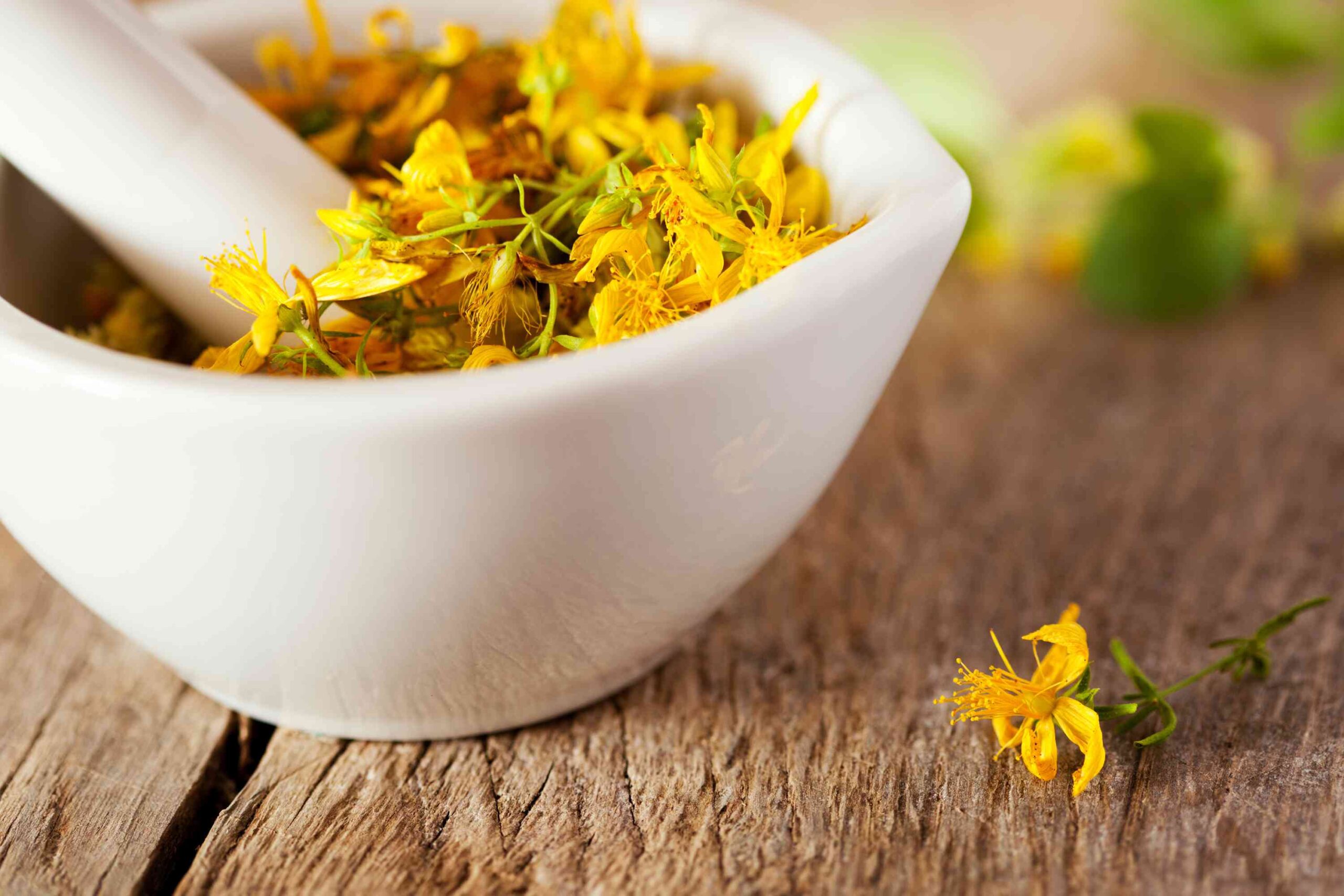
St. John’s wort (Hypericum perforatum) is a flowering plant named for its bright yellow flowers that were said to bloom for the first time around St. John the Baptist’s birthday. The word “wort” means “plant” in Old English.
Commonly Known As
- St. John’s wort
- Saint John’s wort
- Hypericum (from the scientific name)
- Goatweed
- Klamath weed
- Tipton weed
People have been using St. John’s wort for centuries. Its purported benefits include alleviating symptoms of depression, relieving anxiety, and treating premenstrual syndrome (PMS) and menopause.
Verywell / Jessica Olah
Benefits of St. John’s Wort
St. John’s wort is purported to boost mood and provide some relief from depression, but it’s not exactly clear how it works. It may work because of the effect St. John’s wort has on the brain.
Researchers suspect that ingredients in the herb (hypericin and hyperforin) may affect levels of certain brain chemicals, like serotonin. People with depression may have low levels of serotonin and other neurotransmitters.
One reason people decide to try St. John’s wort (as opposed to antidepressants that can increase serotonin) is its lower incidence of side effects than medications.
Talk to your doctor before taking St. John’s wort, and tell them about any other medications, supplements, or substances you are currently taking.
Do not delay seeking treatment for depression. While the research on St. John’s wort is promising, you should work with your healthcare provider and discuss whether it’s appropriate for you rather than trying it on your own.
The herb is also being explored for the following health concerns:
St. John’s wort may also benefit the skin. An oil made from St. John’s wort has been used topically for wound healing and other skin conditions such as eczema and hemorrhoids.
The National Center for Complementary and Integrative Health (NCCIH), a division of the National Institutes for Health, suggests that St. John’s wort is more effective than a placebo for treating mild to moderate depression and appears to be safe to use for up to 12 weeks.
However, they note it can potentially cause serious drug interactions and reduce the efficacy of life-saving medications.
Not enough is known about its effectiveness to recommend it as a treatment for smoking cessation, ADHD, seasonal affective disorder, or other conditions.
Mild to Moderate Depression
Although the benefits of St. John’s wort are still being explored, research suggests the herb can be more effective than a placebo in alleviating mild to moderate depression. A 2015 review published in the Annals of Family Medicine examined whether antidepressants were more effective than a placebo for patients being treated for depression by their primary care doctor.
The researchers examined 66 previously published studies (with a total of 15,161 participants) and found that both antidepressant medications and St. John’s wort extracts were more effective than a placebo for treating mild to moderate depression.
People taking St. John’s wort were also more likely to continue treatment, as the herb was associated with fewer adverse effects compared to tricyclic and tetracyclic antidepressants, selective serotonin reuptake inhibitors (SSRIs), a noradrenaline reuptake inhibitor (NRI), a serotonin-noradrenaline reuptake inhibitor (SNRI), and noradrenergic and specific serotonergic antidepressant agents (NaSSAs).
A 2022 review of the research also found that St. John’s wort was more effective than placebo in treating mild to moderate depression. In some studies included in the review, St. John’s wort had efficacy comparable to SSRIs.
Severe Depression
The most comprehensive research on St. John’s wort and major depression includes a report published in the Cochrane Database of Systematic Reviews.
Researchers looked at 29 previously published clinical trials (with a total of 5,489 participants) that compared the effects of St. John’s wort to a placebo or standard antidepressant medication for a period of four to 12 weeks.
The study’s authors found that St. John’s wort extracts may be more effective than a placebo and were as effective as standard antidepressants. Additionally, the herb appeared to have fewer side effects.
The authors noted that the studies conducted in German-speaking countries (where St. John’s wort has a long history of use and is often recommended by physicians) reported more positive results than studies conducted in the United States and other countries.
It’s important to note, however, that St. John’s worst isn’t necessarily better than prescription antidepressants. Especially if your depression symptoms are severe, you should seek treatment advice from a doctor or mental health professional.
Possible Side Effects
People taking an oral St. John’s wort supplement for a short period of time may experience side effects. These may include:
- Mild stomach upset
- Diarrhea
- Dry mouth
- Headache
- Tiredness
- Dizziness
- Anxiety
- Restlessness
- Tingling
- Allergic skin reactions
- Sexual or erectile dysfunction
- Vivid dreams
- Liver injury
- Psychosis (rare)
When used topically, St. John’s wort may cause a skin rash. St. John’s wort (both oral or topical) can also increase the sensitivity of your skin and eyes to sunlight.
If you have a condition such as lupus or are taking medication that can cause photosensitivity (such as some acne medications), review the risks and benefits of taking St. John’s wort with your doctor or pharmacist.
You may experience withdrawal symptoms if you stop taking St. John’s wort. These symptoms include dizziness, chills, nausea, and fatigue that last up to a week. Be sure to talk to a doctor if you experience any withdrawal symptoms after stopping St. John’s wort.
Possible Drug Interactions
St. John’s wort can cause serious interactions with commonly used medications because of how it gets broken down by the liver. The herb can interact with medication in different ways. It can make some drugs less effective while making the effect of others stronger. The types of medications that may interact with St. John’s Wort include:
- Antibiotics
- Antidepressants
- Oral contraceptives
- Immunosuppressants
- Blood thinners such as warfarin
- Sedatives and medications used to treat anxiety
- Drugs used to treat cancer, heart conditions, and HIV/AIDS
- Over-the-counter medications for sleep, coughs, and colds
St. John’s wort can also interact with other herbs and supplements. You should avoid taking any nutritional supplement or remedy that can raise serotonin, such as 5-hydroxytryptophan (5-HTP), L-tryptophan, or SAMe, if you are taking St. John’s wort.
Taking St. John’s wort with antidepressants or any substance that raises serotonin can cause serotonin syndrome, a potentially dangerous condition resulting from an excess of serotonin. Symptoms of serotonin syndrome include confusion, fever, hallucinations, nausea, loss of muscle coordination, sweating, and shakiness.
If you experience any of these symptoms, stop taking St. John’s wort and seek immediate medical attention. Without treatment, the condition can be fatal.
Contraindications
There may be certain situations where it would be unsafe for you to take a supplement such as St. John’s wort or you will need an adjusted dose.
For example, if you are pregnant, breastfeeding, trying to conceive, or taking oral contraceptives (birth control pills), it’s important to talk with your doctor before you start taking St. John’s wort.
St. John’s wort may worsen symptoms in people with certain conditions, including:
Some research has indicated taking certain herbal supplements, including St. John’s wort, may increase your risk of complications if you are put under anesthesia. You should not take St. John’s wort for at least five days before having surgery. If you have received an organ transplant, you will need to avoid St. John’s wort as it can interact with the medications given to help prevent transplant rejection.
Dosage and Preparation
There is not enough scientific data to provide a standard recommended dose of St. John’s wort, though there are doses commonly used by researchers who are investigating the herb’s effect on depression.
There is no standard recommended dose for St. John’s wort. However, research indicates that taking 300 mg, three times per day can be beneficial for mild to moderate depression.
The appropriate dose of St. John’s wort for you will depend on several factors including your age, biological sex, and medical history. It’s best to work with a doctor, pharmacist, and/or an alternative health practitioner to personalize your dose to ensure effectiveness and safety.
St. John’s wort can be found in several different preparations depending on how it will be used. There are dry, oil, and liquid preparations, including tinctures, capsules, elixirs, and teas. Each preparation of St. John’s wort will have different potencies. The strength may also vary from one supplement brand to another.
If you are taking St. John’s wort for depression, you may find taking a daily capsule more effective than using a topical treatment (which may be better suited to treating muscle pain, for instance). While you can take St. John’s wort every day, it’s generally recommended that you don’t exceed 1800mg per day and that you take it for a specific period of time, such as six to eight weeks.
To help maintain its effectiveness, all preparations of the herb should be kept in a cool, dry, place. Active ingredients in St. John’s wort may be affected by light, which is why the supplements are often packaged in a dark-colored container. Make sure to store the bottle or package out of direct sunlight.
St. John’s wort products need to be stored safely, just like any other medication. Unlike prescription and over-the-counter drugs, herbal supplements don’t always come in child-proof containers.
What to Look For
St. John’s wort is widely available in pharmacies, supermarkets, and health food stores and comes in different doses. Check the Supplement Facts label for the product you choose to ensure you are getting the appropriate dose. This label also provides information about other ingredients the supplement may contain.
Look for products with a seal of approval from a third-party organization that provides quality testing, such as U.S. Pharmacopeia, Consumer Lab, or NSF International.
A seal of approval from these organizations assures a product was properly manufactured, that it actually includes the ingredients listed on the label, and does not contain harmful levels of contaminants. A seal of approval does not, however, guarantee a product’s safety or effectiveness.
