

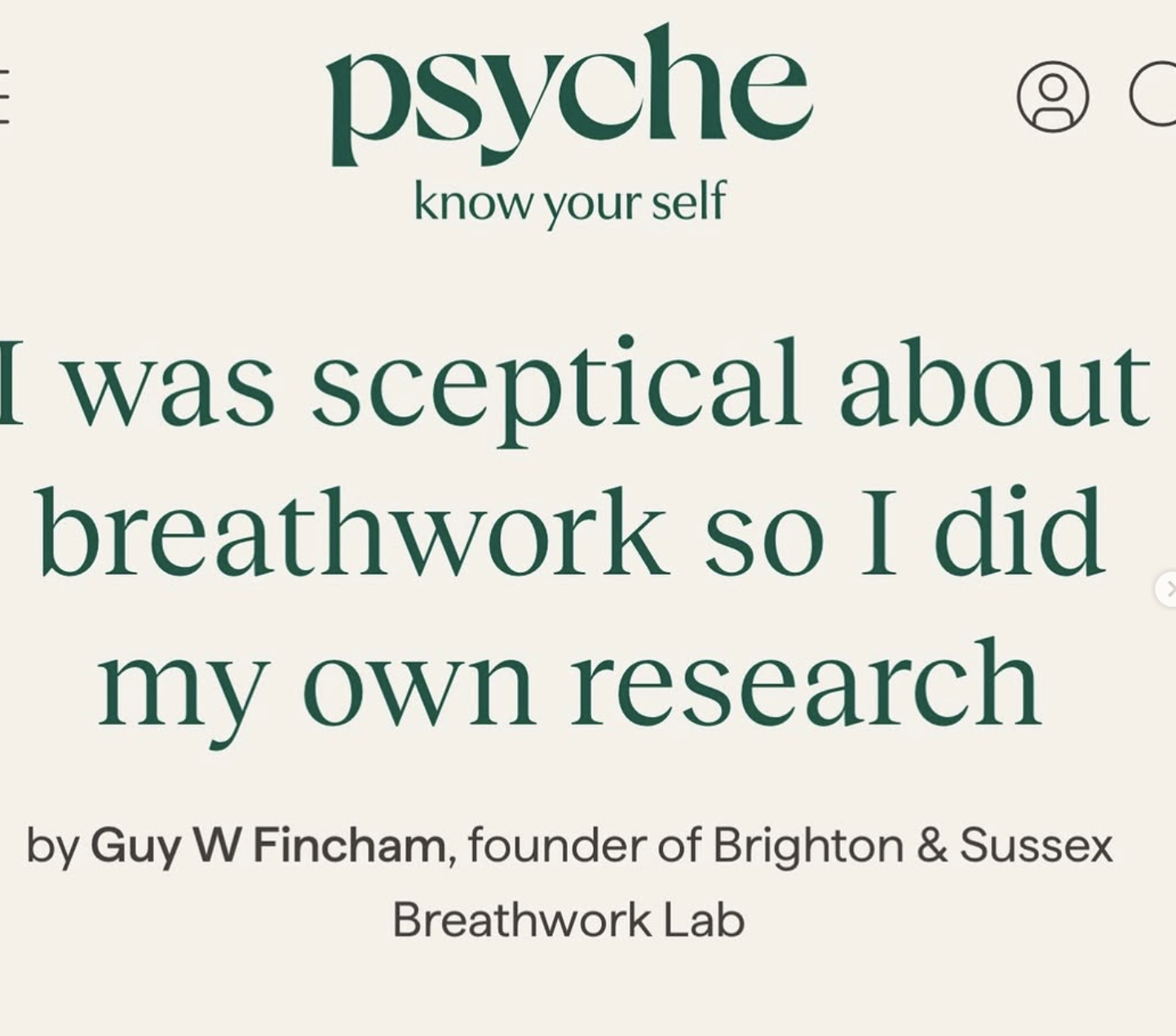
Repost from Health & Human Performance Foundation: “I was sceptical about breathwork so I did my own research.” by Guy W Fincham, | @psyche.the.magazine Guy W. Fincham, PhD
“Each breathwork technique serves different purposes, from relaxation and balance, to energisation, or moving between the states. As a participant in workshops and conferences, I’ve witnessed its transformative power firsthand. Participants often describe experiences of clarity, emotional release and deep connection – experiences starting to be backed by emerging data.
Breathwork’s mechanisms are rooted in its ability to influence the autonomic nervous system. For example, by modulating the vagus nerve, slow breathwork activates the parasympathetic branch of the autonomic nervous system (responsible for ‘rest and digest’ functions), reducing heart rate and promoting relaxation. Coherent breathing optimises heart rate variability, a key marker of stress resilience.
In contrast, fast breathwork methods trigger transient hypoxia and a release of adrenaline, effectively inducing an acute stress response – a hormetic effect – where short-term activation of the sympathetic nervous system (the one that triggers the ‘fight or flight’ response) may build long-term stress tolerance. Techniques such as high-ventilation breathwork may even produce altered states of consciousness akin to those invoked by psychedelics like psilocybin, potentially unlocking psychological insights or emotional release.”
Link to the article: https://psyche.co/ideas/i-was-sceptical-about-breathwork-so-i-did-my-own-research
