

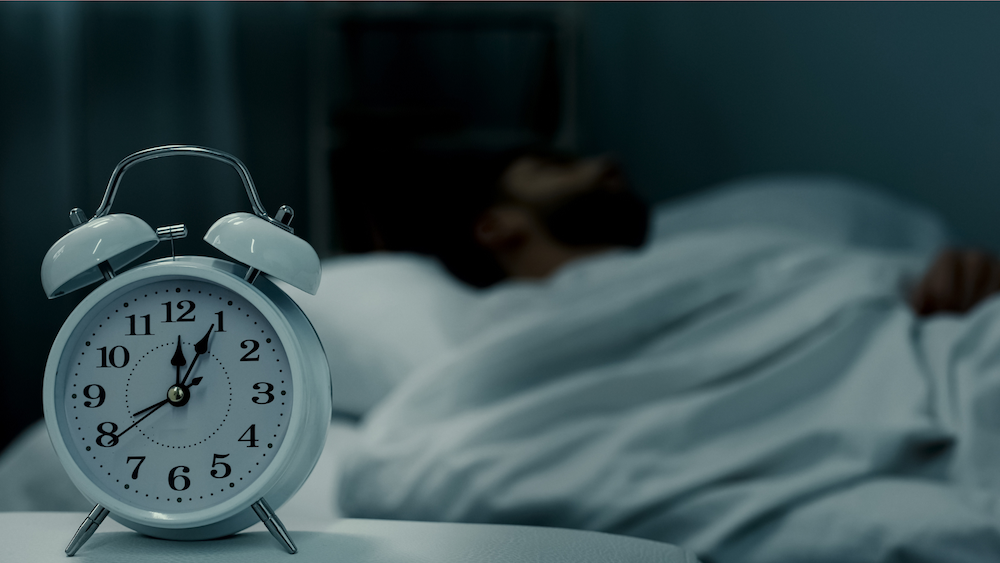
When people think about hair loss, they usually blame the obvious things first.
Hormones. Genetics. Age. Maybe stress.
But sleep?
That one often gets overlooked.
And that is a mistake.
Because your body does some of its most important repair work while you sleep. Deep sleep helps support tissue repair and healthy growth processes throughout the body. So if your sleep has been poor for a while, your body may have a harder time staying in a strong, well-recovered state overall.
That does not mean one bad night of sleep will suddenly make your hair fall out.
But it does mean that chronic poor sleep can become one more thing working against healthy hair growth.
Your hair is always cycling
Hair is not static. Every strand on your scalp is moving through a cycle.
There is a growth phase, a transition phase, and a resting/shedding phase. That is why some daily shedding is completely normal. In fact, the American Academy of Dermatology says it is normal to shed about 50 to 100 hairs a day.
So seeing a few hairs in the shower or on your brush is not automatically a red flag.
The problem starts when more hairs than usual get pushed out of that normal pattern.
That is where recovery starts to matter.
So, can poor sleep make hair loss worse?
Yes, it can.
Not always by itself. Not in every case. But poor sleep can absolutely make the environment for healthy hair growth worse.
Recent research has found that sleep disturbance shows up often in people dealing with hair loss, and it commonly overlaps with higher stress and emotional strain. Researchers have also described hair follicles as being closely tied to the body’s circadian rhythm, which means your hair follicles are not totally separate from your body clock.
In simple terms, your hair does not live in a vacuum.
If your body is run down, stressed, inflamed, and under-recovered, your hair may feel the effects too.
Recovery matters more than most people realize
Hair growth is not just about putting something on your scalp.
It is also about what kind of internal environment your body is operating in.
When sleep is poor, recovery tends to suffer. And when recovery suffers, the body may have a harder time maintaining the conditions that support healthy hair cycling. Deep sleep helps with cell and tissue repair, and the body’s sleep-wake rhythm helps coordinate important biological functions across many tissues.
That matters because hair follicles are surprisingly active little structures.
They are constantly cycling, renewing, and responding to signals from the rest of the body.
So if your sleep has been inconsistent, too short, or poor quality for weeks or months, it makes sense that your hair may not be getting the same level of support it would in a better-recovered state. This is especially true when poor sleep shows up alongside stress, crash dieting, illness, or other body stressors.
Poor sleep can add to stress-related shedding
One of the biggest ways poor sleep may affect your hair is through stress.
A common type of sudden shedding is called telogen effluvium. This is a temporary form of hair loss that can happen after a stressor or a major change in the body. According to Cleveland Clinic, it often shows up two to three months after that trigger, not overnight.
That timing matters.
Because it means the connection is easy to miss.
You might go through a rough stretch of poor sleep, emotional stress, intense dieting, illness, or burnout in January… and then notice extra hair shedding in March.
By then, most people do not connect the dots.
The American Academy of Dermatology also notes that excessive shedding is common after major stressors, including emotional stress and rapid weight loss.
So no, poor sleep is not always the only reason.
But it can absolutely become part of the bigger stress picture that pushes more hairs into the shedding phase.
Your hair follicles follow your body clock, too
This is where things get even more interesting.
Hair follicles are influenced by circadian genes, and researchers say those genes help regulate parts of normal hair follicle function, including the hair cycle itself. The same review notes that disrupted circadian rhythms from things like shift work and sleep-wake problems may affect the regenerative properties of skin and hair precursor cells.
That does not mean every late bedtime equals hair loss.
But it does mean your hair follicles seem to care about rhythm, timing, and internal balance more than most people think.
Which brings us back to recovery.
Because “recovery” is not just about feeling rested.
It is about giving your body enough stability, enough downtime, and enough support to do the repair work it is designed to do.
Signs your hair may be dealing with an under-recovered body
If you are noticing more shedding than usual, it may be worth stepping back and asking a few bigger questions.
Have you been:
- sleeping too little most nights?
- waking up tired even after being in bed for hours?
- dealing with a lot of emotional stress?
- dieting hard or losing weight quickly?
- feeling generally run down?
These kinds of stressors can overlap. And when they do, your body may start shifting resources away from “nice to have” functions and toward more urgent survival and repair priorities. Telogen effluvium is commonly linked to stressors and body changes, and rapid weight loss is one recognized trigger.
That is one reason hair problems can show up during periods when life feels chaotic.
What to do if you think poor sleep is making things worse
The good news is that sleep is something you can start improving.
And even if it is not the only reason your hair is thinning or shedding, better recovery can still support your body in a big way.
A few smart starting points:
1. Aim for enough sleep
The National Heart, Lung, and Blood Institute (NHLBI) says most adults should get about 7 to 9 hours of sleep a night.
2. Keep your sleep schedule more consistent
Going to bed and waking up at wildly different times can make it harder for your body to stay in a steady rhythm. Hair follicles are tied to circadian signaling, so consistency may matter more than people realize.
3. Look at your stress load honestly
If your sleep has been bad because life has been intense, that matters. Stress and poor sleep often travel together, and both can make hair concerns worse.
4. Avoid extreme dieting and under-eating
Rapid weight loss is a known trigger for shedding. If you are trying to get healthier, do it in a way your body can actually recover from.
5. Get checked if the shedding is sudden, severe, or unusual
Not all hair loss is caused by stress or sleep. Patchy hair loss, a widening part, thinning at the crown, or sudden heavy shedding can all have different causes. The American Academy of Dermatology recommends getting the cause identified, and Mayo Clinic notes that sudden hair loss can signal an underlying condition that needs treatment.
The bottom line
Poor sleep may not be the sole cause of your hair loss.
But it can absolutely make things worse.
If your body is not recovering well, your hair may not be either.
That is why hair support should not just be about what you put on your scalp.
It should also be about what you give your body from within.
A smarter way to support hair from the inside out
If you want to support fuller, healthier-looking hair while also working on better sleep, better recovery, and better daily habits, that is where Purality Health’s Hair Renewal comes in.
Hair Renewal features AnaGain™ Nu, a water-soluble extract from organic germinated pea seeds. It’s a clinically studied ingredient shown to improve visual hair density and help reduce hair loss.
In other words, it is designed to support your hair at the follicle level while you work on the bigger picture too.
Because healthier hair is rarely about one magic fix.
It is usually about giving your body the support it has been missing.
And sometimes, better recovery is a much bigger part of that story than people realize.
