

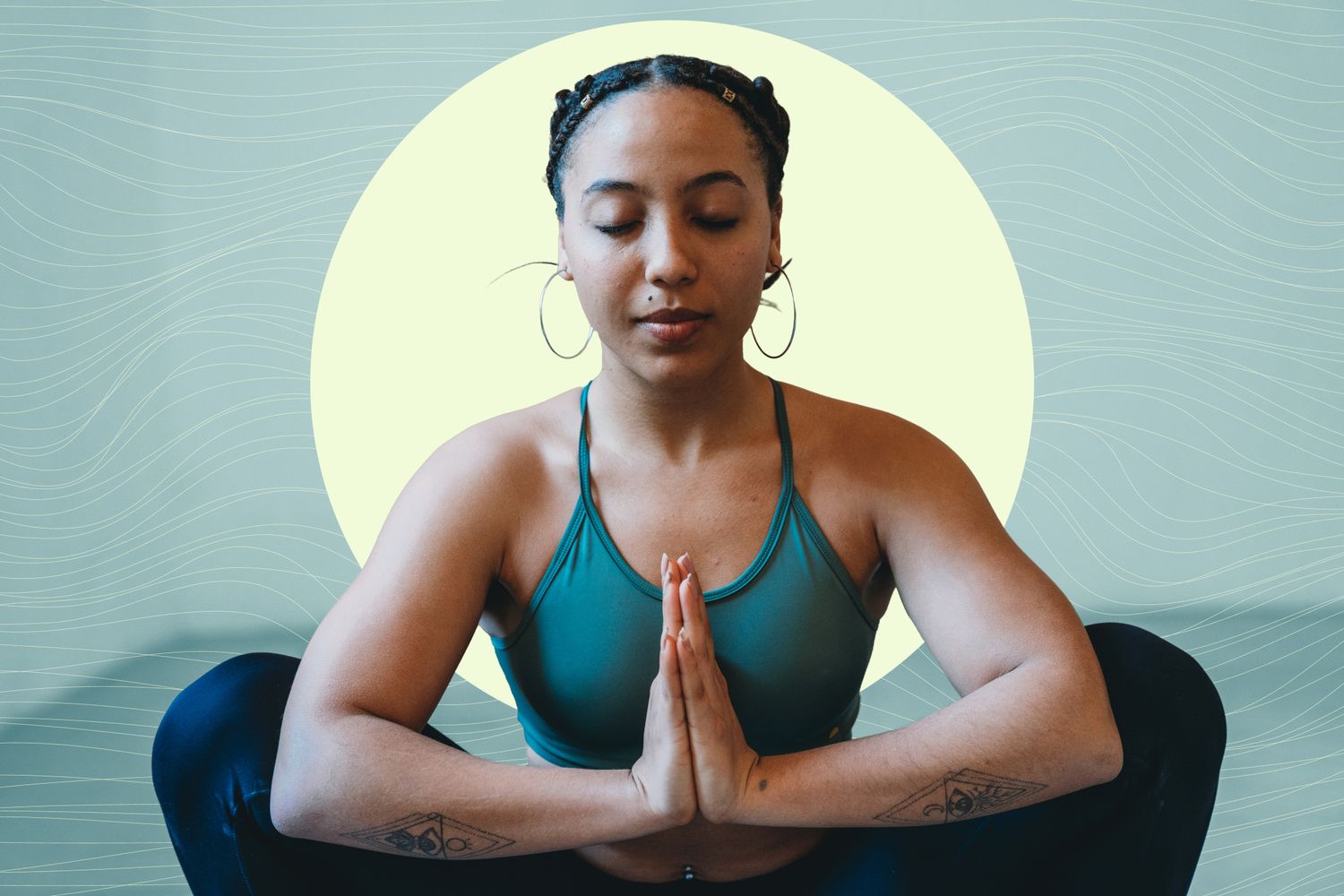
- Experts recommend the Malasana (yogi squat) to help you poop.
- The squatting position has been shown in research to reduce constipation.
- Also remember to drink plenty of water, eat fiber-rich foods and stay active.
About 15% of Americans struggle with constipation, so if a good poop feels hard to come by, you’re definitely not alone. Still, that doesn’t make the discomfort any less real, and when you’re backed up, finding relief is usually top of mind. The good news? Sometimes a gentle stretch can help get things moving, especially a Malasana (yogi squat). If you’re not familiar with this pose, don’t worry. We spoke with experts to explain how to do it and how it may help support easier bowel movements.
Why Malasana Squat is the Best Stretch to Help You Poop
It Helps Open Your Pelvic Floor
In some cases, constipation can be related to pelvic floor dysfunction, and this stretch can help relax in those muscles. “The Malasana squat helps open up the pelvic floor muscles, which can help people poop easier,” shares Carri Dominick, D.P.T., PT, CSCS. “If the pelvic floor muscles are tight, that makes it difficult to poop.”
Even if you don’t have known pelvic floor issues, relaxing these muscles may still support a more complete poop. “The pelvic floor muscles need to relax and lengthen to allow for complete bowel movement,” explains Kayleigh Little-Parks, OTR/L.
It Helps Align Your Colon
A Malasana squat may also help align your colon to form an ideal passageway for stool. Variations of this position have been used for thousands of years in other cultures. “In Southeast Asia, squatting has been, and continues to be, used as a position for prayer, cooking and toileting,” says Vanessa Airey, E-RYT 500, YACEP.
Studies have shown that squatting toilets, which are common in parts of Asia, may help reduce constipation, while sitting toilets—like those commonly used in North America—are associated with a higher risk of functional constipation. It’s one reason toilet stools have grown in popularity: they raise your feet to mimic a squat, helping to align the colon for easier bowel movements.
It May Stimulate Peristalsis
In this squatting position, your thighs and stomach are compressed against one another, putting pressure on your belly. “In this position, pressure to the abdomen helps massage the intestines and stimulate peristalsis—the muscle contractions of the intestines,” says Little-Parks. Research also shows that pooping in a squatting position leads to less straining.
Abdominal massage is a well-studied approach for managing constipation. In fact, one review of 23 studies found that abdominal massage increased bowel movement frequency and reduced constipation-related symptoms.
How to Do It
“Originally used in yogic contexts for containment, grounding or cleansing practices, Malasana is essentially a full squat,” explains Airey, “The feet are on the floor, the knees are bent, the thighs move toward the belly and in some circumstances the arms are wrapped around the shins.”
To come into the pose, Airey offers the following step-by-step instructions:
- Start standing with your feet about hip-distance apart. You can turn your toes out slightly if that feels more comfortable.
- Bend your knees deeply and lower your hips and buttocks towards the floor. Keep your feet flat and avoid lifting your heels. Note: If your heels lift off the floor, return to standing and grab a towel or blanket. Roll it into a thick, tight bundle and place it under your heels with your toes still on the floor, then try again.
- Once in the squat, rest your arms on your knees, wrap your arms around your shins or hold onto something stable in front of you. This can help keep your back upright and support spinal length.
You don’t need to be in a yoga class to try this stretch—Airey suggests practicing it at home or even on the toilet. “Next time you’re on the porcelain throne, lean back and try placing your heels on the seat,” Airey suggests. “Don’t feel flexible enough for that? Grab a small stool, place it in front of the toilet and rest your feet on the stool.”
To support bowel regularity, try practicing a Malasana squat at the start of your day. “Performing this pose in the morning, especially after a warm beverage, can be beneficial to help stimulate a bowel movement,” says Little-Parks. “Do it before eating breakfast and after emptying the bladder.” Dominick also suggests focusing on slow, deep breaths while in the position to encourage relaxation.
Other Tips to Help You Poop
- Eat Enough Fiber. Most adults need about 25–34 grams of fiber per day to support gut and overall health. You can increase your fiber intake with plant foods like whole grains, fruits, veggies, nuts, seeds and beans.
- Stay Hydrated. “Stool needs water in order to move through the intestines,” says Little-Parks. As you increase your fiber intake, be sure to drink more water so fiber can do its job well.
- Be Regularly Active. Exercise helps to get things moving by stimulating peristalsis, allowing stool to gently move along the digestive tract. Aim to get at least 3–4 days of physical activity per week through walking, jogging, cycling, dancing, swimming or whatever else you like.,
- Try a Figure Four Stretch. “I also like my patients to do the figure four stretch to help open up the glutes, which can help with bowel movements as well,” says Dominick. Lay on your back with one leg bent, foot planted on the floor. Cross your other ankle over the thigh of your planted leg to form a figure four shape in the legs.
Our Expert Take
Next time you’re desperate for a good poop, try doing a Malasana squat. “This position helps to align the colon, stimulates blood flow and along with some deep breathing, can relax the pelvic floor muscles,” says Little-Parks. If coming into the full stretch feels intimidating, don’t be discouraged. Placing a prop under your heels can bring the floor closer to you, or you can use a toilet stool for added support.
Remember, regular bowel movements aren’t just about one stretch. Eating enough fiber, staying well hydrated and being active all play an important role in keeping constipation at bay.
