

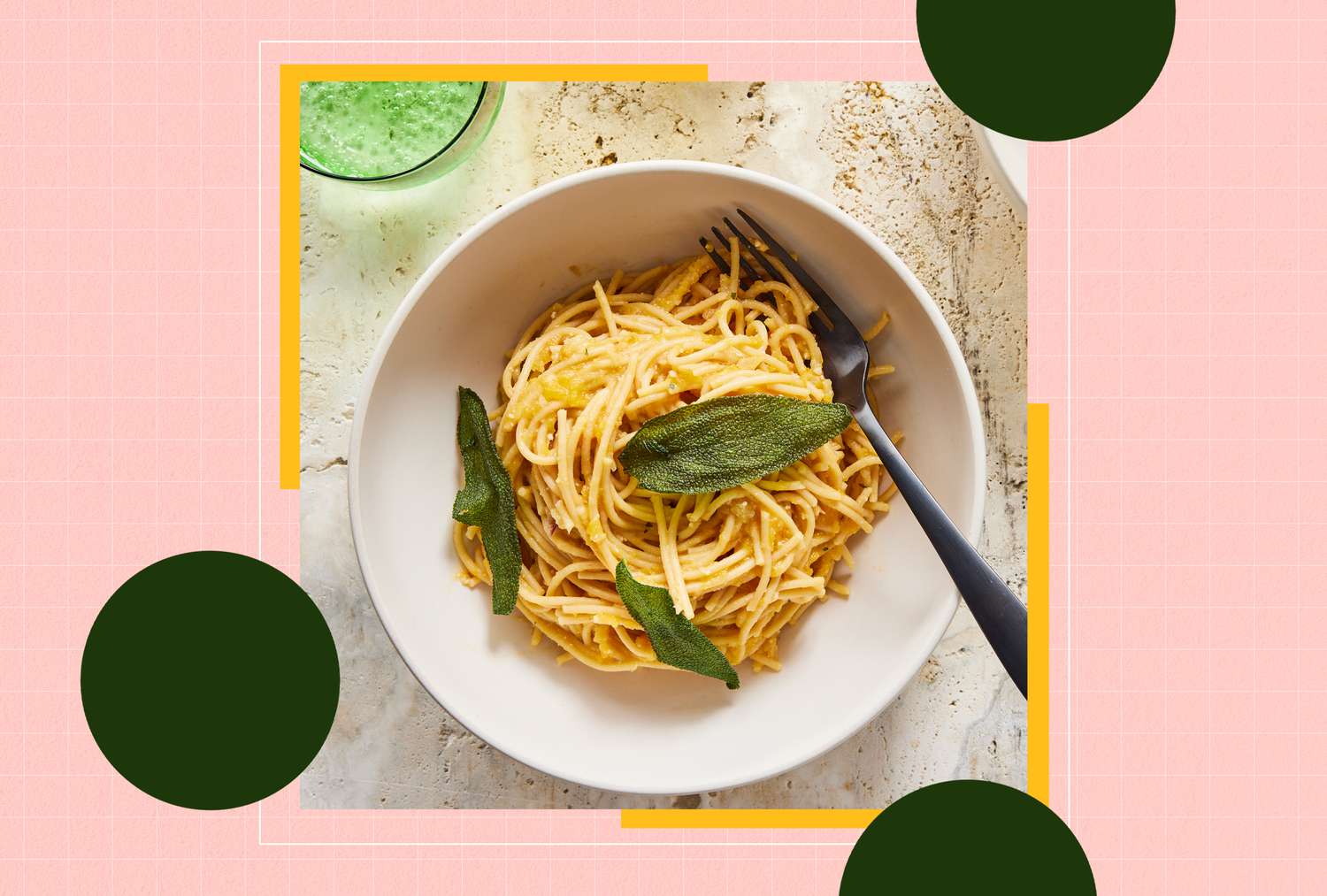
- The ingredients in Butternut Squash Pasta are inflammation-reducing and immune-supporting.
- One cup of squash contains 100% of your daily value of vitamin A and up to 50% of vitamin C.
- Use packaged cut-up squash and the recipe becomes a 15-minute meal.
Once the temperature drops, I just want to cozy up with winter squash in all its forms, particularly this Butternut Squash Pasta. It makes its way into my weekly rotation because it’s perfect for using up leftover squash and offers many nutritional benefits.
I live in a household of two people (and only one of us likes leftovers), and a whole butternut squash often yields two dinners. I’m big into meal prepping, so I’ll usually cut up and roast the entire squash at the beginning of the week and use it to make several dishes over the following days.
I’m also a big fan of anything that saves time, so I like to buy a package or two of pre-cut and peeled squash at the grocery store to roast at the beginning of the week. Having all of that roasted squash in my fridge means this recipe becomes a 15-minute meal, perfect for those busy nights when I feel like I don’t have time to cook.
As a vegetarian, I’m no stranger to pasta for dinner. Most vegetarians can probably tell you the woes of being stuck with buttered noodles or bland jarred pasta sauce. But I love this recipe because it has more to offer than just carbs, and it’s anything but boring.
Beyond the sweet, earthy flavor of the squash, this recipe calls for a vegetarian’s best friend—miso. With a deeply savory flavor usually associated with meat and other animal products, miso brings a ton of flavor to the party. Just a dab plays a supporting role in the background of sauces, soups, marinades and more. And those earthy, savory flavors in miso are a match made in heaven for the big fall flavors of butternut squash, sage and thyme in this recipe.
The other secret ingredient in this recipe is pasta water. Italian grandmas and professional chefs alike will tell you that this is the single most important ingredient when it comes to serving up a perfect plate of pasta. When you boil pasta, it releases starch into the water. When you add a splash of pasta cooking water to the pan along with pasta and the rest of the sauce ingredients, this starch-thickened water helps to create that silky consistency.
Beyond just adding body and that mouth-coating texture, the starch also binds with fat to create a truly special sauce that tastes impossibly creamy and perfectly coats the pasta. In this recipe, that fat comes from the oil in the blended squash mixture and my personal favorite: Parmesan cheese. Note: Parmesan cheese is made with animal rennet, but there are many vegetarian versions available in supermarkets today. You can also omit the Parmesan and mix the pasta water with the butternut squash puree. However, I’d recommend adding in about a tablespoon of your favorite vegan butter to compensate.
I hope I’ve convinced you how delicious this pasta is by now, but it’s also incredibly nutritious. One cup of butternut squash packs nearly 100% of your daily value of vitamin A, and about 30% of your daily needs of vitamin C. And when in the midst of cold and flu season, I can’t get enough immune-supporting nutrients, a category that includes those vitamins. Plus, vitamin A has potent anti-inflammatory properties. When paired with whole-wheat pasta, this recipe provides a quarter of your daily recommended fiber intake, which is crucial for gut health and helping you feel full and satisfied. Dig in!
Frequently Asked Questions
-
What ingredients do I need to have on hand for the recipe?
You’ll want to have the following ingredients ready: grapeseed oil or other neutral oil, fresh sage leaves, butternut squash (at least 2 cups cubed), large shallot, garlic, fresh thyme, salt, lower-sodium vegetable broth, white miso, whole-wheat spaghetti and Parmesan cheese (regular or vegetarian).
-
What is miso?
Miso is made from fermented soybean paste, and there are various kinds. For this butternut squash recipe, it’s best to use white miso for its mild, sweet flavor. If white miso is unavailable, you can opt for awase (blended) or red miso; however, they tend to be a bit saltier and more pungent. If you choose one of these, we recommend using significantly less—about ½ teaspoon to 1 teaspoon should suffice.
-
Is the recipe vegetarian?
It is vegetarian only if you decide to use a vegetarian Parmesan cheese that is not made with animal rennet during the cheese-making process.
-
What should I serve with Butternut Squash pasta?
