

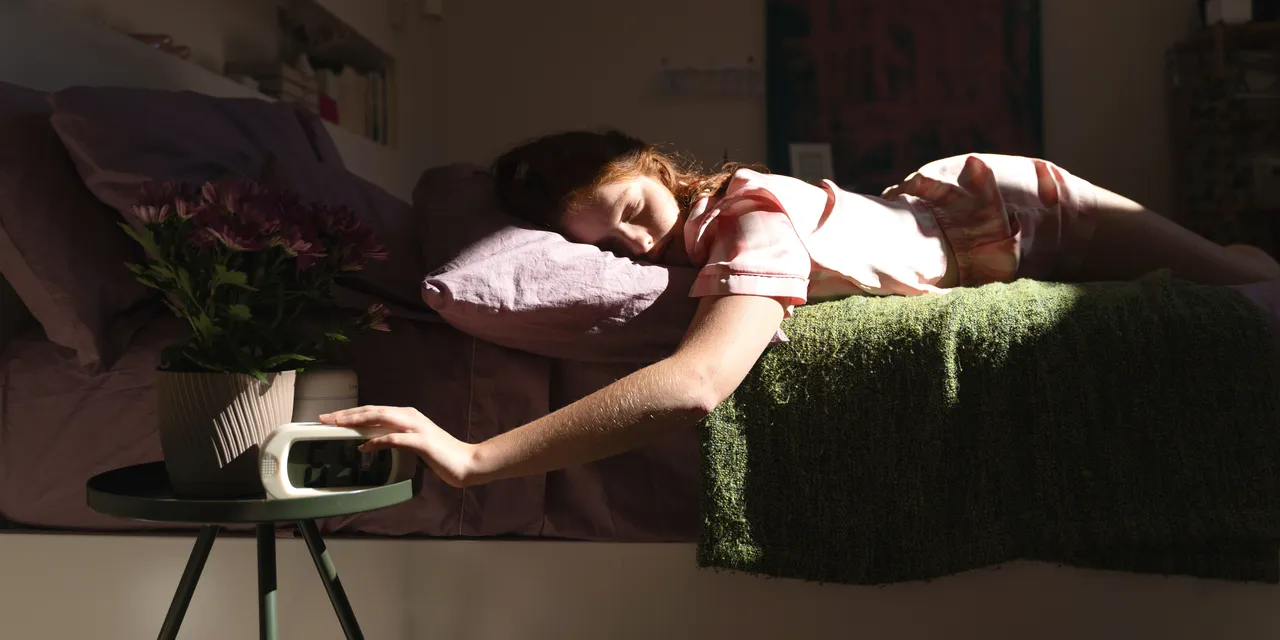
Daylight saving time stirs up a lot of mixed feelings: You’ll kiss the dreary afternoon darkness and early sunsets goodbye—but you’ll also lose an hour of precious sleep when the clocks spring forward at 2 a.m. on Sunday, March 8.
And this can really screw with your system for a bit. As the time changes, you’re also “shifting your natural, biological clock” (a.k.a. your circadian rhythm) with it, Kuljeet K. Gill, MD, a sleep medicine specialist at Northwestern Medicine’s Central DuPage Hospital, tells SELF. This can mess with your hormones, alertness, hunger signals, and mood, she says.
The switch to daylight saving time (DST) is even tougher on the body than the change to standard time in the fall because darker mornings and lighter evenings go against our natural circadian rhythm. “A later sunrise can make it harder for the brain and body to fully wake up and stay aligned with a healthy sleep schedule,” Angela Holliday-Bell, MD, a board-certified physician and sleep specialist, tells SELF. Research has even found that in the days following the spring clock change, hospital admissions increase for cardiovascular issues like stroke and heart attack, and the number of fatal car accidents goes up too.
It’s the reason the American Academy of Sleep Medicine has long urged Congress to do away with the seasonal changes and implement permanent standard time. And a 2025 Gallup poll suggests more than half of Americans are ready to abolish DST as well. But at the same time, fans of more sun-filled evenings have pushed for the opposite approach—the Sunshine Protection Act is a bill that would get rid of standard time and make DST permanent (though it’s been stalled since 2023). What people on both sides can agree on is that the twice yearly clock-changing does no one any favors.
We asked experts what you can do now to better adjust to this season’s upcoming time switch and feel less jet-lagged and miserable in the following week.
How to prepare for the time change
Shift your sleep schedule incrementally earlier.
In the three or four days leading up to DST, Dr. Holliday-Bell recommends getting to bed and waking up 15 minutes earlier. (If that’s too challenging, try to get natural light first thing in the morning to feel more alert; and avoid bright lights and screens close to bedtime to doze off more easily.) These small adjustments help smooth the transition, she says. So when DST arrives, you hopefully won’t feel like you have to get out of bed a full hour earlier than usual.
Refresh your sleep hygiene.
It’s all the more important to optimize your environment and behaviors for good sleep when outside influences—like the clock change—threaten to throw you off. Consider first the temperature in your space. “Your body temperature naturally drops by about one to two degrees to support deeper sleep, so a cooler bedroom and breathable cotton sheets and pajamas can make a real difference,” Dr. Holliday-Bell says.
