

Key Takeaways
- Depression can be caused by genetics, brain chemistry, and lifestyle factors.
- Women experience depression at higher rates than men, possibly due to hormonal factors.
- An imbalance in neurotransmitters like dopamine, serotonin, and norepinephrine might cause depression.
Depression is one of the most common mental disorders in the United States. It can affect anyone at almost any age, but what causes depression in some people is not always known. Potential depression causes can include genetics, brain chemistry, life events, medical conditions, and lifestyle factors.
The Centers for Disease Control and Prevention reported that approximately 1 in 5 U.S. adults have received a depression diagnosis in their lifetime. The World Health Organization estimates that 5% of men and 9% of women experience depressive disorders in any given year.
This article discusses common causes of depression. It covers the genetic, biological, and environmental factors that can play a role in the condition.
Common Causes of Depression
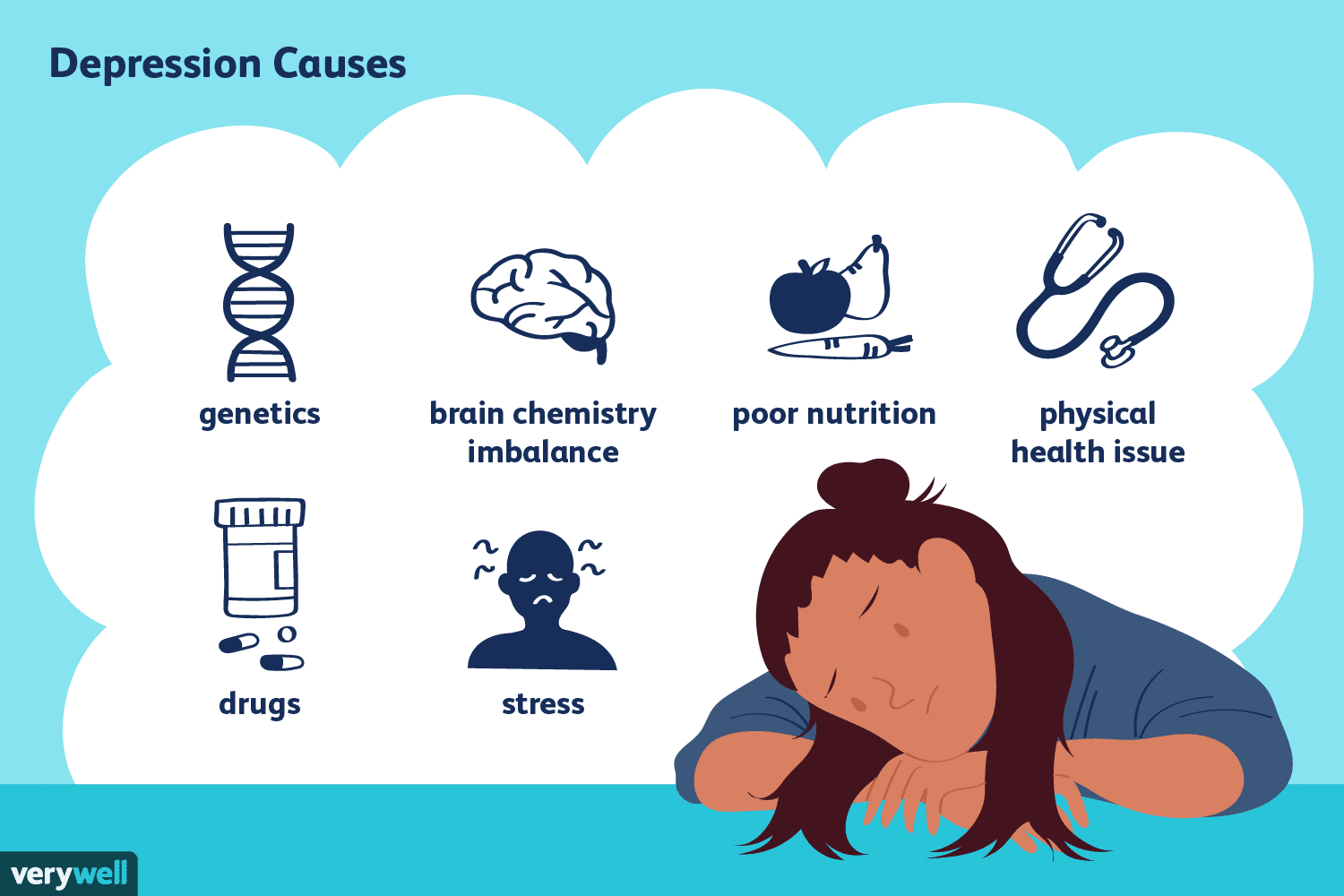
Researchers suspect there are actually many different causes of depression and that it is not always preventable. Factors that can contribute to depression include:
- Genetics
- Brain chemistry
- Certain medical conditions
- Substance use
- Stress
- Poor nutrition
Depression does not have a single cause. There are many factors that play a role in increasing the risk that a person will develop the condition. Women experience depression at higher rates than men (10.5% of women vs. 6.2% of men), which experts suggest may be due to hormonal factors.
Family History and Genetics
A family history of depression may increase your risk of developing the condition. You are more likely to experience symptoms of depression if others in your family also have depression or another type of mood disorder. Estimates suggest that depression is approximately 40% determined by genetics.
Twin, adoption, and family studies have linked depression to genetics. While studies suggest that there is a strong genetic component, researchers are not yet certain about all the genetic risk factors for depression.
Studies show that having a parent and grandparent with depression doubles the risk of having the condition.
It is still unclear exactly which genes play a role in depression, but researchers do know that there are many different genes that can play a role. By better understanding how they function, gene researchers hope to be able to create more effective treatments.
It is important to remember that no single cause of depression acts in isolation. Genetics may increase your risk and environmental influences may then determine how likely you are to develop depression.
Brain and Body Causes of Depression
Some causes of depression are related to the brain and body. These can raise your risk for depression.
Brain Chemistry Imbalances
One potential biological cause of depression is an imbalance in the neurotransmitters which are involved in mood regulation. Certain neurotransmitters, including dopamine, serotonin, and norepinephrine, play an important role in mood.
Neurotransmitters are chemical substances that help different areas of the brain communicate with each other. When certain neurotransmitters are in short supply, it may lead to the symptoms we recognize as clinical depression.
This theory of depression suggests that having too much or too little of certain neurotransmitters causes, or at least contributes to, depression.
While this explanation is often cited as a major cause of depression, it remains unproven and many experts believe that it doesn’t paint a complete picture of the complex factors that contribute to the condition.
Medications to treat depression often focus on altering the levels of certain chemicals in the brain. Some of these treatments include selective serotonin reuptake inhibitors (SSRIs), serotonin-norepinephrine reuptake inhibitors (SNRIs), monoamine oxidase inhibitors (MAOIs), and tricyclic antidepressants (TCAs).
Physical Health and Certain Medical Conditions
You may be more likely to experience symptoms of depression if you have a chronic illness, sleep disorder, or thyroid condition. Depression rates also tend to be higher among people who have chronic pain, diabetes, multiple sclerosis, and cancer.
The mind and the body are linked. If you are experiencing a physical health problem, you may discover changes in your mental health as well.
Illness is related to depression in two ways. The stress of having a chronic illness may trigger an episode of major depression. In addition, certain illnesses, such as thyroid disorders, Addison’s disease, and liver disease, can cause depression symptoms.
Female Sex Hormones
It has been widely documented that women experience major depression about twice as often as men. Because of the incidence of depressive disorders peaks during women’s reproductive years, it is believed that hormonal risk factors may be at play.
Women are especially prone to depressive disorders during times when their hormones are in flux, such as around the time of their menstrual period, pregnancy, childbirth, and perimenopause. The risk of depression declines after menopause.
Hormone fluctuations caused by childbirth and thyroid conditions can also contribute to depression. Postpartum depression may occur after childbirth and is believed to result from the rapid hormonal changes that take place immediately after giving birth.
Some Common Causes of Depression
Lifestyle Causes of Depression
There are also a number of lifestyle factors that can play a role in causing depression. While many of the risk factors for depression, such as sex or family history, cannot be changed, people have much more control over lifestyle factors.
Circadian Rhythm Disturbances
One type of depression, called seasonal affective disorder (officially known as major depressive disorder with seasonal pattern) is believed to be caused by a disturbance in the normal circadian rhythm of the body.
Light entering the eye influences this rhythm. During the shorter days of winter, when people may spend limited time outdoors, this rhythm may become disrupted.
People who reside in colder climates where there are short, dark days may be at the highest risk.
In addition to disruptions in circadian rhythm, reduced sunlight can also lead to a drop in serotonin levels in the brain, which may influence mood. Seasonal changes can also alter melatonin levels in the body, which can disrupt sleep and contribute to mood changes.
While you cannot control seasonal shifts, there are steps you can take to minimize the effect these changes have on your mental health. Light therapy, spending more time outdoors, eating a healthy diet, and exercising regularly may help combat seasonal depression.
Poor Nutrition
A poor diet can contribute to depression in several ways. A variety of vitamin and mineral deficiencies are known to cause symptoms of depression. In addition, diets high in sugar have been associated with depression.
Some studies have found that diets either low in omega-3 fatty acids or with an imbalanced ratio of omega-6 to omega-3 fats are associated with increased rates of depression.
Stress
Stressful life events, which overwhelm a person’s ability to cope, can also be a cause of depression. Researchers suspect high levels of the hormone cortisol, which are secreted during periods of stress, may affect the neurotransmitter serotonin and contribute to depression.
Grief and Loss
Following the loss of a loved one, people who are grieving experience many of the same symptoms of depression. Trouble sleeping, poor appetite, and a loss of pleasure or interest in activities are a normal response to loss.
The symptoms of grief are expected to subside over time. But when symptoms get worse, grief may turn into depression.
Substance Use
Drug and alcohol use can contribute to depressive disorders. But even some prescription drugs have been linked to depression.
Some drugs that have been found to be associated with depression include anticonvulsants, statins, stimulants, benzodiazepines, corticosteroids, and beta-blockers. It’s important to review any medications that you’ve been prescribed and to speak with your physician if you are feeling depressed.
